VAP Membrane: 10 Proven Benefits for Stronger and More Durable Buildings
Table of Contents
- Introduction
- Understanding VAP Membrane Technology
- Why Moisture Protection Matters
- Major Benefits of Using VAP Membrane
- Applications Across Construction Projects
- Why Builders Choose SR Composites
- Industry Standards and Best Practices
- Conclusion
- FAQs
Introduction
VAP Membrane technology has become an essential part of modern construction projects where long-term durability, energy efficiency, and moisture protection are critical requirements. Whether a building is located in a humid coastal region, an industrial zone, or an area experiencing significant seasonal temperature variations, controlling moisture movement within the building envelope is necessary to ensure structural integrity and occupant comfort.
Many construction problems begin when water vapor enters walls, roofs, and flooring systems. Over time, trapped moisture can reduce insulation performance, encourage mold growth, damage construction materials, and increase maintenance costs. A properly installed vapor barrier helps prevent these issues and contributes to a healthier and more efficient building environment.
As construction standards continue to evolve, architects, engineers, and contractors increasingly rely on advanced moisture-control systems to protect investments and improve building performance. This is where high-quality solutions from SR Composites provide significant value.
Understanding VAP Membrane Technology
A VAP Membrane is a specially engineered material designed to limit the movement of water vapor through various components of a building structure. While liquid water intrusion is often visible and easier to address, water vapor can silently penetrate construction assemblies and create hidden problems over time.
Table 1: Key Features of VAP Membrane
| Feature | Description | Benefit |
|---|---|---|
| Moisture Resistance | Prevents water vapor penetration | Protects building materials |
| High Durability | Designed for long-term performance | Reduces replacement costs |
| Flexible Structure | Easy to install on different surfaces | Faster construction |
| Tear Resistance | Withstands handling and installation stress | Reliable performance |
| Lightweight Material | Easy transportation and storage | Lower installation effort |
| Thermal Support | Helps insulation perform effectively | Better energy efficiency |
| Mold Prevention | Limits moisture accumulation | Improved indoor air quality |
| Chemical Resistance | Suitable for industrial environments | Enhanced durability |
The purpose of a vapor control layer is to regulate moisture transfer before condensation occurs inside walls, ceilings, or floor systems. When warm air carrying moisture comes into contact with cooler surfaces, condensation can develop. If this moisture remains trapped, it can gradually deteriorate insulation materials, weaken structural components, and create ideal conditions for biological growth.
Modern membrane technology is developed using advanced materials that offer durability, flexibility, and long-term resistance against moisture transmission. These characteristics make it a reliable solution for both residential and industrial applications.
Why Moisture Protection Matters in Modern Buildings
Moisture management plays a major role in determining the lifespan of any structure. Excess moisture can affect everything from indoor air quality to energy efficiency. Many building owners underestimate the long-term impact of uncontrolled vapor movement until significant repairs become necessary.
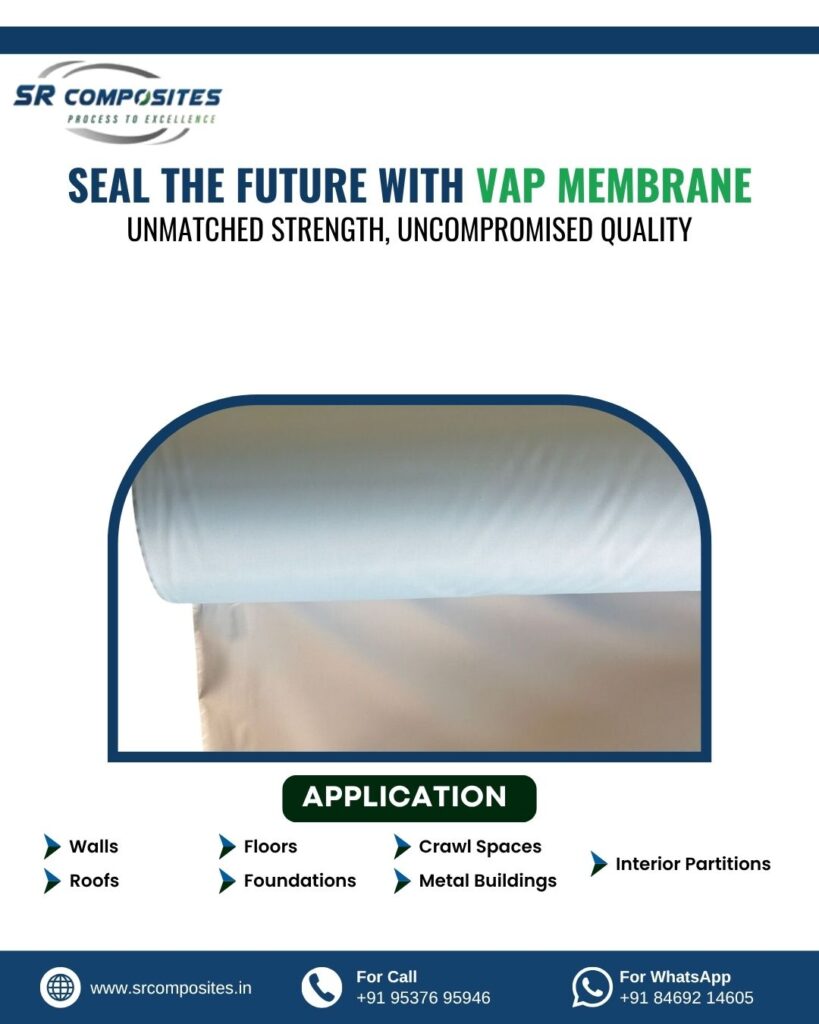
Applications of VAP Membrane in Construction
| Application Area | Purpose | Advantage |
|---|---|---|
| Walls | Controls moisture movement | Prevents dampness and mold |
| Roofs | Reduces condensation | Extends roof lifespan |
| Floors | Blocks ground moisture | Protects floor finishes |
| Foundations | Prevents moisture ingress | Improves structural durability |
| Crawl Spaces | Controls humidity levels | Healthier indoor environment |
| Metal Buildings | Minimizes condensation | Prevents corrosion and rust |
| Interior Partitions | Moisture management | Better building performance |
Buildings that lack adequate moisture protection often experience recurring issues such as peeling finishes, damp insulation, corrosion, mold development, and reduced thermal performance. These problems not only increase operating costs but can also affect the comfort and safety of occupants.
By integrating a high-performance moisture barrier into the building envelope, construction professionals can significantly reduce these risks and create structures that perform more effectively throughout their service life.
Major Benefits of Using VAP Membrane
One of the primary advantages of using this type of moisture protection system is its ability to maintain the effectiveness of insulation. Insulation materials perform best when they remain dry. When moisture enters insulation layers, thermal resistance decreases, causing heating and cooling systems to work harder and consume more energy.
Benefits of Using VAP Membrane
| Benefit | Impact on Building |
|---|---|
| Moisture Protection | Prevents water vapor damage |
| Energy Efficiency | Maintains insulation effectiveness |
| Structural Protection | Reduces deterioration of materials |
| Mold Control | Creates healthier indoor spaces |
| Lower Maintenance | Reduces repair costs |
| Longer Building Life | Enhances durability |
| Better Comfort | Improves indoor conditions |
| Sustainable Construction | Supports energy-saving practices |
Another important benefit is the protection of structural materials. Wood, steel, and other construction components can suffer deterioration when exposed to long-term moisture accumulation. A vapor barrier helps preserve these materials and supports long-term building stability.
Indoor air quality also improves when moisture is properly controlled. Excess humidity can encourage mold and mildew growth, which may affect occupant comfort and health. By limiting vapor migration, building owners can create healthier indoor environments.
Financially, moisture protection systems offer excellent value because they help reduce future repair expenses. Preventing damage is often significantly less expensive than addressing structural deterioration after it occurs.
In industrial and commercial facilities, vapor control solutions contribute to improved operational efficiency by protecting equipment, insulation systems, and sensitive building components from moisture-related issues.
Applications Across Construction Projects
The versatility of modern membrane systems allows them to be used in a wide range of construction environments. Residential buildings frequently incorporate moisture barriers within wall assemblies and roof structures to improve thermal efficiency and durability.
Commercial developments such as office complexes, shopping centers, and educational institutions benefit from improved building envelope performance and reduced maintenance requirements. Large-scale projects often demand reliable moisture management solutions to meet long-term operational goals.
Industrial facilities and warehouses are among the most common applications. Metal structures are particularly vulnerable to condensation because of temperature differences between indoor and outdoor environments. Installing a vapor control layer helps minimize corrosion risks and improves overall building performance.
Foundation systems also benefit from moisture protection. Ground moisture can migrate through concrete and other structural materials if adequate barriers are not incorporated during construction. By controlling vapor movement at the foundation level, builders can improve the longevity of the entire structure.
Similarly, crawl spaces, flooring systems, and interior partition walls can all benefit from advanced moisture management technologies designed to create more stable and durable building environments.
10 Powerful Benefits for Superior Moisture Protection and Building Performance
1. Superior Moisture Protection
Prevents water vapor from penetrating walls, roofs, floors, and foundations, protecting the building structure from moisture-related damage.
2. Improved Energy Efficiency
Helps insulation remain dry and effective, reducing heat loss and lowering energy consumption.
3. Enhanced Structural Durability
Protects construction materials from deterioration caused by long-term moisture exposure, extending the life of the building.
4. Mold and Mildew Prevention
Reduces the risk of mold growth by controlling moisture accumulation within building assemblies.
5. Better Indoor Air Quality
Creates a healthier indoor environment by minimizing dampness and preventing microbial growth.
6. Lower Maintenance Costs
Reduces the need for costly repairs associated with moisture damage, corrosion, and insulation failure.
7. Protection Against Corrosion
Safeguards metal structures and components from rust and corrosion caused by condensation.
8. Increased Building Lifespan
Improves the overall longevity of residential, commercial, and industrial buildings.
9. Versatile Application Across Construction Projects
Suitable for walls, roofs, floors, foundations, crawl spaces, metal buildings, and interior partitions.
10. Supports Sustainable Building Performance
Contributes to energy-efficient and environmentally responsible construction by improving building envelope performance.
Why Builders Choose SR Composites
Construction professionals require materials that combine reliability, durability, and consistent performance. SR Composites has developed a reputation for supplying high-quality moisture control solutions that support modern building requirements.
Why Choose SR Composites
| Factor | SR Composites Advantage |
|---|---|
| Product Quality | High-performance moisture protection solutions |
| Industry Experience | Trusted by construction professionals |
| Application Range | Suitable for residential and industrial projects |
| Reliable Performance | Consistent moisture control |
| Customer Support | Technical assistance and guidance |
| Long-Term Value | Durable and cost-effective solutions |
The company’s focus on quality manufacturing standards ensures products are designed to perform effectively across diverse environmental conditions. Whether the project involves residential housing, industrial facilities, commercial developments, or infrastructure construction, SR Composites provides solutions that help improve structural protection and energy efficiency.
In addition to product quality, customers value dependable technical support and a commitment to meeting industry expectations. These factors have made SR Composites a trusted choice for contractors, architects, and project developers seeking long-term moisture protection solutions.
For more information about building standards and quality practices, readers can refer to the Bureau of Indian Standards website: https://www.bis.gov.in/
For complete product information and moisture-control solutions, visit SR Composites: https://srcomposites.in/
Industry Standards and Best Practices
Selecting the right moisture barrier is only one part of an effective building protection strategy. Proper installation, material compatibility, and compliance with relevant industry standards are equally important.
Construction professionals should ensure that moisture-control systems are incorporated into the overall building envelope design rather than treated as standalone components. A well-designed system improves durability, energy efficiency, and indoor environmental quality while reducing long-term maintenance requirements.
As sustainability becomes increasingly important within the construction sector, effective moisture management continues to play a key role in achieving better building performance and operational efficiency.
FAQs
What is a VAP Membrane?
A VAP Membrane is a moisture-control material designed to reduce water vapor movement through building structures and prevent condensation-related damage.
Where is it commonly used?
It is commonly used in walls, roofs, floors, foundations, crawl spaces, and metal buildings.
Does it improve energy efficiency?
Yes. By helping insulation remain dry, it supports better thermal performance and lower energy consumption.
Is it suitable for industrial applications?
Yes. Industrial facilities, warehouses, and metal structures frequently use moisture barrier systems to reduce condensation and corrosion risks.
Why choose SR Composites?
SR Composites provides reliable moisture protection solutions designed for durability, performance, and long-term building protection.
Conclusion
VAP Membrane solutions have become a critical component of modern construction because they provide reliable protection against moisture-related damage while supporting energy efficiency and structural durability. From residential homes and commercial developments to industrial facilities and metal buildings, proper moisture control helps extend service life and reduce maintenance costs.
As builders continue to prioritize long-term performance and sustainability, advanced vapor barrier technologies will remain an essential part of successful construction projects. By choosing quality solutions from SR Composites, project owners can invest in stronger, healthier, and more durable buildings capable of performing efficiently for years to come.