Table of Contents
- Introduction
- What is Vacuum Bagging Film?
- Key Features and Performance Advantages
- Applications Across Industries
- Benefits for Composite Manufacturing
- Why Material Quality Matters
- Why Choose SR Composites
- Frequently Asked Questions
- Conclusion
Introduction
Vacuum Bagging Film has become a critical component in modern composite manufacturing, enabling industries to produce lightweight, durable, and high-performance products with exceptional consistency. As manufacturing standards continue to evolve, companies are increasingly adopting advanced composite technologies to meet demands for stronger structures, improved efficiency, and reduced material waste. From aerospace and automotive applications to marine construction and renewable energy projects, vacuum-assisted processing plays a significant role in achieving these objectives.
Vacuum Bagging Film: The effectiveness of any vacuum bagging process depends on the quality of materials used throughout production. Among these materials, the bagging film serves as the primary barrier that creates and maintains the sealed environment necessary for successful curing and resin infusion. When selected correctly, it contributes to better product quality, improved structural integrity, and more efficient manufacturing operations.
What is Vacuum Bagging Film?
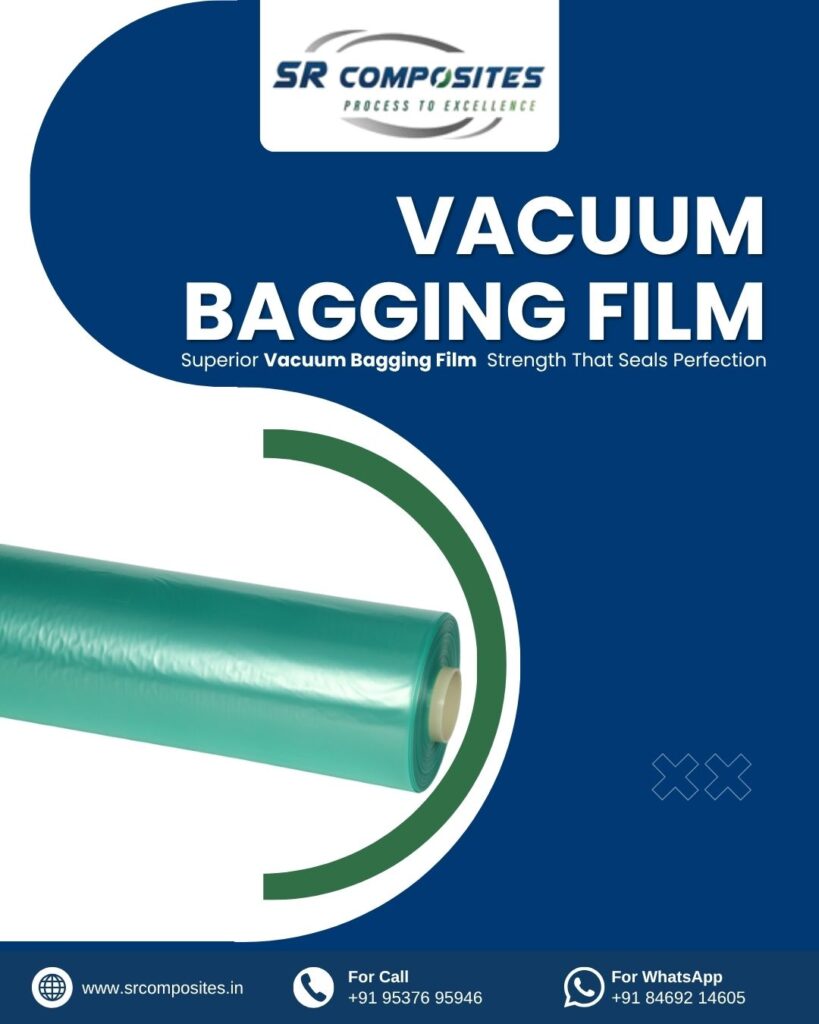
Vacuum Bagging Film is a specially engineered material used during composite fabrication to create an airtight enclosure around laminate structures. During the manufacturing process, reinforcement materials and resin systems are placed on a mould before the film is carefully positioned over the assembly and sealed using specialised tape. Vacuum Bagging Film Air is then removed from the enclosed space through a vacuum system, creating pressure that compresses the laminate and assists resin distribution.
This controlled manufacturing environment helps eliminate trapped air, reduces void formation, and ensures consistent consolidation of composite layers. The result is a stronger and more reliable finished component with improved mechanical properties and enhanced surface quality.
Because composite parts often feature complex shapes and intricate geometries, the film must be flexible enough to conform to mould contours while maintaining excellent sealing performance throughout the curing cycle.
Key Features and Performance Advantages
A high-quality vacuum bagging solution offers several characteristics that contribute directly to manufacturing success. One of the most important features is excellent vacuum retention, which helps maintain stable pressure conditions throughout the production process. Vacuum Bagging Film: Consistent vacuum levels reduce the likelihood of defects and improve overall laminate quality.
Flexibility is another important property. Composite structures frequently contain curved surfaces and detailed shapes that require the material to stretch and conform without creating wrinkles or bridging. This adaptability ensures complete coverage and reliable processing.
Temperature resistance is equally critical, particularly in applications involving elevated curing temperatures. Premium materials maintain their physical properties under demanding thermal conditions, ensuring dependable performance during manufacturing.
Durability also plays a major role in production efficiency. Strong tear resistance helps prevent accidental damage during handling and installation, reducing downtime and minimising material waste. In addition, compatibility with various resin systems, including epoxy, polyester, and vinyl ester resins, allows manufacturers to use the material across a wide range of applications.
Applications Across Industries
Vacuum Bagging Film Composite manufacturing has expanded significantly over the past decade, leading to increased demand for advanced processing materials across multiple sectors. Aerospace manufacturers use vacuum-assisted production techniques to create lightweight aircraft structures capable of delivering exceptional strength and fuel efficiency. Precision and consistency are essential in this industry, making reliable manufacturing consumables particularly important.
The automotive sector also benefits from composite technology. Manufacturers increasingly rely on lightweight materials to improve vehicle performance, enhance energy efficiency, and support electric mobility initiatives. Vacuum-assisted processing helps ensure the structural quality required for these demanding applications.
Marine industries utilise composite materials for boat hulls, decks, and structural components exposed to challenging environmental conditions. Vacuum Bagging Film Proper processing contributes to enhanced durability and long-term performance in marine environments.
Renewable energy projects, particularly wind turbine manufacturing, depend on composite materials to produce large structural components that must withstand significant mechanical stress. Industrial fabrication companies similarly use advanced composites in tanks, pipes, covers, and specialised engineering products where corrosion resistance and strength are essential.
Benefits for Composite Manufacturing
Vacuum Bagging Film One of the primary advantages of vacuum-assisted processing is improved laminate consolidation. By applying controlled pressure throughout the manufacturing cycle, composite layers are compacted more effectively, resulting in stronger finished products with fewer internal defects.
Manufacturers also benefit from improved resin distribution. Consistent resin flow throughout the laminate structure enhances product quality and helps achieve more predictable manufacturing outcomes. Better resin control contributes to improved mechanical performance and reduced material waste.
Surface finish quality is another important benefit. Components produced under controlled vacuum conditions typically require less post-processing, reducing labour requirements and increasing production efficiency. This improvement can significantly impact overall manufacturing costs, particularly in high-volume operations.
Weight optimisation is equally valuable. Improved fibre-to-resin ratios enable manufacturers to produce lighter components while maintaining the strength and durability required for demanding applications. This advantage is particularly important in aerospace, automotive, and renewable energy industries where weight reduction directly affects performance.
Why Material Quality Matters
The success of any composite manufacturing operation depends heavily on the quality of consumable materials used during production. Vacuum Bagging Film Poor-quality materials can compromise vacuum integrity, increase the likelihood of defects, and lead to inconsistent results. These issues often result in rejected parts, production delays, and higher operating costs.
High-performance manufacturing materials help maintain stable process conditions throughout the curing cycle, supporting repeatable results and improved quality control. As industry standards continue to become more demanding, manufacturers increasingly recognise the importance of investing in dependable production materials that support long-term operational success.
India’s manufacturing sector continues to promote innovation and advanced production technologies through initiatives such as Make in India. Vacuum Bagging Film. Additional information regarding manufacturing growth and industrial development can be found through the official government initiative at www.makeinindia.com.
Why Choose SR Composites
SR Composites is dedicated to providing high-quality composite manufacturing materials designed to meet the needs of modern industrial applications. Vacuum Bagging Film With a strong focus on reliability, performance, and customer satisfaction, the company supports manufacturers seeking consistent production outcomes and improved operational efficiency.
Our products are selected to perform under demanding manufacturing conditions while helping customers achieve superior results across a wide range of applications. Whether serving aerospace, automotive, marine, renewable energy, or industrial sectors, SR Composites delivers solutions that prioritise quality and long-term value.
In addition to supplying dependable materials, our team understands the technical challenges associated with composite manufacturing and works closely with customers to identify products best suited to their specific requirements. Vacuum Bagging Film. This commitment to service and product excellence has helped establish SR Composites as a trusted partner within the composite manufacturing industry.
For additional information about our products and solutions, visit https://srcomposites.in/.
Frequently Asked Questions
What is the primary purpose of Vacuum Bagging Film?
It creates a sealed environment that allows vacuum pressure to compact composite laminates, improve resin flow, and enhance overall product quality.
Which industries commonly use this material?
Aerospace, automotive, marine, wind energy, and industrial manufacturing sectors frequently utilise vacuum-assisted composite processing.
Is it compatible with different resin systems?
Yes. It works effectively with epoxy, polyester, vinyl ester, and other commonly used resin formulations.
Why is vacuum pressure important in composite fabrication?
Vacuum pressure helps remove trapped air, improves laminate consolidation, and enhances the mechanical properties of finished components.
Why choose SR Composites?
SR Composites provides reliable products, industry expertise, and dedicated customer support to help manufacturers achieve consistent production results.
Conclusion
Vacuum Bagging Film plays a vital role in modern composite manufacturing by helping create stronger, lighter, and more reliable products. Through effective vacuum-assisted processing, manufacturers can improve laminate quality, optimise resin distribution, and reduce production defects. As industries continue to embrace advanced composite technologies, the importance of dependable manufacturing materials will only increase. By partnering with SR Composites, businesses gain access to quality-driven solutions designed to support efficient production and long-term success.