Table of Contents
- Introduction
- What is a Foam Roller?
- Benefits of Using a Foam Roller
- Applications of Foam Rollers Across Industries
- How Foam Roller Technology Improves Finishing Quality
- Factors to Consider When Choosing a Foam Roller
- Why Choose SR Composites?
- Conclusion
Introduction
Foam Roller solutions are widely used in painting, coating, and surface finishing applications where consistency and appearance are important. Whether working on furniture, walls, industrial components, composite products, or decorative surfaces, achieving a smooth finish requires the right application tool.
Modern industries focus heavily on efficiency and quality. Even the best coating materials can produce unsatisfactory results if they are not applied correctly. This is why professional contractors, manufacturers, and finishing specialists rely on high-quality rollers that ensure even distribution of paint, resin, varnish, and other coating materials.
A well-designed roller helps reduce visible marks, improve coating uniformity, and enhance the final appearance of a product or surface. As industries continue to adopt advanced finishing techniques, these application tools remain an important part of achieving professional results.
Understanding Foam Rollers
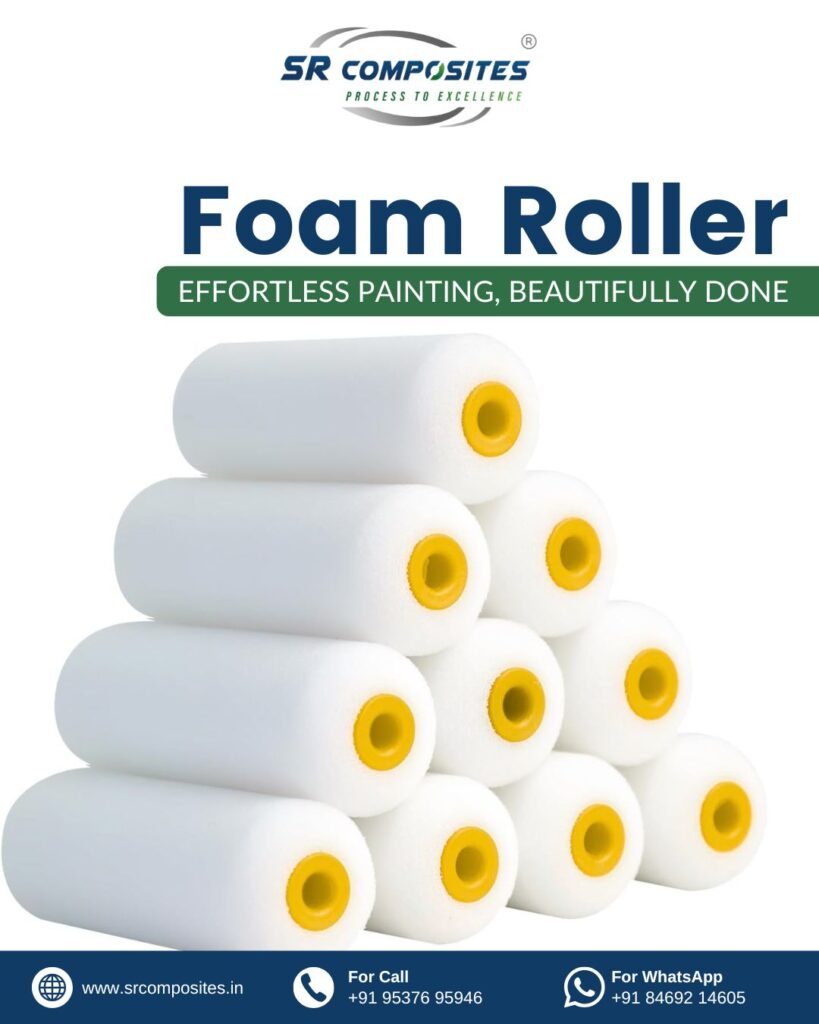
A foam-based paint roller is designed using high-density material that can absorb and release coating products evenly across a surface. Unlike traditional fabric alternatives, this type of applicator is specifically developed for smooth surfaces where a refined finish is required.
The structure of the foam allows controlled material transfer, helping users achieve a more uniform coating layer. This makes it particularly useful for projects where aesthetics, durability, and consistency are essential.
Professionals often choose this type of applicator because it delivers a cleaner finish while reducing common issues such as streaking, excessive texture, and uneven coverage. The result is a surface that looks more polished and professional.
Benefits of Using a Foam Roller
Smooth and Uniform Finish
One of the biggest advantages of a Foam Roller is its ability to create a smooth finish with minimal texture. The material distributes paint and coatings evenly, helping improve overall surface appearance.
Better Material Utilization
Efficient transfer of coating materials helps reduce waste during application. This not only lowers material costs but also contributes to a more controlled finishing process.
Improved Productivity
Professionals often prefer foam-based applicators because they enable faster coverage of large areas while maintaining finishing quality. This can significantly improve project efficiency.
Reduced Surface Imperfections
High-quality rollers help minimize streaks, bubbles, and visible application marks. As a result, surfaces require less rework and touch-up effort.
Versatile Performance
These tools can be used with a variety of materials, including paints, primers, sealants, adhesives, resins, and protective coatings, making them suitable for numerous industries.
Industrial and Commercial Applications
The use of foam-based rollers extends across several sectors due to their versatility and reliable performance.
In construction projects, they are commonly used for applying paints and decorative finishes on walls, ceilings, and interior surfaces. Furniture manufacturers rely on them to achieve premium finishes on wooden products and cabinetry.
The automotive sector frequently uses these rollers during refinishing and coating operations where surface quality is critical. Composite manufacturers also utilize them for resin distribution and laminate processing, helping improve product consistency.
Industrial coating applications represent another important area where these tools provide value. Protective coatings, corrosion-resistant layers, and specialty finishes often require controlled application methods that deliver uniform coverage.
For information on coating standards and industrial quality practices, readers can refer to the Government of India’s Bureau of Indian Standards (BIS):
https://www.bis.gov.in/
Choosing the Right Roller for Your Project
Selecting the appropriate finishing tool can directly impact coating quality and operational efficiency. Several factors should be considered before making a purchase decision.
Foam density plays an important role in determining finish quality and durability. Higher-density materials generally provide smoother results and longer service life. Roller size should also match the dimensions of the working surface to ensure effective coverage.
The compatibility of the applicator with the chosen coating material is equally important. Different paints, resins, and sealants may require specific material properties to achieve optimal performance.
By evaluating project requirements carefully, users can select a solution that delivers both efficiency and consistent finishing quality.
Why Surface Quality Matters
Surface finishing is often the first aspect of a product that customers notice. A smooth and professional appearance enhances perceived quality and contributes to overall customer satisfaction.
In manufacturing environments, consistent coating thickness can also improve durability, corrosion resistance, and long-term performance. Proper application techniques combined with high-quality tools help businesses reduce defects and maintain production standards.
Organizations worldwide continue to emphasize coating quality and process control. Additional technical resources related to manufacturing best practices can be found through the National Institute of Standards and Technology:
https://www.nist.gov/
Why Choose SR Composites
When sourcing industrial consumables and finishing products, reliability and consistency are essential. SR Composites has built a reputation for supplying quality solutions that support demanding manufacturing and finishing requirements.
The company focuses on delivering products that help customers achieve dependable performance, smoother finishes, and greater operational efficiency. Every product is developed with attention to quality, durability, and practical application requirements.
Customers choose SR Composites because of its commitment to product excellence, technical expertise, responsive support, and industry-focused solutions. Whether serving composite manufacturing, coating applications, or industrial finishing operations, the company prioritizes performance and customer satisfaction.
Explore additional solutions offered by SR Composites:
https://srcomposites.in/
Frequently Asked Questions (FAQs)
1. What is a Foam Roller used for?
A Foam Roller is primarily used for applying paint, varnish, resin, sealants, and other coatings smoothly and evenly. It helps achieve a professional finish with minimal texture and fewer visible application marks.
2. Why is a Foam Roller preferred over traditional paint rollers?
Foam rollers provide a smoother finish compared to many traditional fabric rollers. They help reduce streaks, splatter, and uneven coating distribution, making them ideal for surfaces that require a refined appearance.
3. Can Foam Rollers be used for industrial applications?
Yes. Foam rollers are widely used in industrial coating, composite manufacturing, automotive refinishing, furniture production, and construction projects where consistent coating application is essential.
4. Are Foam Rollers suitable for resin application?
Yes. Many composite manufacturers use foam rollers for resin distribution and laminate processing because they help ensure even material spread and improved surface quality.
5. How do Foam Rollers improve finishing quality?
The high-density foam structure allows coatings to be applied uniformly, reducing bubbles, streaks, and surface imperfections. This results in a smoother and more professional finish.
6. What surfaces can be coated using a Foam Roller?
Foam rollers can be used on walls, furniture, metal components, composite parts, doors, cabinets, and various smooth surfaces that require high-quality finishing.
7. How do I choose the right Foam Roller?
The right roller depends on factors such as foam density, roller size, coating material, and application requirements. Selecting a high-quality product helps ensure better performance and durability.
8. Are Foam Rollers reusable?
Many foam rollers can be reused if cleaned properly after use. However, reuse depends on the type of coating material applied and the condition of the roller after cleaning.
9. Do Foam Rollers reduce paint and coating waste?
Yes. Their efficient absorption and release properties help improve material utilization, reducing excess consumption and improving application efficiency.
10. Why choose SR Composites for Foam Rollers?
SR Composites offers reliable, high-quality finishing and composite consumable solutions designed for professional and industrial applications. Customers trust SR Composites for consistent product quality, performance, and technical expertise.
Conclusion
A Foam Roller remains one of the most effective tools for achieving smooth, consistent, and professional-quality finishes across a wide range of applications. From construction and furniture manufacturing to automotive refinishing and industrial coating projects, its ability to improve surface appearance and application efficiency makes it a valuable asset.
By selecting high-quality products and partnering with trusted suppliers such as SR Composites, businesses can enhance productivity, reduce waste, and achieve superior finishing results. Investing in the right application tools ultimately contributes to better product quality, improved customer satisfaction, and long-term operational success. In manufacturing, a high-performance Foam Roller remains a valuable investment in quality, productivity, and customer satisfaction.