7 Extension Pole: Reach Higher, Work Smarter with Safe & Efficient Access Solutions
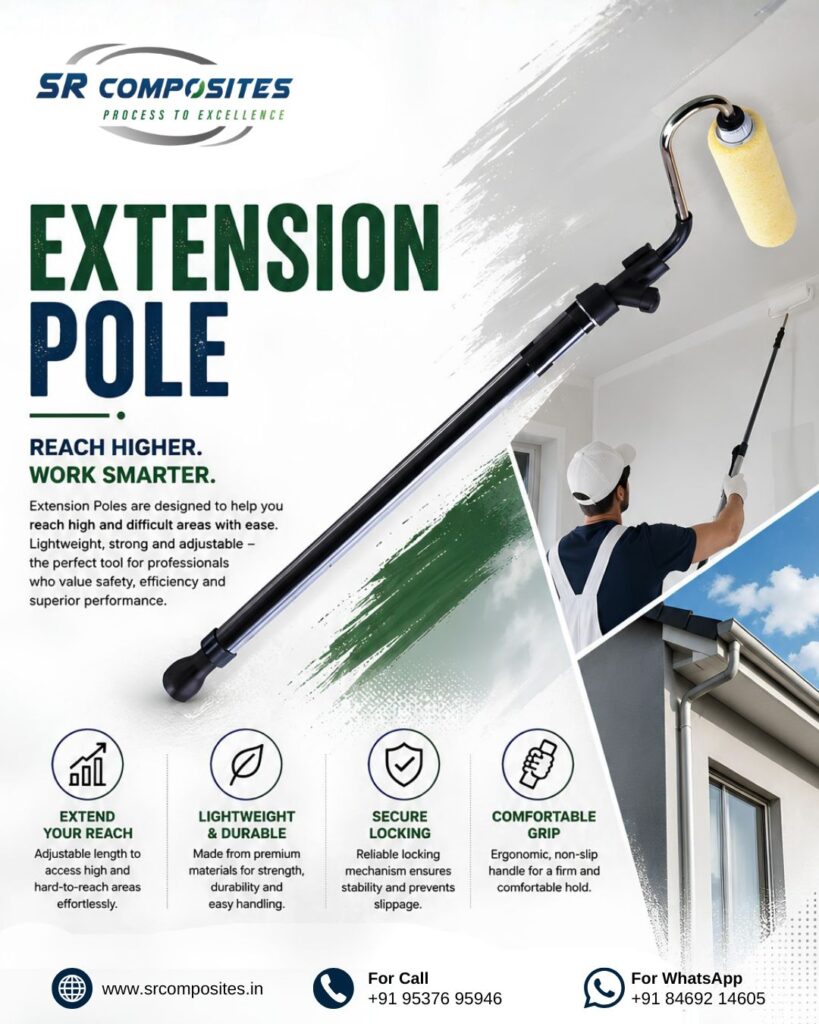
Table of Contents Introduction Discover the benefits of Extension Poles designed for painting, cleaning, maintenance, and hard-to-reach tasks. Lightweight, durable, adjustable, and safe for professional and residential applications. Extension Poles are essential tools designed to help users safely reach high, difficult, or inaccessible areas without the need for ladders or scaffolding. Whether used for painting walls and ceilings, cleaning windows, maintaining buildings, or performing inspection tasks, extension poles improve efficiency, safety, and convenience. Extension Pole Modern extension poles are engineered using lightweight yet durable materials, making them easy to handle while providing the strength required for professional applications. What is an Extension Pole? An Extension Pole is an adjustable telescopic rod that extends the reach of tools such as paint rollers, brushes, cleaning attachments, dusters, squeegees, and inspection equipment. The pole can be extended or shortened according to the working height, allowing users to perform tasks safely from the ground while maintaining control and stability. Key Features of Extension Poles Adjustable Reach The telescopic design allows users to extend the pole to various lengths for accessing ceilings, walls, roofs, gutters, and elevated surfaces. Lightweight Construction Manufactured using lightweight materials for comfortable operation and reduced user fatigue. High Strength and Durability Built to withstand demanding professional and industrial applications while maintaining structural integrity. Secure Locking Mechanism Reliable locking systems keep the pole firmly in place during use and prevent accidental collapse. Comfortable Grip Ergonomic handles provide a secure and non-slip grip for better control and user comfort. Easy Tool Compatibility Compatible with a wide range of painting, cleaning, and maintenance accessories. Corrosion Resistant Design Suitable for indoor and outdoor environments where long-lasting performance is required. Technical Specifications Property Specification Product Type Extension Pole Material Aluminum / SRComposite Material Design Telescopic Weight Lightweight Reach Adjustment Adjustable Length Locking System Secure Locking Mechanism Grip Type Ergonomic Non-Slip Grip Corrosion Resistance High Application Painting, Cleaning, Maintenance Durability Excellent Applications of Extension Poles Painting Projects Ideal for painting ceilings, walls, high surfaces, and exterior building structures. Window Cleaning Allows safe cleaning of high windows without requiring ladders. Building Maintenance Used for inspections, repairs, dust removal, and maintenance work. Gutter Cleaning Provides access to roof gutters while keeping operators safely on the ground. Commercial Cleaning Useful for cleaning warehouses, shopping centers, offices, and industrial facilities. Residential Use Suitable for home improvement projects and routine household maintenance. Industrial Applications Used in factories, plants, and large facilities requiring elevated access solutions. Benefits of Using an Extension Pole Enhanced Safety Reduces the need for ladders and minimizes the risk of falls. Increased Productivity Allows users to complete tasks faster with less setup time. Cost-Effective Solution Eliminates the need for expensive access equipment for many routine jobs. Improved Reach Provides convenient access to hard-to-reach areas. Better Work Quality Maintains consistent control over tools even at extended heights. Reduced Physical Strain Lightweight construction helps reduce fatigue during prolonged use. How to Choose the Right Extension Pole Consider Required Reach Select a pole length that matches your typical working height requirements. Check Material Quality Choose poles made from durable materials such as aluminum or composite materials. Evaluate Locking Mechanism Ensure the locking system is reliable and easy to operate. Verify Tool Compatibility Confirm compatibility with your existing tools and attachments. Assess User Comfort Look for ergonomic grips and lightweight designs for extended usage. Maintenance and Safety Tips Inspect Before Use Check the pole regularly for damage, wear, or loose locking components. Clean After Operation Remove dirt, paint residue, and debris after each use. Store Properly Keep the extension pole in a dry and protected location. Avoid Overloading Use only compatible tools and avoid exceeding the recommended load capacity. Secure Locking Sections Always verify that all telescopic sections are properly locked before use. Why Choose a Quality Extension Pole? A premium-quality extension pole provides durability, reliability, and superior user safety. Professional users prefer high-performance extension poles because they offer: These advantages make extension poles an essential tool across residential, commercial, and industrial environments. Frequently Asked Questions What is an extension pole used for? Extension poles are used to extend the reach of painting, cleaning, maintenance, and inspection tools. Can extension poles replace ladders? For many tasks, extension poles reduce or eliminate the need for ladders, improving safety and convenience. Are extension poles adjustable? Yes, most extension poles feature telescopic designs that allow length adjustment. What materials are commonly used? Aluminum, fiberglass, and composite materials are commonly used for strength and lightweight performance. Can extension poles be used outdoors? Yes, they are suitable for outdoor painting, cleaning, maintenance, and inspection applications. How do I maintain an extension pole? Regular cleaning, proper storage, and inspection of locking mechanisms help ensure long-term performance. Conclusion Extension Poles provide a practical, safe, and efficient solution for reaching elevated areas during painting, cleaning, maintenance, and inspection work. Their lightweight construction, adjustable reach, secure locking systems, and durable design make them valuable tools for professionals and homeowners alike. By investing in a high-quality extension pole, users can improve productivity, reduce physical strain, and complete tasks safely while achieving better results across a wide range of applications. Check this :- https://www.indiamart.com/
7 Knitted Infusion Mesh 160 GSM: Optimized Resin Flow for Superior Composite Manufacturing
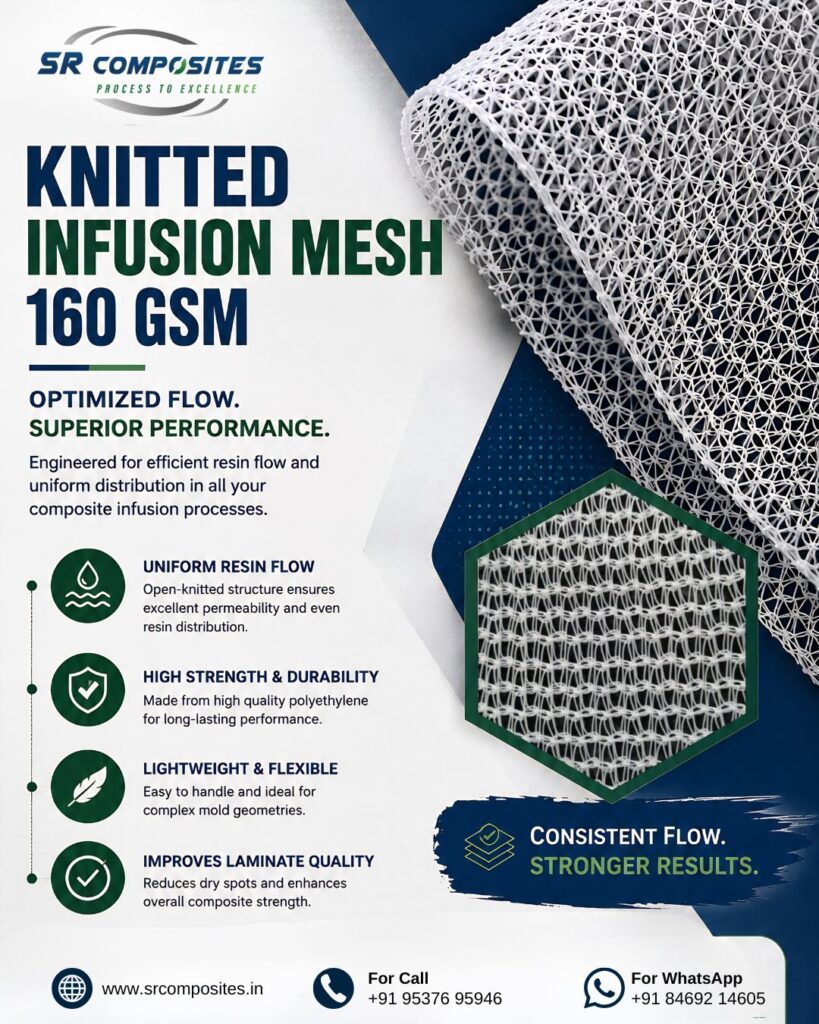
Table of Contents Introduction Explore the benefits of Knitted Infusion Mesh 160 GSM for composite manufacturing. Designed for uniform resin flow, improved laminate quality, high durability, and efficient vacuum infusion processes. Knitted Infusion Mesh 160 GSM is a specialized flow media designed to optimize resin distribution during vacuum infusion and composite manufacturing processes. Its open-knitted structure enables fast and uniform resin flow, ensuring complete wet-out of reinforcement materials while reducing dry spots and manufacturing defects. Manufacturers in industries such as aerospace, marine, automotive, wind energy, and industrial srcomposites rely on knitted infusion mesh to achieve consistent laminate quality and enhanced production efficiency. What is Knitted Infusion Mesh 160 GSM? Knitted Infusion Mesh 160 GSM is a lightweight yet durable polyethylene-based mesh used during vacuum resin infusion processes. The mesh acts as a flow medium that accelerates resin movement across the laminate surface, helping resin reach all areas uniformly. Its carefully engineered knitted structure provides excellent permeability while maintaining flexibility for use on complex mold geometries. check this :- https://www.indiamart.com/ Key Features of Knitted Infusion Mesh 160 GSM Uniform Resin Flow The open-knitted construction promotes excellent permeability and ensures even resin distribution throughout the laminate. High Strength and Durability Manufactured using premium-quality polyethylene material for reliable performance during demanding infusion operations. Lightweight and Flexible The mesh is lightweight, easy to handle, and conforms easily to curved and complex mold surfaces. Improved Laminate Quality Reduces the possibility of dry spots, voids, and uneven resin saturation, resulting in stronger composite structures. Optimized Manufacturing Efficiency Accelerates resin flow and helps reduce production cycle times. Excellent Permeability Designed to provide consistent resin movement over large surface areas. Easy Removal After Curing Can be removed efficiently after the composite curing process when used with appropriate peel ply systems. Technical Specifications Property Specification Product Type Knitted Infusion Mesh GSM 160 GSM Material Polyethylene (PE) Structure Open-Knitted Mesh Flexibility High Resin Flow Rate Excellent Durability High Weight Lightweight Application Vacuum Infusion Process Compatibility Various Resin Systems Applications of Knitted Infusion Mesh Marine Industry Used in boat hulls, decks, and marine composite structures requiring uniform resin distribution. Wind Energy Components Ideal for manufacturing large wind turbine blades and composite structures. Automotive Industry Supports lightweight composite part production with improved structural integrity. Aerospace Components Used in advanced composite manufacturing where precision and consistency are critical. Industrial Composite Products Suitable for tanks, panels, covers, ducts, and custom composite components. Construction and Infrastructure Helps manufacture high-strength composite structures used in construction projects. Benefits in Composite Manufacturing Faster Resin Infusion The mesh significantly improves resin flow speed across the laminate surface. Reduced Dry Spots Ensures complete resin saturation and minimizes manufacturing defects. Improved Structural Strength Uniform resin distribution results in stronger and more reliable composite products. Better Production Consistency Provides repeatable results across multiple manufacturing cycles. Lower Material Waste Efficient resin utilization helps reduce excess material consumption. How Knitted Infusion Mesh Improves Resin Distribution During vacuum infusion, resin must travel quickly and evenly throughout the laminate. Knitted Infusion Mesh creates dedicated flow channels that allow resin to spread efficiently over large areas. This controlled flow mechanism: Installation and Usage Guidelines Prepare the Mold Surface Ensure the mold surface is clean and properly prepared before layup. Position Reinforcement Materials Place fiberglass, carbon fiber, or reinforcement fabrics according to design requirements. Install Infusion Mesh Lay the knitted infusion mesh evenly across the laminate surface. Set Vacuum Bagging Components Install peel ply, vacuum bag film, spiral tubing, and vacuum connectors. Monitor Resin Flow Observe resin distribution to ensure complete wet-out throughout the laminate. Remove After Processing After curing, remove the mesh and associated consumables as required. Why Choose 160 GSM Knitted Infusion Mesh? Knitted Infusion Mesh 160 GSM offers an ideal balance of permeability, strength, flexibility, and handling convenience. Its engineered structure helps manufacturers achieve: These advantages make it an essential consumable in modern composite manufacturing processes. Frequently Asked Questions What is the purpose of Knitted Infusion Mesh? It acts as a flow medium that helps resin spread quickly and evenly during vacuum infusion. Why is 160 GSM commonly used? 160 GSM provides an excellent balance between flow efficiency, flexibility, and durability. Which industries use infusion mesh? Marine, aerospace, automotive, wind energy, industrial composites, and construction industries commonly use it. Does infusion mesh improve laminate quality? Yes, it reduces dry spots and promotes uniform resin saturation, improving overall laminate strength. Is the mesh compatible with different resin systems? Yes, it is generally compatible with polyester, vinyl ester, and epoxy resin systems. Can it be used on complex molds? Yes, its flexible knitted construction allows easy adaptation to curved and intricate mold geometries. Conclusion Knitted Infusion Mesh 160 GSM is a critical component in vacuum infusion and composite manufacturing processes. Its open-knitted structure enables efficient resin flow, ensuring complete laminate wet-out and improved product quality. With advantages such as high durability, lightweight construction, superior permeability, and enhanced laminate performance, this infusion mesh helps manufacturers achieve consistent results while improving productivity and reducing defects. For industries demanding precision and reliability in composite production, Knitted Infusion Mesh 160 GSM remains an excellent solution.
5 Powerful Benefits of PA Vap Membrane 120 GSM for Advanced Moisture Control
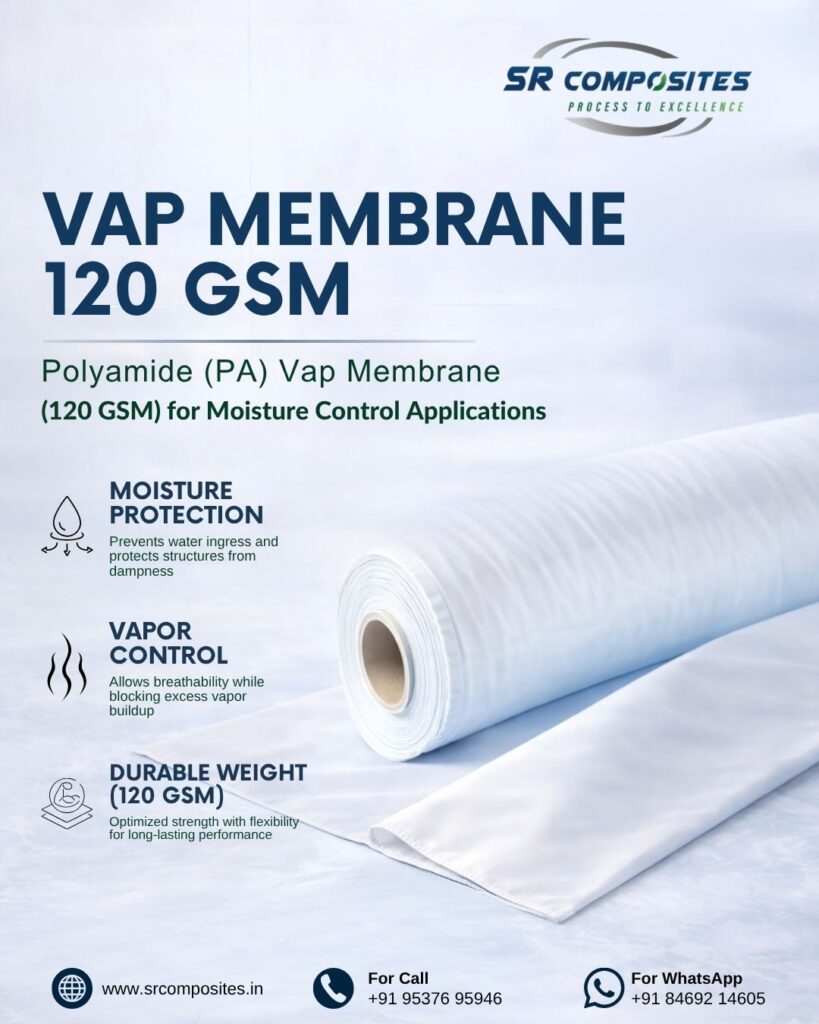
Introduction: PA Vap Membrane 120 GSM for Reliable Moisture Management PA Vap Membrane 120 GSM is an advanced moisture control solution designed to improve performance, durability, and efficiency in composite manufacturing and industrial applications. Developed using high-quality polyamide materials, this membrane provides excellent vapor regulation while preventing unwanted moisture penetration during processing and application. In composite industries, controlling moisture and air movement plays a crucial role in achieving strong, lightweight, and defect-free structures. A properly designed vapor membrane helps maintain consistent processing conditions, improves surface quality, and enhances the overall reliability of composite components. SR Composites manufactures high-performance composite consumables and solutions that support industries such as aerospace, automotive, marine, wind energy, and industrial manufacturing. With advanced material technology and quality-focused production, the company delivers products that meet demanding application requirements. You can explore more about composite materials and their applications through resources provided by the Ministry of Micro, Small & Medium Enterprises (MSME), Government of India. Understanding PA Vap Membrane 120 GSM and Its Importance A PA Vap Membrane 120 GSM is a specialized polyamide-based membrane used for controlling vapor transmission and protecting composite structures from moisture-related issues. GSM refers to grams per square meter, which indicates the weight and thickness characteristics of the material. The 120 GSM structure provides an ideal balance between flexibility, strength, and handling convenience. It allows manufacturers to achieve efficient processing without compromising durability. During composite manufacturing, trapped moisture or excessive vapor can affect resin curing, surface finish, and mechanical performance. A reliable vapor membrane helps maintain controlled conditions by allowing necessary breathability while reducing moisture-related problems. This makes it an essential component for vacuum infusion, resin transfer processes, and various composite fabrication techniques. Why Choose PA Vap Membrane 120 GSM for Composite Applications? Composite manufacturing requires precision, quality materials, and reliable process control. Choosing the right membrane can significantly influence the final product quality. Superior Moisture Protection One of the major advantages of PA Vap Membrane 120 GSM is its ability to provide effective moisture protection. It acts as a controlled barrier that reduces unwanted water and vapor penetration, helping protect composite structures from environmental damage. Moisture control is especially important in applications where components are exposed to changing temperatures, humidity, and demanding operating environments. Proper protection increases product life and reduces maintenance requirements. Excellent Vapor Control Performance Composite manufacturing processes often require controlled airflow and vapor management. This membrane supports controlled vapor movement while preventing excessive buildup. The balanced permeability characteristics help manufacturers achieve better curing conditions and improved final product consistency. This feature makes it suitable for industries where precision and performance are critical. Strong Yet Flexible Material Design The 120 GSM construction provides excellent strength without making the material difficult to handle. Its flexibility allows easy placement over different shapes and complex geometries. This advantage is valuable in composite manufacturing because many components involve curved surfaces, customized designs, and detailed structures. Improved Manufacturing Efficiency Using a high-quality membrane helps reduce production challenges caused by moisture and processing variations. Better process control leads to improved efficiency, fewer defects, and consistent output quality. For manufacturers working with advanced composites, selecting dependable consumables is an important step toward achieving better production results. Applications of PA Vap Membrane 120 GSM The versatility of PA Vap Membrane 120 GSM allows it to be used across multiple industries where composite performance and moisture management are important. Common applications include: Each industry demands materials that provide reliability, durability, and consistent performance. Polyamide vapor membranes help manufacturers maintain these standards by supporting controlled processing environments. Why Choose Composite Materials for Modern Manufacturing? Composite materials have become increasingly popular because they offer a combination of strength, lightweight construction, corrosion resistance, and design flexibility. Compared with traditional materials, composites can provide better strength-to-weight ratios, allowing engineers to create efficient structures without unnecessary weight. This makes them valuable in transportation, renewable energy, construction, and advanced engineering applications. Choosing the right composite consumables is equally important because even high-quality composite materials require proper processing conditions. Products such as vacuum bags, release films, peel ply, breather fabrics, and vapor membranes contribute significantly to achieving high-quality finished components. SR Composites focuses on delivering dependable composite processing solutions that help manufacturers improve productivity and product performance. Key Advantages of Using PA Vap Membrane 120 GSM The important benefits of this membrane include: These advantages make it a practical choice for manufacturers looking for reliable moisture management solutions. Technical Importance in Composite Processing During composite production, maintaining proper environmental conditions is essential. Excess moisture can create issues such as weak bonding, surface imperfections, and reduced mechanical strength. A well-designed vapor membrane helps maintain process stability by managing moisture movement throughout manufacturing. The polyamide structure provides durability while supporting efficient composite processing. For technical information regarding composite materials and industrial standards, manufacturers can also refer to resources from National Institute of Standards and Technology (NIST). How SR Composites Supports Quality Composite Manufacturing SR Composites provides a wide range of composite consumables designed for professional manufacturing requirements. The company focuses on quality materials, reliable performance, and customer-oriented solutions. From vapor membranes to other composite processing products, SR Composites helps industries achieve better production outcomes with materials designed for accuracy and durability. Frequently Asked Questions (FAQs) What is PA Vap Membrane 120 GSM used for? PA Vap Membrane 120 GSM is used for moisture protection and vapor control during composite manufacturing processes. It helps maintain controlled conditions and improves the quality of finished composite components. Why is 120 GSM important in a vapor membrane? The 120 GSM specification provides a balanced combination of strength, flexibility, and easy handling. It offers durability while remaining suitable for different composite applications. Can PA Vap Membrane 120 GSM be used in aerospace applications? Yes, polyamide vapor membranes are commonly used in industries requiring high-performance composite manufacturing, including aerospace applications where moisture control and process reliability are important. How does a vapor membrane improve composite quality? A vapor membrane helps reduce moisture-related defects, supports better curing conditions, and improves manufacturing consistency. Why choose
7 PVC Steel Wire Hose Pipe: Durable, Flexible & High-Performance Industrial Hose Solution
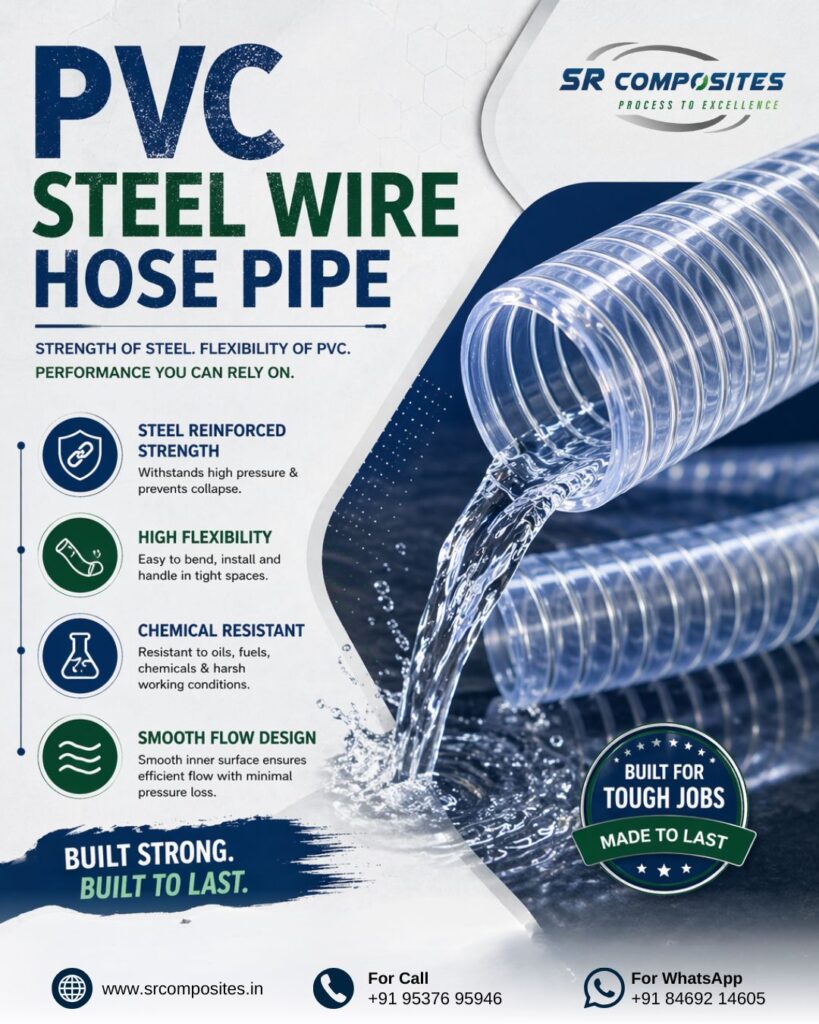
Table of Contents Introduction Discover the benefits of PVC Steel Wire Hose Pipes, including superior strength, flexibility, chemical resistance, and efficient flow performance. Ideal for industrial, agricultural, and commercial applications. PVC Steel Wire Hose Pipe is a highly durable and flexible hose designed to handle demanding industrial, agricultural, and commercial applications. Manufactured using premium-grade transparent PVC reinforced with high-tensile steel wire, these hoses provide excellent pressure resistance while maintaining flexibility for easy installation and operation. srcomposites The combination of steel strength and PVC flexibility makes these hoses suitable for transporting water, chemicals, oils, fuels, powders, and other materials under challenging working conditions. Check this :- https://www.bis.gov.in/ What is a PVC Steel Wire Hose Pipe? A PVC Steel Wire Hose Pipe is a transparent flexible hose reinforced with a spiral steel wire embedded within the PVC wall. This reinforcement improves structural strength and prevents the hose from collapsing under suction or high-pressure conditions. The transparent construction allows users to monitor fluid flow, while the steel wire reinforcement enhances durability and service life. Key Features of PVC Steel Wire Hose Pipe Steel Reinforced Strength The embedded high-tensile steel wire provides exceptional resistance against pressure and vacuum conditions. It prevents collapse and deformation during operation. High Flexibility Despite its reinforced construction, the hose remains highly flexible, making it easy to bend, install, and maneuver in confined spaces. Chemical Resistant Construction PVC Steel Wire Hose Pipes are resistant to a wide range of chemicals, oils, fuels, and industrial fluids, ensuring long-term performance. Smooth Flow Design The smooth internal surface minimizes friction loss and promotes efficient fluid transfer with consistent flow rates. Transparent Body The clear PVC structure enables visual inspection of material flow and helps detect blockages quickly. Lightweight Yet Durable Compared to metal piping systems, these hoses are lightweight, easy to handle, and highly durable. Excellent Weather Resistance Suitable for indoor and outdoor use, offering reliable performance under varying environmental conditions. Technical Specifications Table Feature Specification Material Premium PVC Reinforcement High Tensile Steel Wire Color Transparent Flexibility High Pressure Resistance Excellent Vacuum Resistance Excellent Chemical Resistance High Temperature Resistance Moderate to High Flow Surface Smooth Interior Applications Water, Chemicals, Oils, Fuels Applications of PVC Steel Wire Hose Pipe Industrial Fluid Transfer Widely used in factories and manufacturing plants for transferring liquids and chemicals safely. Water Suction and Delivery Suitable for irrigation systems, water pumps, and agricultural operations. Chemical Processing Plants Used for handling various industrial chemicals due to its corrosion-resistant properties. Oil and Fuel Transfer Can efficiently transport oils and fuels without compromising hose integrity. Construction Industry Ideal for water transportation, dewatering operations, and site fluid management. Food and Beverage Industry Certain food-grade variants can be used for liquid food transfer applications. Mining and Engineering Projects Provides reliable performance in demanding industrial environments. Advantages Over Traditional Hoses PVC Steel Wire Hose Pipe Traditional Rubber Hose Transparent Design Opaque Lightweight Heavy High Flexibility Moderate Excellent Vacuum Resistance Limited Corrosion Resistant May Degrade Over Time Easy Inspection Difficult Inspection Long Service Life Moderate Service Life Installation and Maintenance Tips Proper Storage Store hoses in a cool, dry location away from direct sunlight when not in use. Avoid Excessive Bending Maintain recommended bend radius to prevent unnecessary stress on the hose. Regular Inspection Inspect periodically for wear, damage, or blockage to ensure optimal performance. Use Suitable Connectors Always use compatible fittings and connectors for secure operation. Clean After Chemical Use Flush thoroughly after transferring chemicals to extend hose lifespan. Why Choose PVC Steel Wire Hose Pipes? PVC Steel Wire Hose Pipes offer the perfect balance between durability, flexibility, and performance. Their reinforced structure enables reliable operation in high-pressure and vacuum environments while maintaining ease of use. Industries prefer these hoses because they: Frequently Asked Questions (FAQs) What is the main advantage of a PVC Steel Wire Hose Pipe? Its steel wire reinforcement provides superior strength while maintaining excellent flexibility. Can PVC Steel Wire Hose Pipes handle chemicals? Yes, they offer excellent resistance to many industrial chemicals, oils, and fuels. Are these hoses suitable for suction applications? Yes, the steel wire reinforcement prevents collapse during vacuum and suction operations. Can the hose be used outdoors? Yes, it is suitable for both indoor and outdoor applications when used within recommended operating conditions. Is the hose transparent? Yes, most PVC Steel Wire Hose Pipes feature a transparent design that allows easy monitoring of fluid flow. What industries commonly use these hoses? Agriculture, manufacturing, chemical processing, construction, mining, and fluid transfer industries commonly use them. Conclusion PVC Steel Wire Hose Pipe is an advanced hose solution designed for industries that require strength, flexibility, and dependable performance. Its steel-reinforced construction ensures excellent pressure and vacuum resistance, while the smooth interior surface promotes efficient flow with minimal pressure loss. Whether used for water transfer, chemical handling, oil movement, or industrial fluid transportation, PVC Steel Wire Hose Pipes deliver long-lasting durability and reliable operation. Investing in a high-quality PVC Steel Wire Hose Pipe can significantly improve efficiency, safety, and productivity across various industrial applications.
7 Powerful Benefits of Handy Paint Tray for Easy & Efficient Painting
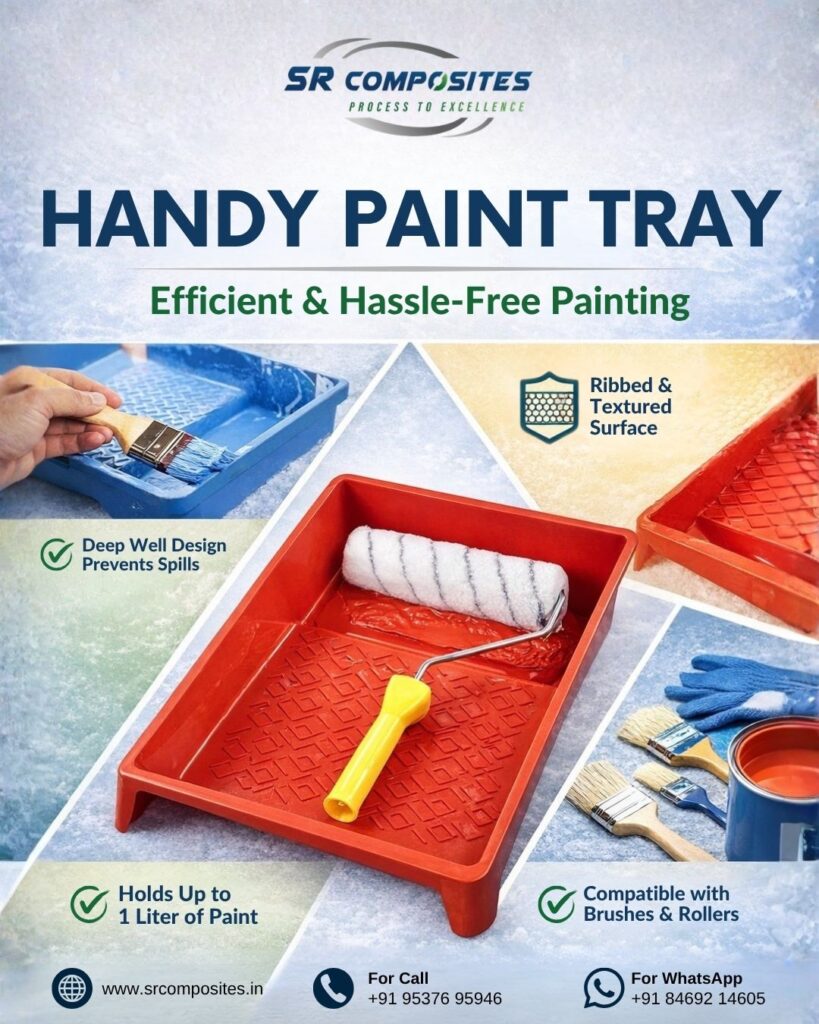
Table of Contents Introduction to Handy Paint Tray Handy Paint Tray is an essential painting accessory designed to make painting projects cleaner, faster, and more convenient. Whether you are a professional painter, contractor, industrial user, or a homeowner working on a DIY project, having the right painting tools can significantly improve the final result. A well-designed paint tray helps in maintaining proper paint distribution, reducing wastage, and providing a smooth painting experience. Traditional painting methods often create problems such as paint spills, uneven coating, and difficulty in handling rollers or brushes. A high-quality Handy Paint Tray solves these challenges with its deep well design, textured rolling surface, and durable construction. It allows painters to load the perfect amount of paint onto rollers while preventing unnecessary dripping and mess. SR Composites manufactures reliable composite products that focus on durability, performance, and user convenience. The company provides innovative solutions for different industries by combining advanced materials with practical designs. You can explore more about industrial composite solutions through the official website of SR Composites. Why Choose a Composite Handy Paint Tray? Composite materials have become popular across industries because of their excellent strength, lightweight nature, and resistance properties. Choosing a composite-based Handy Paint Tray provides better performance compared to ordinary plastic alternatives. Composite products are designed to withstand regular usage while maintaining their shape and quality for a longer period. During painting work, tools are exposed to different paint types, cleaning chemicals, moisture, and rough handling. A composite tray offers improved durability and reliability. The advantages of choosing composite manufacturing include: According to the United States Department of Energy – Composite Materials Information, composite materials are widely used because of their lightweight properties and enhanced performance characteristics. Features That Make Handy Paint Tray a Smart Choice A professionally designed Handy Paint Tray includes multiple features that improve painting efficiency. SR Composites focuses on creating products that support smooth workflow and user comfort. The deep well structure allows the tray to hold sufficient paint capacity, reducing the need for frequent refilling. The textured surface helps remove excess paint from rollers and ensures an even coating during application. Some important features include: Durable Composite Construction The strong composite material helps the tray maintain its structure even during continuous usage. It is suitable for painters who require dependable tools for multiple projects. Deep Well Design for Better Paint Storage The deep reservoir design prevents frequent paint refilling and helps reduce spills while moving the tray from one place to another. Ribbed and Textured Rolling Surface The textured area allows rollers to distribute paint evenly. This feature helps achieve smoother finishes on walls, furniture, and industrial surfaces. Compatible with Brushes and Rollers The versatile design makes it suitable for different painting tools, allowing users to switch between brushes and rollers easily. Lightweight and Easy to Handle Despite being strong and durable, the tray remains convenient to carry, making it useful for residential as well as commercial painting applications. Applications of Handy Paint Tray in Different Painting Projects A Handy Paint Tray is useful in various painting environments because of its practical design and easy operation. From small home improvement projects to professional construction work, this tool helps painters achieve better productivity. Homeowners can use it for wall painting, furniture renovation, decorative painting, and maintenance projects. Professional painters benefit from its efficient design during large-scale painting jobs where speed and accuracy are important. Industries, workshops, and contractors also require reliable painting accessories that can handle regular usage. A durable paint tray helps maintain workflow efficiency and reduces interruptions caused by damaged or unsuitable tools. Common applications include: Why SR Composites is the Preferred Manufacturer SR Composites focuses on delivering quality-driven composite products designed according to practical industry requirements. With experience in composite manufacturing, the company develops solutions that combine durability, functionality, and cost efficiency. The company understands that every product must provide value through better performance and longer service life. The Handy Paint Tray reflects this approach by offering a convenient design suitable for both professional and personal painting needs. Customers looking for reliable composite solutions can also explore other products and services offered by SR Composites through internal resources available on the website, including innovative composite manufacturing solutions. The company’s commitment includes: Frequently Asked Questions About Handy Paint Tray 1. What is a Handy Paint Tray used for? A Handy Paint Tray is used to hold paint while using rollers or brushes. It helps painters apply paint evenly, reduce wastage, and maintain a cleaner working area. 2. Why should I choose a composite Handy Paint Tray? A composite Handy Paint Tray provides better durability, strength, and resistance compared to standard trays. It is suitable for repeated painting tasks and professional applications. 3. How much paint can the SR Composites tray hold? The SR Composites paint tray is designed with a deep well structure that can hold a significant amount of paint, helping users complete painting tasks efficiently. 4. Can this paint tray be used with different rollers and brushes? Yes, the Handy Paint Tray is compatible with different types of brushes and rollers, making it suitable for various painting projects. 5. How do I clean a Handy Paint Tray after use? The tray can be cleaned by removing leftover paint and washing it with suitable cleaning methods, depending on the type of paint used. Conclusion A quality Handy Paint Tray plays an important role in achieving professional painting results. Its smart design, durable construction, deep paint capacity, and user-friendly features make it a valuable tool for painters, contractors, and DIY users. Choosing a composite-based product from SR Composites ensures better durability, convenience, and long-term performance. With increasing demand for efficient painting solutions, a reliable paint tray helps save time, reduce waste, and improve overall productivity. For anyone looking for a practical and durable painting accessory, SR Composites’ Handy Paint Tray is an excellent choice for achieving smooth, efficient, and hassle-free painting results.
7 Powerful Benefits of Sealant Tape for Reliable Cold Condition Sealing
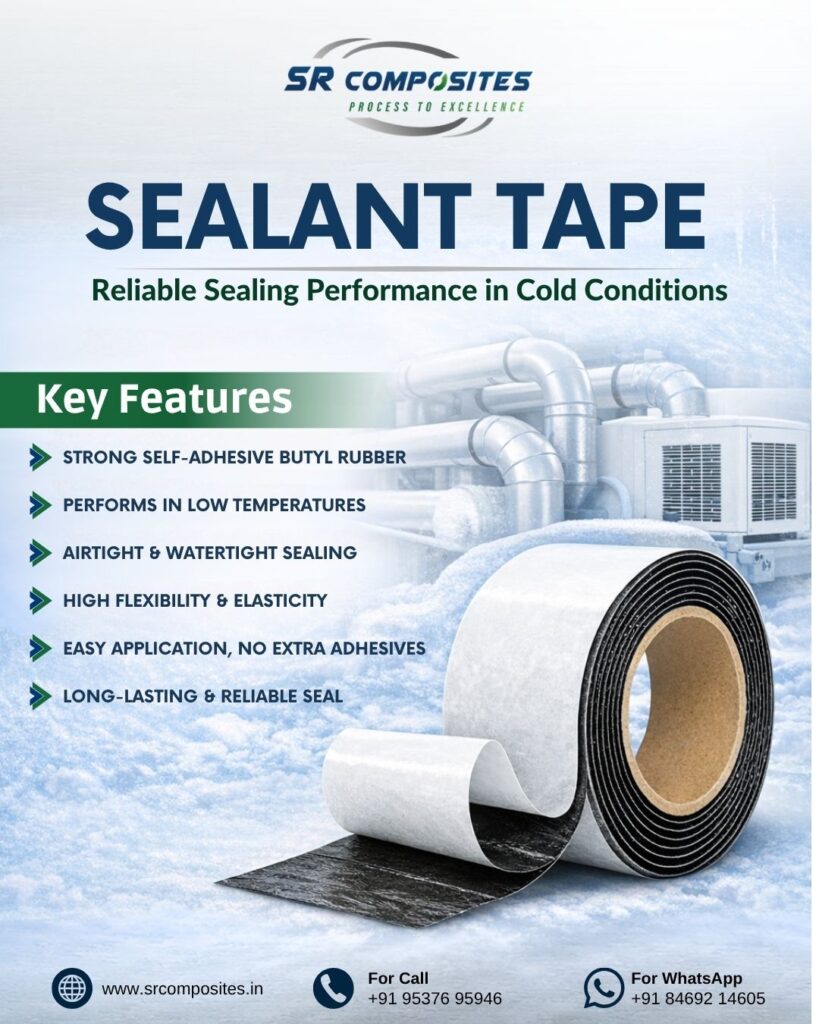
When industries require dependable protection against moisture, air leakage, and temperature changes, Sealant Tape becomes an essential material for creating strong and durable joints. Designed with advanced butyl rubber technology, this sealing solution provides excellent bonding strength, flexibility, and resistance in demanding environments. SR Composites offers high-performance sealing materials designed for industrial applications where reliability and long service life are important. The self-adhesive design makes installation simple while creating a secure barrier against water, air, and environmental exposure. From HVAC systems and insulation projects to composite manufacturing and construction applications, modern sealing products help improve efficiency and reduce maintenance requirements. Choosing the right material ensures better protection and long-lasting performance. Why Sealant Tape Is Important for Industrial Applications Industrial environments often experience challenges such as temperature fluctuations, vibration, moisture exposure, and surface movement. Ordinary sealing methods may lose their effectiveness over time, resulting in leakage problems and increased maintenance costs. A high-quality butyl rubber sealing material provides excellent adhesion and flexibility, allowing it to maintain a strong connection between different surfaces. Its ability to adjust with surface movement makes it suitable for applications where durability is required. According to technical information provided by the National Institute of Standards and Technology, material selection plays an important role in achieving reliable performance in engineering applications. Key Features of Sealant Tape The advanced construction of this sealing product provides multiple benefits for professional users. Excellent Adhesion and Strong Bonding The butyl rubber layer offers powerful bonding capability on different surfaces, reducing the chances of separation. The self-stick design eliminates the need for additional adhesive materials and helps improve installation efficiency. Reliable Performance in Low Temperatures Cold environments can affect the flexibility of many sealing materials. This product is specially developed to maintain its sealing ability even under low-temperature conditions, making it suitable for refrigeration, outdoor insulation, and cold storage applications. Airtight and Waterproof Protection A major requirement in industrial sealing is preventing unwanted air and moisture penetration. The strong protective layer helps maintain airtight and watertight performance, protecting structures from possible damage. Flexible Design for Surface Movement Expansion, contraction, and vibration can affect joints and connections. The elastic nature of this material allows it to adapt to movement while maintaining a continuous protective seal. Simple Installation Process The self-adhesive structure makes application faster and easier. Users can apply the material directly after proper surface preparation, reducing installation time and labor requirements. Long-Term Durability Industrial projects require materials that provide consistent performance over extended periods. High-quality sealing products help reduce replacement frequency and improve overall system reliability. Industrial Applications and Uses Advanced sealing materials are used across various industries because of their ability to provide protection and reliability. In HVAC and insulation systems, these products help reduce air leakage and improve energy efficiency. Construction companies use them for protecting joints, panels, and connections against moisture penetration. Composite manufacturers also depend on reliable sealing solutions during production processes where controlled environments and material protection are required. Common applications include: Why Choose SR Composites for Your Sealing Requirements? SR Composites is focused on providing quality composite materials and industrial solutions that meet modern manufacturing requirements. The company combines technical expertise with reliable production standards to deliver products suitable for professional applications. The right sealing material improves product life, reduces maintenance needs, and supports better performance in challenging conditions. SR Composites develops solutions that focus on durability, ease of use, and consistent quality. Explore more industrial solutions from SR Composites here:SR Composites Official Website Advantages of Composite-Compatible Sealing Materials Composite structures are widely used because they provide excellent strength, lightweight performance, and resistance to environmental conditions. Using compatible sealing materials helps manufacturers maintain structural protection and improve reliability. Organizations involved in advanced engineering applications, including Indian Space Research Organisation (ISRO), use composite materials because of their high-performance characteristics. Selecting suitable sealing solutions for composite applications supports better manufacturing results and improved product durability. How to Apply for Maximum Performance Proper installation plays an important role in achieving the best sealing results. Before application: Following correct installation practices helps achieve better adhesion and longer service performance. Frequently Asked Questions What is Sealant Tape used for? It is used for creating protective seals in construction, insulation, HVAC, automotive, and industrial applications where resistance against moisture and air leakage is required. Can this sealing material work in cold environments? Yes, specially designed butyl rubber-based products maintain flexibility and bonding strength even in low-temperature conditions. Is it suitable for waterproof applications? Yes, the material provides strong resistance against water penetration and helps protect surfaces from moisture-related problems. Why is butyl rubber preferred for sealing products? Butyl rubber provides excellent flexibility, durability, and resistance against environmental changes, making it suitable for long-lasting sealing applications. Why select SR Composites products? SR Composites provides industrial-grade solutions developed for reliability, easy application, and consistent performance. Conclusion Reliable sealing plays an important role in improving the safety, efficiency, and durability of industrial systems. A well-designed sealing solution helps prevent leakage, protects surfaces, and maintains performance in challenging environments. SR Composites provides advanced sealing materials designed for industries that require strong adhesion, flexibility, and long-term protection. With quality manufacturing and application-focused solutions, businesses can achieve better results while reducing maintenance requirements. Yes, high-quality Sealant Tape is specially designed to maintain flexibility and adhesion even in low-temperature environments. Is Sealant Tape waterproof? Yes, butyl rubber-based Sealant Tape provides excellent water resistance and helps protect surfaces from moisture penetration. Why is butyl rubber used in Sealant Tape? Butyl rubber offers strong adhesion, flexibility, and resistance against moisture and environmental changes, making it suitable for long-term sealing applications. Why should industries choose SR Composites Sealant Tape? SR Composites provides reliable sealing solutions manufactured with quality materials and designed for industrial performance, durability, and easy application. Conclusion A dependable sealing solution plays an important role in improving product performance, reducing maintenance costs, and protecting structures from environmental damage. Sealant Tape provides excellent adhesion, flexibility, and resistance against cold conditions, making it a valuable choice for various industrial applications. With advanced
10 Powerful Benefits of PA66 Peel Ply Tape for High-Performance Composite Manufacturing
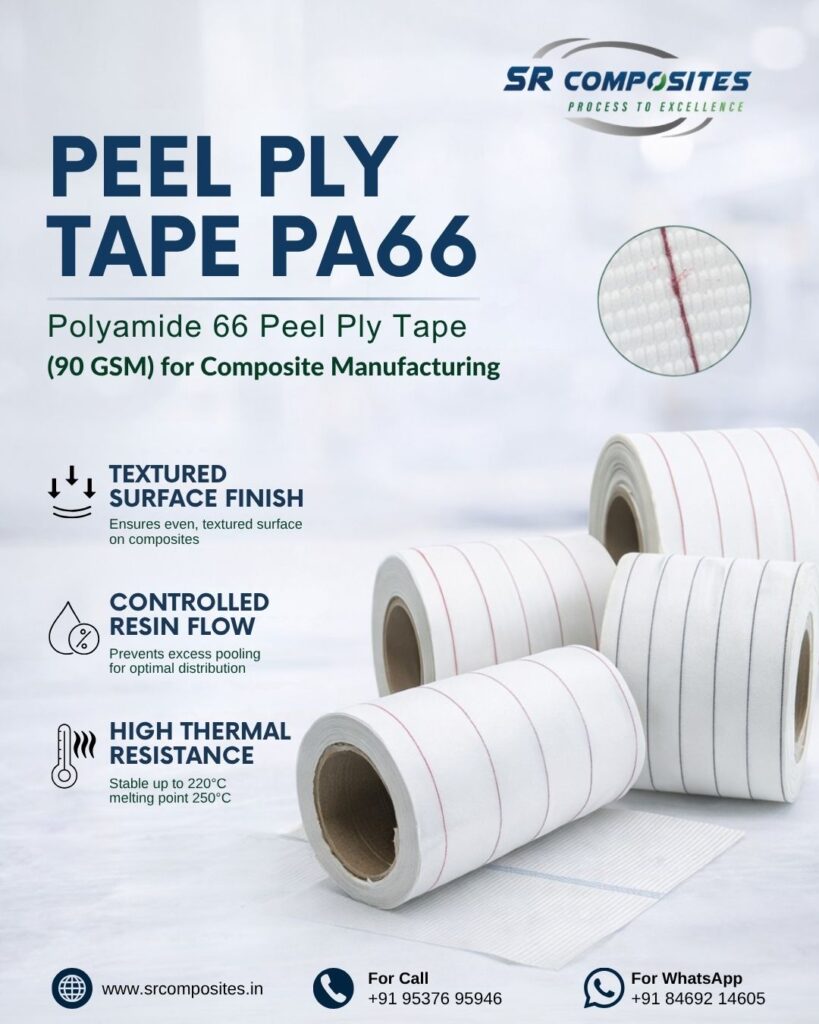
PA66 Peel Ply Tape is an advanced surface preparation solution used in composite manufacturing industries to achieve better finishing, improved bonding strength, and controlled resin distribution. With the increasing demand for lightweight, durable, and high-performance composite structures, PA66 Peel Ply Tape manufacturers are focusing on materials that improve production efficiency while maintaining excellent quality. Composite production requires accuracy at every stage, from material selection to curing and finishing. A reliable peel ply solution helps manufacturers create a clean textured surface that supports secondary bonding and reduces additional finishing work. SR Composites provides high-quality composite manufacturing solutions designed for industries that require consistency, durability, and reliable performance. Table of Contents Why Industries Prefer Composite Materials PA66 Peel Ply Tape Composite materials have become essential in modern engineering because they provide excellent strength while maintaining lightweight characteristics. PA66 Peel Ply Tape Industries, including aerospace, automotive, marine, renewable energy, and sports equipment, are adopting composites because they offer flexibility in design and superior mechanical properties. Compared with traditional materials, composites provide advantages such as corrosion resistance, high strength-to-weight ratio, and improved durability. These properties make them suitable for applications where performance and efficiency are important. According to research from the U.S. Department of Energy Advanced Materials Program, advanced materials contribute significantly to improving energy efficiency and reducing weight in transportation and industrial applications. However, producing reliable composite parts requires proper processing techniques and suitable supporting materials. Surface preparation plays an important role because bonding quality directly affects the final performance of the component. Role of PA66 Peel Ply Tape in Composite Production PA66 Peel Ply Tape. During composite manufacturing, peel ply materials are placed over the laminate surface before curing. After the curing process, the fabric layer is removed, leaving a clean and textured surface. This surface texture improves adhesive bonding and helps eliminate extra mechanical preparation, such as sanding or grinding. PA66 Peel Ply Tape. The polyamide-based structure of this material provides excellent strength and temperature resistance, making it suitable for demanding composite applications. It helps manufacturers achieve consistent results while improving overall production efficiency. The 90 GSM solution offered by SR Composites is developed for applications where controlled resin movement and surface quality are important. Manufacturers can explore additional composite solutions through the official website of SR Composites. Key Benefits of Polyamide Peel Ply Solutions Improved Surface Finish One of the major advantages of using a nylon-based peel ply material is the consistent texture created after removal. The prepared surface allows adhesives and coatings to bond more effectively. This reduces extra finishing requirements and helps save valuable production time. Better Resin Management During laminate processing, uncontrolled resin movement can affect weight and structural performance. The specially designed fabric structure supports balanced resin distribution and prevents excessive resin accumulation. This helps manufacturers maintain better quality control throughout production. High Temperature Performance Composite curing often involves elevated temperatures. A heat-resistant peel ply material maintains stability during these processes and supports reliable manufacturing performance. Its thermal capability makes it suitable for industries where curing conditions require dependable materials. Stronger Secondary Bonding A properly textured surface increases contact between materials and improves bonding performance. This is especially beneficial when additional layers, coatings, or components need to be attached. Easy Removal After Processing The material can be removed smoothly after curing without damaging the laminate surface. This makes the production process faster and more efficient. Industrial Applications of Composite Peel Ply Materials Composite manufacturing continues expanding across multiple industries because companies require lighter and stronger products. Common applications include: Aerospace Industry Aircraft manufacturers use composite structures to reduce weight while maintaining strength and safety standards. Automotive Manufacturing Composite components help improve vehicle efficiency by reducing overall weight and increasing durability. Wind Energy Sector Wind turbine blades require strong and lightweight materials capable of handling demanding environmental conditions. Marine Applications Composite materials provide excellent resistance against moisture and corrosion, making them suitable for marine structures. Industrial Products Many industrial components use composites for improved performance and longer service life. Why Choose SR Composites? Choosing the right supplier is important because composite manufacturing depends on material consistency and reliability. SR Composites focuses on delivering quality composite materials that support professional manufacturing requirements. The company provides solutions designed for better processing control, improved surface quality, and efficient production. Customers choose SR Composites because of: For manufacturers searching for dependable composite solutions, SR Composites offers products designed to meet modern industrial expectations. Frequently Asked Questions What is PA66 Peel Ply Tape used for? It is used during composite manufacturing to create a textured surface, improve bonding capability, and support controlled resin distribution. Why is polyamide material used in peel ply products? Polyamide 66 provides excellent strength, durability, and temperature resistance, making it suitable for demanding manufacturing environments. Does peel ply reduce surface preparation time? Yes. It creates a ready-to-bond surface after removal, reducing additional sanding and finishing requirements. Which industries commonly use this material? It is widely used in aerospace, automotive, marine, renewable energy, and industrial composite production. Why should manufacturers choose SR Composites? SR Composites provides reliable composite manufacturing materials designed for quality, consistency, and improved production performance. Conclusion Modern composite manufacturing requires materials that improve efficiency, quality, and reliability. A high-performance peel ply solution helps manufacturers achieve better surface finishing, stronger bonding results, and smoother production processes. SR Composites provides advanced composite solutions designed to support industries where precision and performance matter. By selecting the right manufacturing materials, companies can improve product quality and achieve better long-term results. For businesses looking to enhance their composite production process, investing in reliable surface preparation materials is an important step toward achieving superior manufacturing outcomes.
7 HDPE Spiral Tubes – Strong, Durable & Efficient Resin Flow Solutions
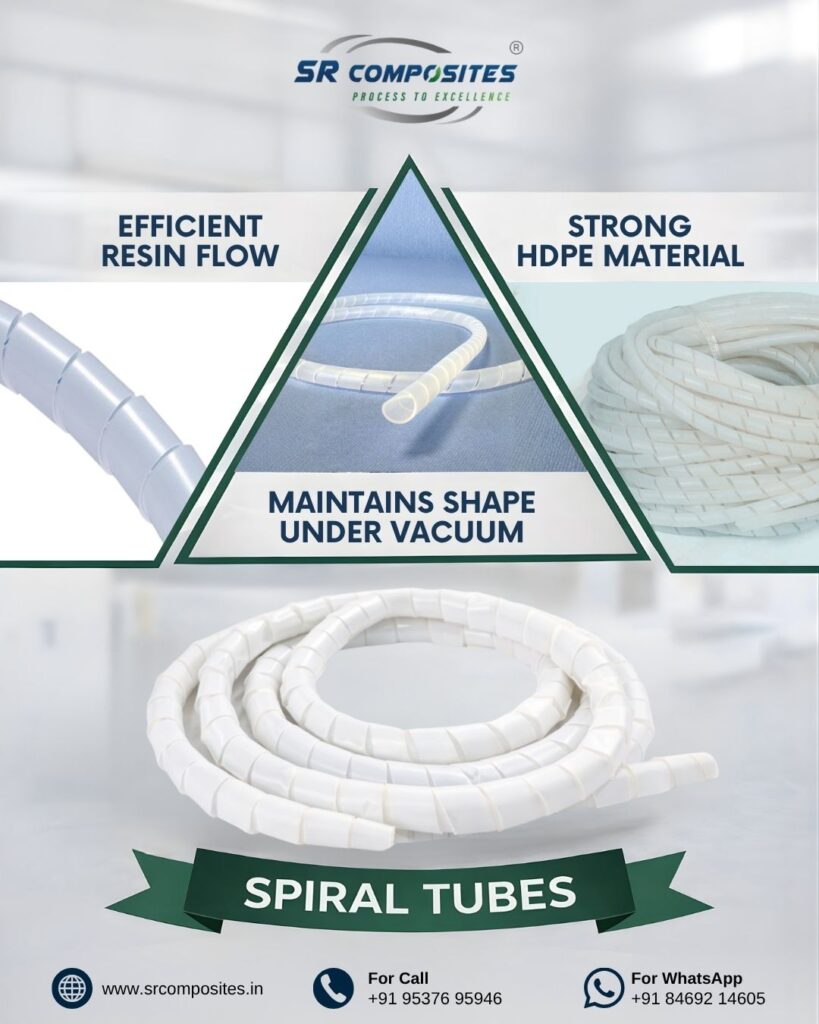
Table of Contents Introduction Discover the benefits of HDPE Spiral Tubes designed to maintain shape under vacuum, ensure efficient resin flow, and provide superior strength for composite manufacturing and industrial applications. In srcomposite manufacturing and vacuum infusion processes, maintaining consistent resin flow is essential for achieving high-quality results. HDPE Spiral Tubes are specially designed to withstand vacuum pressure while ensuring efficient resin distribution throughout the system. Manufactured from strong HDPE material, these tubes maintain their shape under vacuum conditions and provide reliable performance across various industrial applications. Their spiral structure enhances resin movement, reduces flow resistance, and helps manufacturers achieve faster and more uniform resin infusion. Due to their durability and flexibility, HDPE Spiral Tubes have become a preferred solution in composite fabrication, marine, automotive, aerospace, and industrial sectors. Key Features Maintains Shape Under Vacuum The spiral design prevents tube collapse even under high vacuum pressure, ensuring uninterrupted resin flow during the infusion process. Efficient Resin Flow The open spiral structure allows resin to move quickly and evenly, reducing infusion time and improving manufacturing efficiency. Strong HDPE Material Made from High-Density Polyethylene (HDPE), these tubes offer excellent strength, durability, and resistance to wear. Lightweight Construction HDPE Spiral Tubes are lightweight, making them easy to handle, install, and transport. Chemical Resistance The material offers resistance to various chemicals, resins, and environmental conditions, extending service life. Flexible and Easy to Use Their flexibility allows easy placement around complex mold shapes and production setups. Technical Specifications Specification Details Material High-Density Polyethylene (HDPE) Structure Spiral Design Vacuum Resistance High Resin Flow Efficiency Excellent Flexibility High Chemical Resistance Excellent Weight Lightweight Industrial Use Composite Manufacturing Benefits of Using HDPE Spiral Tubes Improved Resin Distribution Ensures uniform resin flow throughout the laminate structure for better product quality. Faster Manufacturing Process Efficient resin transfer reduces infusion time and improves production output. Reduced Risk of Blockages The spiral structure minimizes resin accumulation and flow interruptions. Enhanced Durability Strong HDPE construction ensures long-lasting performance under demanding conditions. Cost-Effective Solution Lower maintenance requirements and improved process efficiency help reduce operational costs. Applications Composite Manufacturing Used extensively in vacuum infusion and resin transfer molding processes. Marine Industry Ideal for manufacturing boat hulls, decks, and composite marine components. Aerospace Components Supports precision composite fabrication for lightweight aerospace structures. Automotive Parts Production Used in composite panels, structural components, and lightweight vehicle parts. Wind Energy Sector Suitable for manufacturing wind turbine blades and other large composite structures. Comparison Table Feature HDPE Spiral Tubes Standard Tubes Vacuum Resistance Excellent Moderate Shape Retention High Low Resin Flow Efficiency Excellent Average Durability High Medium Chemical Resistance Excellent Moderate Flexibility High Medium Frequently Asked Questions What are HDPE Spiral Tubes used for? HDPE Spiral Tubes are primarily used in vacuum infusion and composite manufacturing processes for efficient resin distribution. Why is shape retention under vacuum important? Shape retention prevents tube collapse, ensuring continuous resin flow and consistent product quality. Are HDPE Spiral Tubes chemically resistant? Yes, HDPE material offers excellent resistance to many chemicals, resins, and environmental conditions. Can these tubes be reused? Depending on the application and operating conditions, HDPE Spiral Tubes can often be reused multiple times. Which industries commonly use HDPE Spiral Tubes? Composite manufacturing, marine, aerospace, automotive, and wind energy industries commonly use these tubes. Conclusion HDPE Spiral Tubes are an essential component in modern composite manufacturing processes. Their ability to maintain shape under vacuum, provide efficient resin flow, and deliver long-term durability makes them a reliable choice for industrial applications. With strong HDPE construction, excellent chemical resistance, and superior flow performance, these tubes help manufacturers improve efficiency, product quality, and overall production reliability. Check this:- https://www.bis.gov.in/
Breather Fabric 150 GSM: 7 Powerful Benefits for Durable and Reliable Moisture Protection
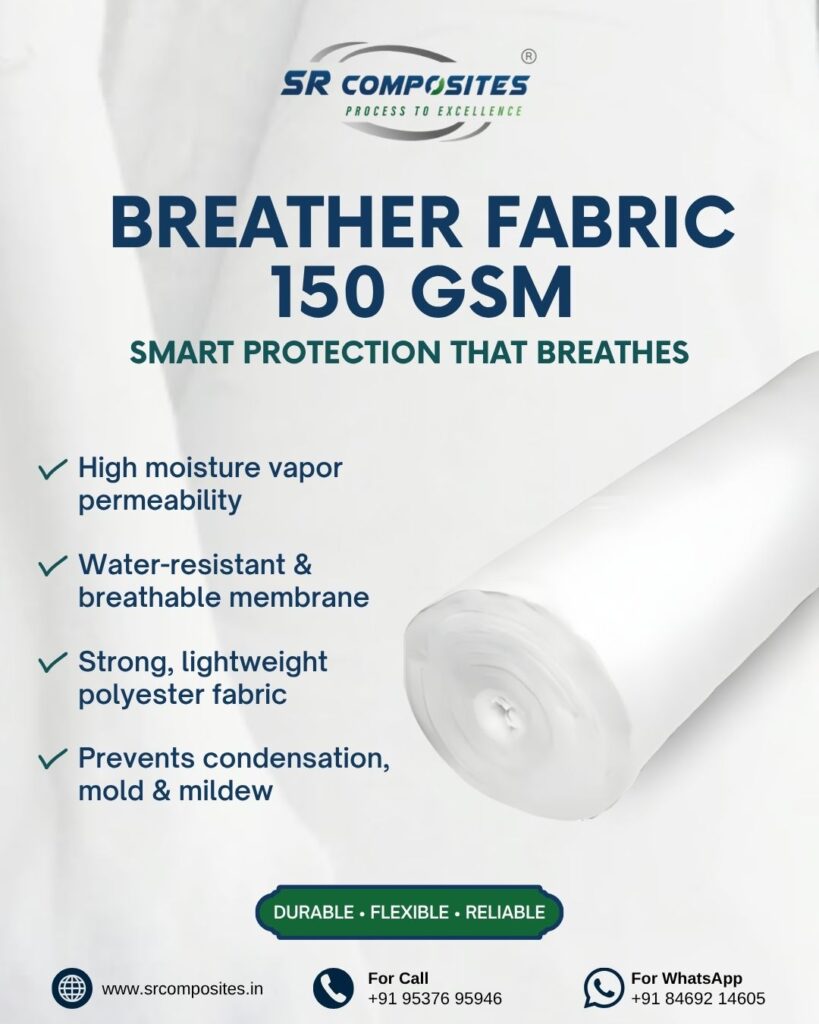
Table of Contents Breather Fabric 150 GSM: The Smart Choice for Moisture Control and Composite Manufacturing Modern industries require materials that deliver durability, moisture management, and consistent performance under demanding conditions. Breather Fabric 150 GSM has emerged as a reliable solution for manufacturers and engineers who need effective moisture vapor transmission while maintaining protection against water penetration. Its unique construction makes it suitable for a wide range of applications, from composite manufacturing to building insulation systems. As industries continue to focus on product quality, process efficiency, and long-term durability, the demand for high-performance breathable fabrics has increased significantly. Breather Fabric 150 GSM offers an ideal balance of strength, flexibility, and breathability, helping manufacturers achieve better results while reducing the risk of moisture-related damage. What is Breather Fabric 150 GSM? Breather Fabric 150 GSM is a specially engineered polyester-based fabric designed to allow moisture vapor to pass through while preventing the accumulation of condensation and trapped moisture. The fabric is lightweight yet strong enough to withstand demanding industrial environments. The 150 GSM weight provides excellent structural stability without adding unnecessary bulk. This balance allows the material to perform efficiently in vacuum bagging processes, composite curing applications, roofing systems, insulation assemblies, and various moisture-control environments. Its breathable membrane structure helps maintain airflow and vapor transmission, reducing the chances of mold, mildew, and condensation-related deterioration. As a result, industries that prioritize durability and product integrity increasingly rely on Breather Fabric 150 GSM as a critical component of their manufacturing processes. Key Features of Breather Fabric 150 GSM One of the primary reasons for the growing popularity of Breather Fabric 150 GSM is its combination of performance-enhancing features. The fabric offers high moisture vapor permeability, allowing water vapor to escape efficiently while maintaining protection against external moisture. This capability helps maintain dry internal environments and improves overall system longevity. Its water-resistant yet breathable construction protects without restricting airflow. This makes it suitable for applications where moisture control is essential, but ventilation cannot be compromised. The material is manufactured using high-quality polyester fibers, providing excellent tensile strength and dimensional stability. Even under challenging industrial conditions, Breather Fabric 150 GSM maintains consistent performance. The lightweight design simplifies handling, installation, and integration into production systems. Manufacturers can improve operational efficiency without sacrificing product quality. Another important feature is its ability to reduce condensation formation. By allowing moisture vapor to escape, the fabric minimizes conditions that encourage mold and mildew growth, helping preserve equipment, structures, and finished products. Applications of Breather Fabric 150 GSM Across Industries The versatility of Breather Fabric 150 GSM allows it to serve multiple industries where moisture management and airflow are critical. In composite manufacturing, the fabric is commonly used during vacuum bagging operations. It facilitates uniform vacuum distribution and assists in removing excess air and volatiles from the laminate. This contributes to improved composite quality and better surface finishes. The aerospace sector relies on advanced composite processes that require consistent airflow and pressure management. Breather fabrics help maintain process integrity while supporting the production of lightweight, high-strength components. In marine applications, moisture control is essential for maintaining structural performance and preventing long-term degradation. Breather Fabric 150 GSM supports manufacturing processes that demand reliability and precision. The construction industry also benefits from breathable fabrics in roofing systems, wall assemblies, and insulation installations. These materials help regulate moisture movement, improving building durability and indoor environmental quality. For information on modern building moisture management practices, readers can refer to the official guidelines published by the U.S. Department of Energy: https://www.energy.gov Benefits of Using Breather Fabric 150 GSM The use of Breather Fabric 150 GSM offers numerous operational and performance advantages. One of the most significant benefits is enhanced moisture management. Moisture trapped within systems can lead to material degradation, corrosion, and reduced efficiency. By facilitating vapor transmission, the fabric helps maintain optimal operating conditions. Manufacturers also benefit from improved product quality. In composite production, proper airflow and vacuum distribution contribute to better laminate consolidation and reduced defect rates. The material’s durability ensures long-term performance, reducing replacement frequency and maintenance costs. This reliability is particularly valuable in demanding industrial environments where downtime can be costly. Its lightweight construction improves handling and installation efficiency, allowing operators to work more effectively and reduce labor requirements. Another major advantage is protection against mold and mildew growth. Moisture accumulation often creates ideal conditions for biological contamination. The breathable design helps maintain dry conditions and supports cleaner operating environments. Why Material Quality Matters The effectiveness of Breather Fabric 150 GSM depends heavily on the quality of the raw materials and manufacturing processes used during production. Inferior fabrics may exhibit inconsistent permeability, reduced durability, and poor structural integrity. These issues can negatively affect manufacturing outcomes and increase operational costs. High-quality breather fabrics provide consistent airflow characteristics, dependable moisture management, and reliable performance throughout the production cycle. Manufacturers that prioritize quality materials often achieve better product consistency and improved process control. Industry best practices for composite manufacturing can be explored through the American Composites Manufacturers Association (ACMA) at https://www.acmanet.org. This resource offers valuable insights into composite technologies and performance standards. Why Choose SR Composites? When selecting a supplier for Breather Fabric 150 GSM, experience, quality assurance, and technical expertise are critical considerations. SR Composites is committed to delivering premium composite consumables designed to meet the evolving needs of modern industries. The company focuses on maintaining strict quality standards to ensure consistent product performance. Customers benefit from reliable product availability, technical support, and industry-specific expertise. Whether supporting aerospace, marine, automotive, wind energy, or general composite manufacturing applications, SR Composites provides solutions designed for efficiency and long-term value. By choosing SR Composites, manufacturers gain access to high-quality materials that support improved process control, better product quality, and enhanced operational efficiency. FAQs What is Breather Fabric 150 GSM used for? Breather Fabric 150 GSM is primarily used in composite manufacturing, vacuum bagging processes, roofing systems, insulation applications, and moisture management solutions. How does Breather Fabric 150 GSM prevent condensation? The fabric allows moisture vapor to pass
7 Masking Tape: The Ultimate Surface Protection Solution for Painting, Labeling, and Industrial Applications
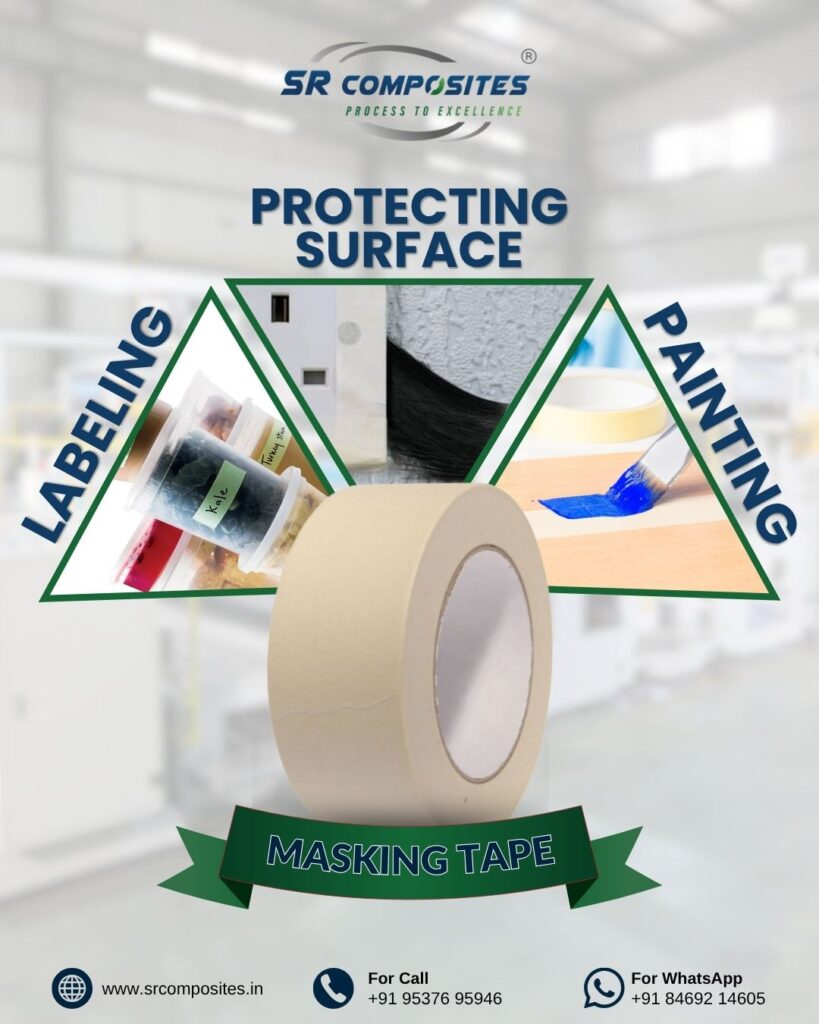
Table of Contents Introduction Masking tape is a pressure-sensitive adhesive tape made from crepe paper and coated with a specially formulated adhesive. It is primarily used to protect surfaces from paint, dust, chemicals, scratches, and unwanted markings. Due to its excellent adhesion and easy removal properties, masking tape has become an essential product in painting projects, labeling applications, composite manufacturing, automotive refinishing, and general industrial operations. What is Masking Tape? Masking tape is a lightweight paper-based adhesive tape designed for temporary bonding and surface protection. Unlike standard adhesive tapes, it can be removed without leaving residue or damaging the underlying surface. Masking Tape is commonly used during painting operations to create sharp paint lines and protect adjacent surfaces. Additionally, it serves as a convenient solution for labeling, bundling, marking, and masking operations in industrial environments. Key Features of Masking Tape Easy Tear by Hand No scissors or cutting tools are required, making application quick and efficient. Strong Initial Adhesion Provides secure bonding to various surfaces while remaining removable. Clean Removal Leaves minimal or no adhesive residue after removal. Flexible Crepe Paper Backing Conforms easily to curves, corners, and irregular surfaces. Paint Resistance Masking tape Prevents paint seepage and helps achieve clean paint edges. Surface Protection Protects surfaces from dust, scratches, paint splashes, and contaminants. Lightweight and Convenient Easy to handle, store, and transport. Benefits of Using Masking Tape Benefit Description Clean Paint Lines Produces sharp and professional paint finishes Easy Application Can be applied quickly without special tools Residue-Free Removal Helps maintain surface quality Multi-Surface Compatibility Suitable for wood, metal, plastic, glass, and painted surfaces Cost-Effective Affordable solution for temporary masking needs Versatile Usage Ideal for industrial, commercial, and residential applications Time Saving Simplifies painting and labeling tasks Applications of Masking Tape Painting and Decorating Masking Tape Used to create clean paint edges and protect adjacent surfaces during painting projects. Labeling and Identification Ideal for temporary labels, product identification, and inventory management. Automotive Industry Used during vehicle painting, detailing, and refinishing operations. Composite Manufacturing Provides masking and protection during composite fabrication processes. Packaging Operations Useful for temporary sealing, marking, and packaging tasks. Construction Projects Protects surfaces from dust, paint, and damage during renovation work. DIY and Craft Projects Widely used in arts, crafts, and home improvement activities. Technical Specifications Property Specification Product Type Masking Tape Backing Material Crepe Paper Adhesive Type Pressure Sensitive Adhesive Color Beige Surface Finish Smooth Removal Clean and Residue-Free Temperature Resistance Moderate Application Type Indoor and Industrial Use Custom Sizes Available Yes How Masking Tape Works Masking tape works by forming a temporary adhesive bond between the tape and the application surface. The pressure-sensitive adhesive provides reliable holding power while allowing easy removal when the task is complete. During painting applications, the tape acts as a protective barrier that prevents paint from reaching unwanted areas. After the paint dries, the tape can be removed cleanly, leaving crisp and professional-looking paint lines. For labeling and industrial applications, masking tape offers temporary adhesion that allows easy repositioning and removal without damaging the substrate. Why Choose SR Composites Masking Tape? Superior Surface Protection Protects surfaces from paint, scratches, dust, and contamination. Reliable Adhesion Provides strong bonding performance during application. Easy Removal Removes cleanly without damaging surfaces. Multiple Industry Applications Suitable for painting, labeling, automotive, construction, and composite manufacturing. Consistent Quality Manufactured to deliver dependable performance across demanding environments. Custom Solutions Available in different widths and lengths to meet specific customer requirements. Storage and Handling Guidelines Store in a Cool and Dry Area Keep away from direct sunlight and excessive humidity. Maintain Original Packaging Store products in original packaging until use. Avoid Excessive Heat High temperatures may affect adhesive performance. Keep Surface Clean Ensure surfaces are dry and free from dust before application. Follow Recommended Usage Conditions Use within recommended environmental conditions for optimal results. Frequently Asked Questions (FAQs) What is masking tape mainly used for? Masking tape is primarily used for painting, surface protection, labeling, packaging, and industrial masking applications. Does masking tape leave adhesive residue? High-quality masking tape is designed to remove cleanly with little or no adhesive residue. Can masking tape be used on painted surfaces? Yes, masking tape is commonly used on painted surfaces for temporary protection and paint line creation. Is masking tape suitable for automotive painting? Yes, masking tape is widely used in automotive refinishing and painting applications. Can masking tape be removed easily? Yes, it is specifically designed for easy and clean removal after use. Is masking tape available in different sizes? Yes, masking tape is available in various widths, lengths, and thicknesses depending on application requirements. Can masking tape be used for labeling? Yes, it is commonly used for temporary labeling and identification purposes. Conclusion Masking tape is a versatile and essential product for painting, labeling, packaging, automotive refinishing, composite manufacturing, and general surface protection. Its strong adhesion, clean removal, flexibility, and ease of use make it a preferred choice across numerous industries. SR Composites Masking Tape delivers reliable performance, excellent surface protection, and professional results for a wide range of applications. Whether you are working on industrial projects, painting tasks, or labeling operations, masking tape provides an efficient and cost-effective solution. Check this :- https://www.makeinindia.com/