Wooster Roller: 7 Powerful Benefits of a Durable Wooster Roller for Perfect Paint Application
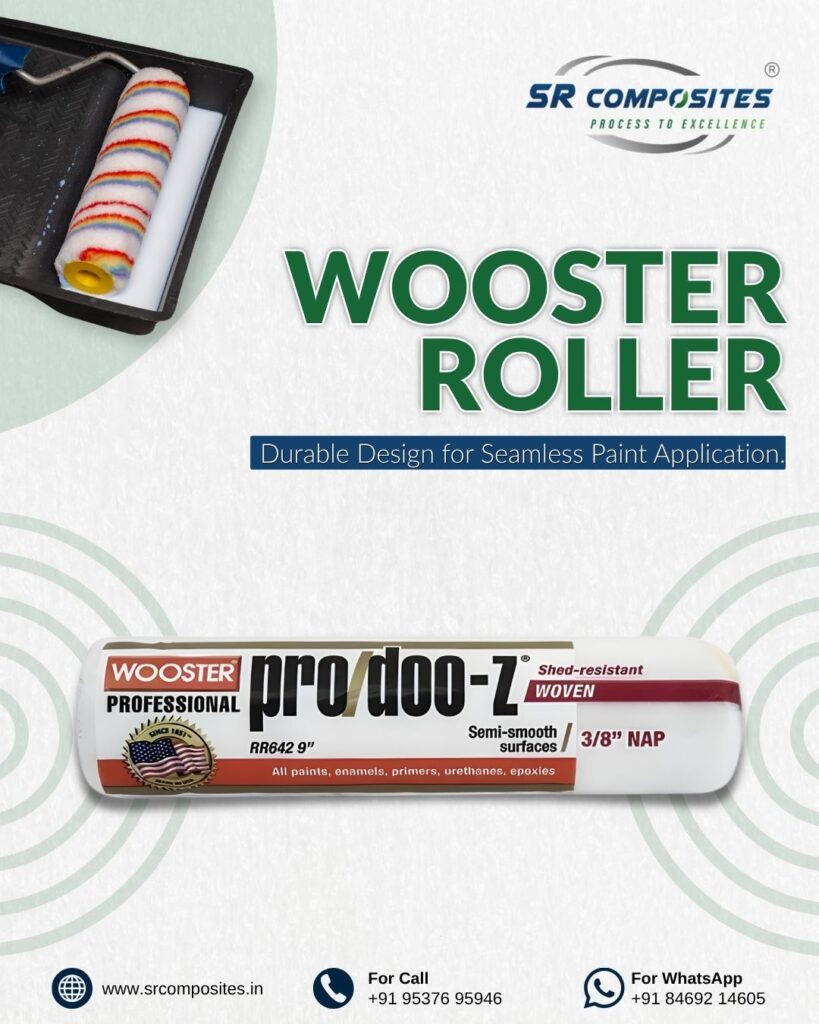
Table of Contents Wooster Roller: A Reliable Solution for Professional Paint Finishing A Wooster Roller is widely recognized among professional painters and industrial users for its ability to provide smooth, consistent, and efficient paint application. Whether the task involves residential walls, commercial facilities, manufacturing plants, or maintenance projects, the quality of the painting tool plays a major role in determining the final finish. Wooster Roller Modern coating systems are designed to deliver durability, protection, and visual appeal. However, even premium paints can produce unsatisfactory results when applied with low-quality tools. This is why professional contractors often choose reliable roller covers that offer superior paint pickup, controlled release, and reduced linting. Wooster Roller: A quality paint roller helps achieve an even coating while minimizing rework and material waste. Painting projects today demand higher standards than ever before. Property owners, contractors, and industrial maintenance teams all expect coatings to perform consistently while maintaining an attractive appearance. Selecting the proper roller cover is therefore an important part of the overall painting process. Understanding the Product The Wooster Roller is engineered to support efficient paint application across a variety of surfaces. Manufactured using durable woven fabrics and advanced construction methods, it is designed to provide excellent coverage while maintaining a smooth finish. Unlike ordinary rollers that may leave fibers behind or create uneven textures, professional-grade roller covers are built to withstand demanding applications. Wooster Roller. Their design allows them to absorb paint effectively and release it uniformly across the surface. This contributes to a cleaner appearance and better coating performance. These rollers are suitable for use with a wide range of products, including primers, emulsions, enamels, protective coatings, urethanes, and epoxy systems. Wooster Roller. Their versatility makes them a preferred choice in both commercial and industrial environments. Features That Improve Painting Results Consistent Paint Distribution One of the most important characteristics of a professional roller cover is its ability to distribute paint evenly. Uniform application helps reduce visible streaks and ensures a more attractive finish. Durable Construction A high-quality painting roller is designed for repeated use and maintains its shape throughout demanding projects. This durability helps improve productivity while reducing replacement costs. Reduced Lint and Shedding Fiber shedding can affect both appearance and coating performance. Wooster Roller Premium woven fabrics help minimize this issue, contributing to cleaner surfaces and professional-quality results. Improved Coverage Professional roller covers typically hold more paint than standard alternatives. Wooster Roller This enables painters to cover larger areas more efficiently and spend less time reloading paint. Smooth Surface Finish The ability to create a uniform coating is especially important in commercial spaces, industrial facilities, and decorative projects where appearance matters. Applications Across Different Industries Professional paint rollers are used in a broad range of industries due to their versatility and reliable performance. In residential construction, they are commonly used for walls, ceilings, and renovation projects. Commercial contractors rely on them when painting offices, retail stores, hotels, and educational institutions where consistent finishes are required. Industrial facilities use these tools for machinery coatings, structural steel protection, equipment maintenance, and factory refurbishment projects. In marine environments, roller covers are frequently utilized for applying protective coatings designed to resist moisture and corrosion. Composite manufacturing facilities also benefit from high-quality application tools. Wooster Roller During finishing operations and coating processes, achieving a smooth and uniform surface is essential. Reliable rollers help maintain quality standards while improving overall efficiency. The Importance of Using Quality Painting Tools Many painting problems originate from the use of low-grade equipment rather than poor-quality paint. Wooster Roller Uneven coverage, roller marks, lint contamination, and excessive material consumption are common issues associated with inferior products. Using professional painting tools can significantly improve the final result. Better paint transfer leads to more consistent film thickness, which is important for both appearance and long-term durability. Proper application also helps coatings achieve their intended protective properties. According to standards and technical guidance provided by the Government of India through the Bureau of Indian Standards (BIS), following appropriate application practices contributes to improved coating performance and durability. Visit the official BIS website for industry standards and references: https://www.bis.gov.in How the Right Roller Enhances Efficiency Efficiency is a major consideration for contractors and industrial users. Labor costs, project timelines, and material consumption all influence overall project expenses. A premium roller cover can improve productivity by holding more paint and delivering better coverage with fewer passes. This reduces downtime and allows painters to complete projects more quickly without compromising quality. In addition, consistent application reduces the likelihood of touch-ups and corrective work. Fewer defects mean lower material usage and greater customer satisfaction. Industry professionals seeking information about protective coatings and application best practices can also refer to the Association for Materials Protection and Performance (AMPP): https://www.ampp.org Why Choose SR Composites SR Composites is known for supplying quality industrial products and composite manufacturing solutions to customers across various sectors. The company focuses on delivering dependable materials that support productivity, consistency, and performance. Customers choose SR Composites because of its commitment to quality, technical expertise, and responsive service. Whether the requirement involves composite consumables, vacuum bagging materials, release films, peel ply fabrics, or professional painting accessories, the company provides solutions designed to meet demanding industrial requirements. Businesses working in manufacturing, aerospace, marine, automotive, and general industrial sectors trust SR Composites for reliable products and ongoing support. For more industrial and composite solutions, visit the internal resource page:https://srcomposites.in/ Conclusion The Wooster Roller remains a trusted choice for professionals who require smooth paint application, dependable performance, and consistent finishing quality. From residential projects to industrial maintenance operations, the right painting tool can make a noticeable difference in efficiency and appearance. Choosing a premium roller cover helps reduce material waste, improve coverage, and support better coating performance. When combined with quality paints and proper application techniques, professional-grade tools contribute to long-lasting and visually appealing results. FAQs What is a Wooster Roller used for? It is used for applying paints, primers, enamels, and protective coatings on a variety of surfaces. Can it
7 Powerful Hose Clamp: Reliable Fastening for Secure and Leak-Free Connections
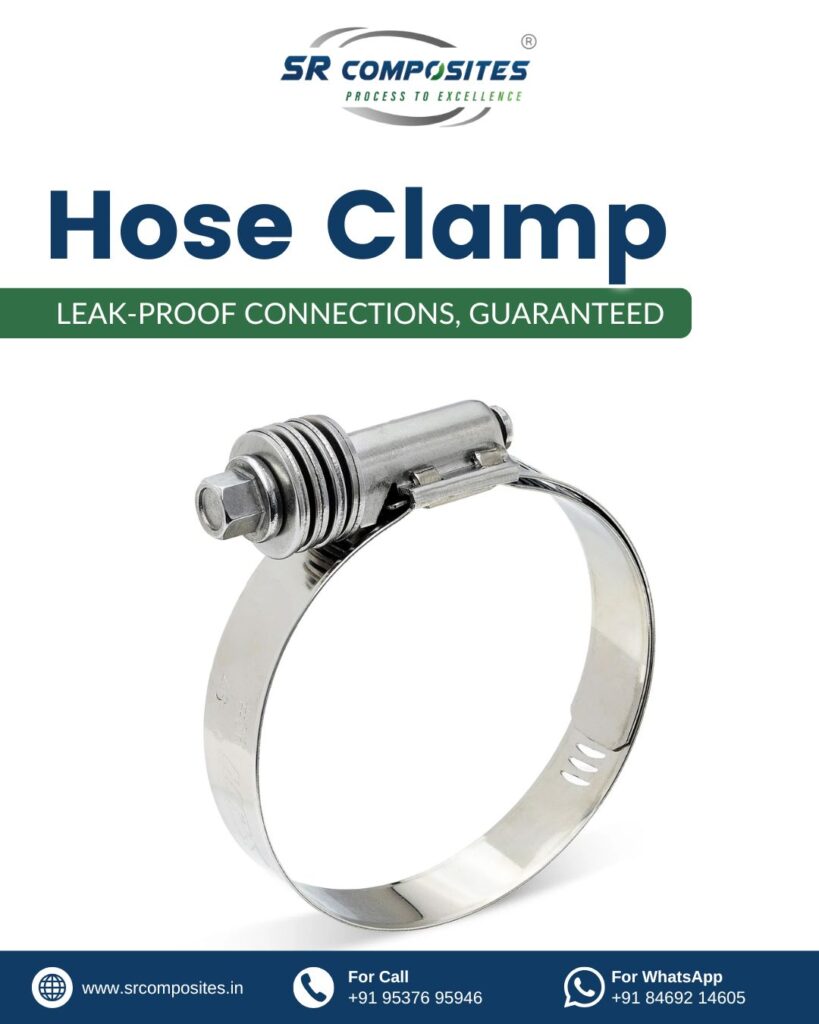
Introduction Srcomposites Reliable fastening systems are essential for maintaining safe and efficient fluid transfer operations. Whether transporting water, air, fuel, chemicals, or other industrial media, secure connections help prevent leaks, pressure loss, and equipment damage. Hose Clamp Among the most widely used fastening solutions is the Hose Clamp, a simple yet highly effective component designed to hold flexible tubing firmly onto fittings and connectors. These adjustable devices provide uniform pressure around the hose, ensuring long-lasting performance even under demanding operating conditions. From manufacturing facilities and automotive systems to agricultural irrigation networks and commercial plumbing installations, these fastening components play a crucial role in maintaining system reliability and operational safety. Check this :- https://www.indiamart.com/ Table of Contents Understanding Industrial Fastening Solutions A Hose Clamp is a mechanical fastening device used to attach a flexible hose to a fitting, pipe, or connector. By applying consistent pressure around the hose circumference, it creates a secure seal that minimizes leakage and prevents accidental disconnection. Available in various sizes, materials, and designs, these fastening devices are suitable for a wide range of industrial, commercial, and residential applications. Working Principle of Clamping Systems Uniform Compression The tightening mechanism distributes pressure evenly around the hose surface. Secure Retention Hose Clamp The fastening force prevents movement or slippage during operation. Leak Prevention A properly installed clamp creates a reliable seal between the hose and fitting. Pressure Management Helps maintain consistent operating pressure within the system. Resistance to Vibration Designed to remain secure even in equipment exposed to continuous movement and vibration. Key Features and Performance Characteristics Strong Holding Capacity Provides dependable fastening for various hose materials and diameters. Corrosion Resistance Manufactured using stainless steel and protective coatings for enhanced durability. Adjustable Design Can be tightened or loosened according to application requirements. Long Service Life Built to withstand harsh industrial environments. Leak-Proof Sealing Ensures reliable fluid and air transfer without unwanted leakage. Easy Installation Simple design allows quick assembly and replacement. Temperature Tolerance Suitable for both hot and cold operating conditions. High Reliability Delivers consistent performance over extended periods. Advantages of Secure Fastening Devices Minimizes Fluid Loss Creates a tight seal that helps prevent leakage. Enhances Operational Safety Reduces the risk of hose disconnection during operation. Protects Equipment Helps prevent damage caused by pressure loss and fluid leakage. Cost-Effective Solution Provides long-term reliability at an affordable cost. Simple Maintenance Easy to inspect, adjust, and replace when necessary. Versatile Usage Compatible with a wide variety of hose materials and systems. Improved System Performance Supports efficient fluid transfer and pressure stability. Reduced Downtime Helps prevent unexpected failures and maintenance interruptions. Common Types Available Worm Drive Clamps The most commonly used option featuring an adjustable screw-tightening mechanism. Heavy-Duty Clamps Designed for demanding industrial and high-pressure applications. Spring Clamps Utilize spring tension to maintain continuous pressure. T-Bolt Clamps Ideal for heavy-duty installations requiring superior holding strength. Wire Clamps Frequently used for lightweight tubing and lower-pressure applications. Stainless Steel Variants Provide excellent corrosion resistance and durability. Technical Specifications Property Description Product Type Hose Clamp Material Stainless Steel / Galvanized Steel Design Worm Drive, T-Bolt, Spring Type Corrosion Resistance High Pressure Capability Medium to High Temperature Range Industrial Grade Diameter Availability Multiple Sizes Installation Method Screw Tightening Reusable Yes Application Hose Securing & Sealing Industrial Applications Manufacturing Facilities Used in fluid transfer equipment and production systems. Automotive Sector Secures coolant lines, fuel hoses, and air intake assemblies. Plumbing Networks Supports leak-free water distribution systems. Agricultural Operations Used in irrigation systems, pumps, and water management equipment. Pneumatic Installations Provides secure connections in compressed air systems. HVAC Equipment Supports ventilation and air handling applications. Marine Industry Suitable for water circulation and engine-related systems. Construction Projects Used in temporary and permanent fluid transfer setups. Why Choose SR Composites? Premium Raw Materials Manufactured using high-quality corrosion-resistant metals. Precision Manufacturing Engineered for reliable and consistent fastening performance. Wide Size Range Available for various industrial and commercial applications. Long-Term Durability Designed to withstand challenging operating environments. Reliable Sealing Performance Provides dependable leak protection. Technical Expertise Supported by extensive industry knowledge and customer assistance. Installation and Maintenance Guidelines Select the Correct Diameter Ensure the clamp size matches the hose dimensions. Proper Positioning Place the fastening device directly over the fitting area. Avoid Excessive Tightening Over-tightening may damage the hose material. Perform Routine Inspections Check regularly for wear, corrosion, or loosening. Replace When Necessary Damaged components should be replaced immediately. Follow Recommended Practices Always adhere to manufacturer guidelines for installation. Frequently Asked Questions What is the primary function of a Hose Clamp? It secures a hose to a fitting and helps prevent leaks and disconnections. Which material offers the best durability? Stainless steel is commonly preferred due to its corrosion resistance and strength. Can these fastening devices be reused? Yes, most designs can be reused if they remain in good condition. Are they suitable for outdoor environments? Yes, corrosion-resistant models perform well in outdoor applications. Can they handle high-pressure systems? Heavy-duty and T-bolt variants are specifically designed for higher pressure requirements. How often should they be inspected? Regular inspections are recommended, particularly in critical industrial systems. Conclusion Secure fastening solutions are essential for maintaining reliable fluid transfer systems across multiple industries. Their ability to create strong, leak-free connections helps improve safety, protect equipment, and enhance operational efficiency. Whether used in manufacturing plants, agricultural operations, automotive assemblies, plumbing installations, or HVAC systems, these components provide dependable performance and long-term value. By choosing high-quality products from SR Composites, businesses can ensure durability, safety, and consistent system reliability for years to come.
Feed Hose Pipe: 7 Powerful Benefits for Efficient and Reliable Resin Flow Systems
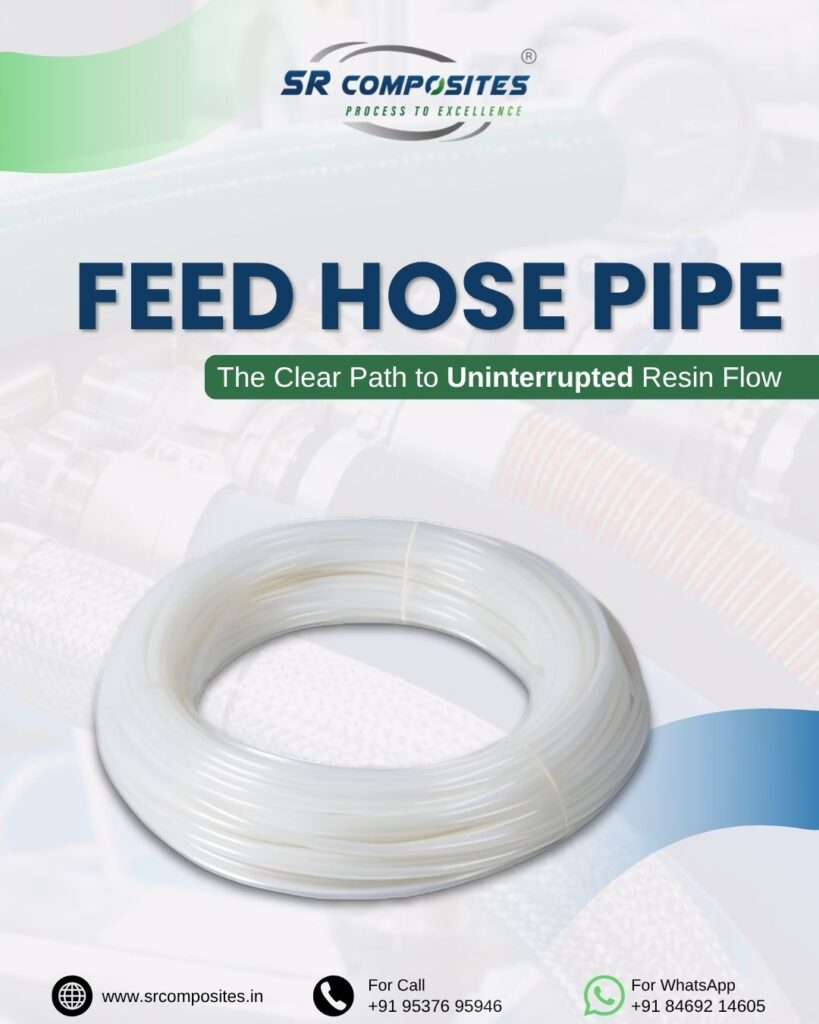
Table of Contents Alt Text: Feed Hose Pipe Introduction Feed Hose Pipe is one of the most important consumables used in vacuum infusion and advanced composite manufacturing. While major attention is often given to reinforcement fabrics and resin systems, the accessories responsible for transporting resin efficiently are equally important. A properly designed hose ensures that resin reaches every section of the laminate consistently, helping manufacturers achieve superior quality and reliable production outcomes. As composite materials continue to gain popularity across aerospace, automotive, marine, wind energy, and industrial sectors, manufacturers are increasingly focused on improving process efficiency. Feed Hose Pipe Resin distribution plays a significant role in this objective, making the selection of suitable infusion accessories essential. Understanding Feed Hose Pipe Feed Hose Pipe A feed hose is a flexible tubing solution designed to transport resin from the supply container to the composite layup during vacuum-assisted manufacturing processes. Its primary purpose is to create a controlled flow path, ensuring that resin moves efficiently through the system without interruptions. The transparent design commonly used in these hoses allows operators to visually monitor resin movement throughout the process. This visibility helps identify potential flow restrictions, trapped air, or process irregularities before they affect the finished component. Feed Hose Pipe In modern production facilities, these hoses are often used alongside vacuum bagging films, flow media, sealant tapes, and other consumables to create a complete infusion setup. Feed Hose Pipe in Resin Infusion Processes Successful resin infusion depends on maintaining a steady and controlled flow. Feed Hose Pipe Any disruption can result in dry spots, uneven wet-out, or structural inconsistencies that affect product performance. By providing a dedicated resin pathway, this tubing helps maintain process stability from start to finish. Feed Hose Pipe Consistent delivery allows reinforcement materials to absorb resin uniformly, resulting in stronger and more reliable composite parts. Manufacturers producing large structures such as boat hulls, wind turbine blades, and industrial panels particularly benefit from efficient resin transport systems because even minor flow issues can lead to costly production delays. Key Features and Advantages One of the most valuable characteristics of this product is transparency. Operators can monitor resin progression in real time, allowing immediate corrective action if irregularities occur. Another important feature is flexibility. The hose can be routed around complex molds and manufacturing setups without restricting flow performance. This adaptability makes it suitable for a wide variety of production environments. Chemical resistance is equally important. High-quality materials are designed to withstand exposure to epoxy, polyester, and vinyl ester resin systems, ensuring long-term reliability during manufacturing operations. A smooth internal surface further enhances performance by reducing resistance and promoting efficient resin movement throughout the infusion cycle. Industrial Applications Composite manufacturing is used across numerous industries where lightweight construction and high mechanical performance are required. Aerospace Aircraft manufacturers use advanced composites to reduce weight while maintaining structural strength. Reliable resin delivery contributes to consistent component quality and manufacturing accuracy. Marine Boat builders rely on vacuum infusion technology to produce hulls, decks, and structural components with excellent durability and reduced weight. Wind Energy Large wind turbine blades require uniform resin distribution over extensive laminate areas. Efficient infusion accessories help achieve consistent manufacturing results. Automotive The automotive sector increasingly uses composite materials to improve efficiency and performance. Controlled resin transfer supports the production of lightweight vehicle components. Industrial Manufacturing Corrosion-resistant tanks, panels, covers, and specialized structures also benefit from advanced composite manufacturing techniques supported by dependable infusion equipment. Performance Benefits Using high-quality resin delivery tubing offers several operational advantages. Manufacturers experience improved process consistency because resin reaches reinforcement materials at a controlled rate. This reduces the likelihood of defects and improves repeatability between production runs. Another benefit is reduced material waste. Better process control helps minimize excess resin consumption and decreases the number of rejected components. Production efficiency also improves. Faster and more predictable infusion cycles allow manufacturers to increase output while maintaining quality standards. The ability to monitor resin movement visually further enhances operational control and supports troubleshooting when necessary. According to industry resources from the Composite Manufacturing Association, proper resin flow management remains one of the most important factors in achieving high-performance composite structures. For additional information on composite manufacturing standards, manufacturers can refer to the Bureau of Indian Standards: https://www.bis.gov.in Additional industry guidance can be found through: Selecting the Right Solution Choosing the correct hose depends on several factors, including resin compatibility, required flow rate, flexibility requirements, and manufacturing conditions. The ideal solution should provide reliable performance while maintaining compatibility with the selected resin system. Durability and dimensional consistency are also important considerations for achieving repeatable production results. Working with an experienced supplier helps ensure that manufacturers select products suited to their specific application requirements. Why Choose SR Composites SR Composites is committed to supporting composite manufacturers with dependable consumables designed for modern production environments. The company focuses on product quality, consistency, and customer satisfaction while offering solutions suitable for a broad range of infusion and vacuum bagging applications. Customers choose SR Composites because of: For more composite manufacturing consumables, visit: FAQs What is the purpose of a Feed Hose Pipe? It transports resin from the supply source to the composite layup during vacuum infusion processes. Can it be used with epoxy resin? Yes, quality products are typically compatible with epoxy, polyester, and vinyl ester systems. Which industries use this product? Aerospace, marine, automotive, wind energy, and industrial manufacturing sectors commonly use it. Why is resin flow important? Consistent resin flow helps prevent dry spots, improves laminate quality, and supports structural performance. Where can I buy composite manufacturing consumables? SR Composites offers a wide range of products designed for vacuum infusion and composite manufacturing applications. As technologies continue to evolve, the importance of dependable Feed Hose Pipe systems will remain central to successful manufacturing operations. Conclusion A well-designed Feed Hose Pipe contributes significantly to successful resin infusion and composite manufacturing. From improving resin distribution and reducing defects to increasing production efficiency, this component plays an important role in achieving high-quality results.
Foam Roller: 7 Powerful Benefits of Using a Premium Foam Roller for Smooth and Professional Finishing
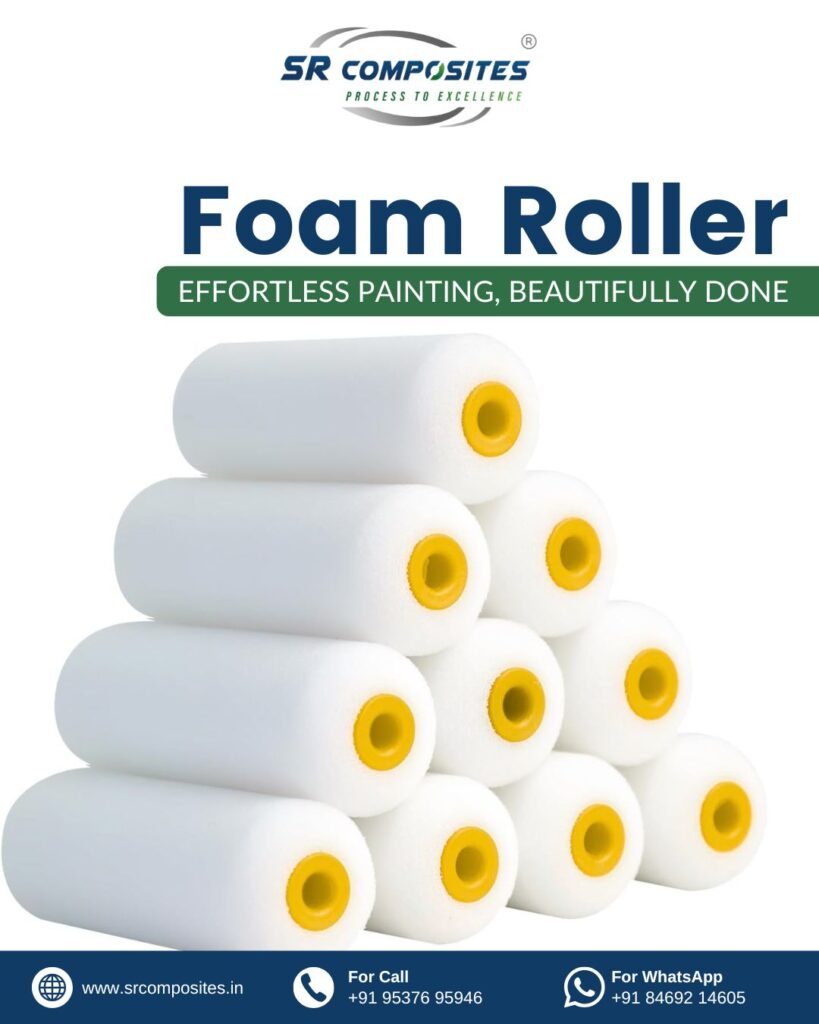
Table of Contents Introduction Foam Roller solutions are widely used in painting, coating, and surface finishing applications where consistency and appearance are important. Whether working on furniture, walls, industrial components, composite products, or decorative surfaces, achieving a smooth finish requires the right application tool. Modern industries focus heavily on efficiency and quality. Even the best coating materials can produce unsatisfactory results if they are not applied correctly. This is why professional contractors, manufacturers, and finishing specialists rely on high-quality rollers that ensure even distribution of paint, resin, varnish, and other coating materials. A well-designed roller helps reduce visible marks, improve coating uniformity, and enhance the final appearance of a product or surface. As industries continue to adopt advanced finishing techniques, these application tools remain an important part of achieving professional results. Understanding Foam Rollers A foam-based paint roller is designed using high-density material that can absorb and release coating products evenly across a surface. Unlike traditional fabric alternatives, this type of applicator is specifically developed for smooth surfaces where a refined finish is required. The structure of the foam allows controlled material transfer, helping users achieve a more uniform coating layer. This makes it particularly useful for projects where aesthetics, durability, and consistency are essential. Professionals often choose this type of applicator because it delivers a cleaner finish while reducing common issues such as streaking, excessive texture, and uneven coverage. The result is a surface that looks more polished and professional. Benefits of Using a Foam Roller Smooth and Uniform Finish One of the biggest advantages of a Foam Roller is its ability to create a smooth finish with minimal texture. The material distributes paint and coatings evenly, helping improve overall surface appearance. Better Material Utilization Efficient transfer of coating materials helps reduce waste during application. This not only lowers material costs but also contributes to a more controlled finishing process. Improved Productivity Professionals often prefer foam-based applicators because they enable faster coverage of large areas while maintaining finishing quality. This can significantly improve project efficiency. Reduced Surface Imperfections High-quality rollers help minimize streaks, bubbles, and visible application marks. As a result, surfaces require less rework and touch-up effort. Versatile Performance These tools can be used with a variety of materials, including paints, primers, sealants, adhesives, resins, and protective coatings, making them suitable for numerous industries. Industrial and Commercial Applications The use of foam-based rollers extends across several sectors due to their versatility and reliable performance. In construction projects, they are commonly used for applying paints and decorative finishes on walls, ceilings, and interior surfaces. Furniture manufacturers rely on them to achieve premium finishes on wooden products and cabinetry. The automotive sector frequently uses these rollers during refinishing and coating operations where surface quality is critical. Composite manufacturers also utilize them for resin distribution and laminate processing, helping improve product consistency. Industrial coating applications represent another important area where these tools provide value. Protective coatings, corrosion-resistant layers, and specialty finishes often require controlled application methods that deliver uniform coverage. For information on coating standards and industrial quality practices, readers can refer to the Government of India’s Bureau of Indian Standards (BIS):https://www.bis.gov.in/ Choosing the Right Roller for Your Project Selecting the appropriate finishing tool can directly impact coating quality and operational efficiency. Several factors should be considered before making a purchase decision. Foam density plays an important role in determining finish quality and durability. Higher-density materials generally provide smoother results and longer service life. Roller size should also match the dimensions of the working surface to ensure effective coverage. The compatibility of the applicator with the chosen coating material is equally important. Different paints, resins, and sealants may require specific material properties to achieve optimal performance. By evaluating project requirements carefully, users can select a solution that delivers both efficiency and consistent finishing quality. Why Surface Quality Matters Surface finishing is often the first aspect of a product that customers notice. A smooth and professional appearance enhances perceived quality and contributes to overall customer satisfaction. In manufacturing environments, consistent coating thickness can also improve durability, corrosion resistance, and long-term performance. Proper application techniques combined with high-quality tools help businesses reduce defects and maintain production standards. Organizations worldwide continue to emphasize coating quality and process control. Additional technical resources related to manufacturing best practices can be found through the National Institute of Standards and Technology:https://www.nist.gov/ Why Choose SR Composites When sourcing industrial consumables and finishing products, reliability and consistency are essential. SR Composites has built a reputation for supplying quality solutions that support demanding manufacturing and finishing requirements. The company focuses on delivering products that help customers achieve dependable performance, smoother finishes, and greater operational efficiency. Every product is developed with attention to quality, durability, and practical application requirements. Customers choose SR Composites because of its commitment to product excellence, technical expertise, responsive support, and industry-focused solutions. Whether serving composite manufacturing, coating applications, or industrial finishing operations, the company prioritizes performance and customer satisfaction. Explore additional solutions offered by SR Composites:https://srcomposites.in/ Frequently Asked Questions (FAQs) 1. What is a Foam Roller used for? A Foam Roller is primarily used for applying paint, varnish, resin, sealants, and other coatings smoothly and evenly. It helps achieve a professional finish with minimal texture and fewer visible application marks. 2. Why is a Foam Roller preferred over traditional paint rollers? Foam rollers provide a smoother finish compared to many traditional fabric rollers. They help reduce streaks, splatter, and uneven coating distribution, making them ideal for surfaces that require a refined appearance. 3. Can Foam Rollers be used for industrial applications? Yes. Foam rollers are widely used in industrial coating, composite manufacturing, automotive refinishing, furniture production, and construction projects where consistent coating application is essential. 4. Are Foam Rollers suitable for resin application? Yes. Many composite manufacturers use foam rollers for resin distribution and laminate processing because they help ensure even material spread and improved surface quality. 5. How do Foam Rollers improve finishing quality? The high-density foam structure allows coatings to be applied uniformly, reducing
Paint Tray: 7 Powerful Benefits of Using a High-Quality Paint Tray for Perfect Finishing
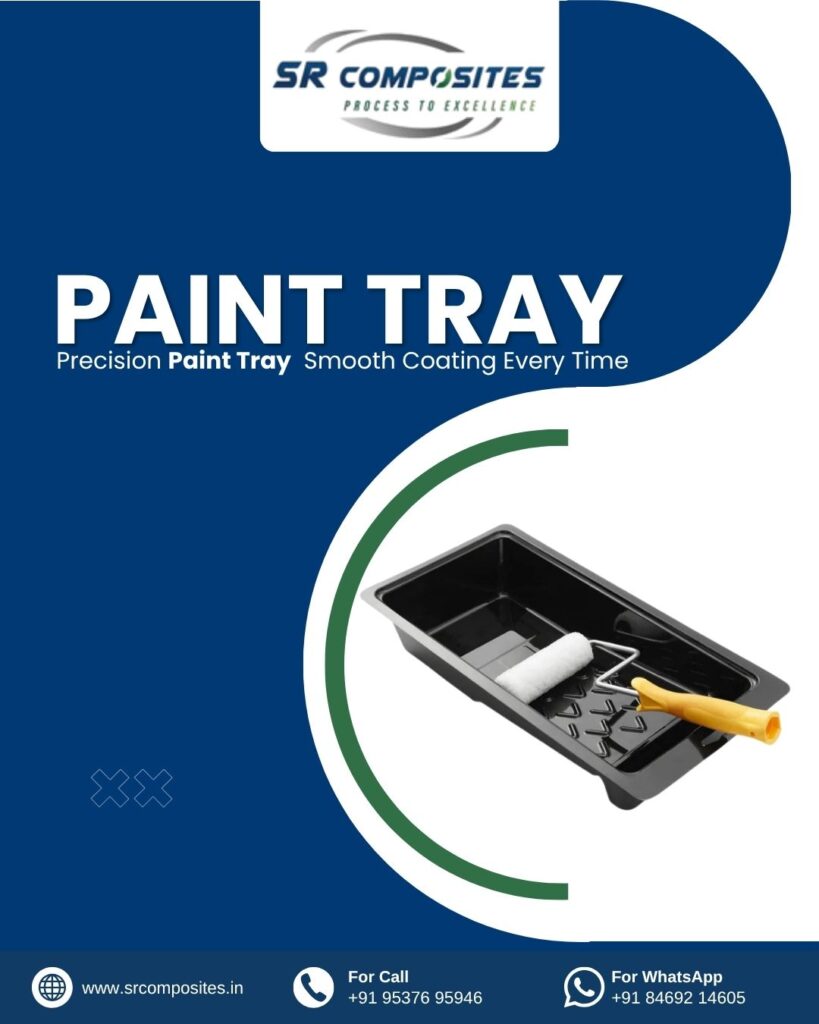
Table of Contents Introduction Paint Tray solutions play a crucial role in modern painting and coating operations. Whether the project involves residential interiors, commercial buildings, furniture finishing, industrial structures, or composite products, proper paint distribution directly affects the final appearance and durability of the coating. While brushes and rollers are often considered the primary tools for painting, the equipment used to hold and distribute paint is equally important. A well-designed tray helps painters achieve smooth coverage, reduces unnecessary paint consumption, and improves workflow efficiency. Paint Tray In industries where precision and consistency are essential, selecting high-quality painting accessories can significantly influence productivity and overall project outcomes. At SR Composites, we manufacture durable and reliable solutions designed to meet the needs of professionals who demand performance, durability, and long-term value. Understanding the Importance of a Paint Tray A painting tray is a specially designed container used for holding paint and loading it evenly onto rollers. Its unique structure generally includes a deep reservoir for paint storage and a textured rolling section that helps remove excess material before application. This simple yet highly effective design allows painters to maintain consistent paint distribution throughout a project. Paint Tray Instead of applying uneven amounts of coating to a surface, users can achieve controlled application with fewer drips and reduced wastage. In both industrial and commercial environments, consistency is a key factor in coating performance. Proper paint loading helps ensure uniform thickness, improved surface coverage, and a cleaner overall finish. Paint Tray. These advantages become even more important when working on large-scale projects where efficiency and quality must be maintained simultaneously. According to coating and material quality standards published by the U.S. government through the National Institute of Standards and Technology (https://www.nist.gov), consistency in coating application contributes significantly to long-term surface performance and durability. Features That Define a Quality Product Not all painting accessories offer the same level of performance. Paint Tray: The quality of materials, manufacturing standards, and structural design directly influence usability and durability. A premium tray is manufactured using strong materials capable of resisting cracks, bending, and deformation during regular use. Durable construction ensures reliability even in demanding work environments where repeated handling is common. Another important feature is the textured rolling surface. This section helps distribute paint evenly across the roller, preventing excessive loading and reducing the risk of uneven coating. Professional painters often rely on this functionality to maintain consistent finishes across walls, furniture, machinery, and other painted surfaces. Chemical resistance is equally important. Paint Tray Modern paints, primers, and specialty coatings may contain ingredients that can degrade low-quality materials. High-performance products are designed to withstand prolonged exposure without losing structural integrity. Lightweight construction further enhances usability by making transportation and handling easier while maintaining sufficient strength for daily operations. Applications Across Industries Painting equipment is widely used across various sectors due to its versatility and effectiveness. In the construction industry, Paint Tray contractors rely on roller trays for interior and exterior painting projects. Residential developments, commercial buildings, and renovation projects all benefit from efficient paint management systems. Furniture manufacturers utilize professional painting tools to achieve smooth finishes on wood, engineered materials, and decorative products. Consistent paint loading helps create attractive surfaces while reducing material waste. Industrial facilities frequently require protective coatings on machinery, equipment, pipelines, and fabricated structures. Proper coating application helps improve corrosion resistance and extend service life. The automotive industry also uses specialized painting accessories during refinishing and touch-up procedures. Accurate paint control is essential for maintaining appearance and surface quality. Composite manufacturing facilities depend on reliable coating equipment when applying surface treatments, protective layers, and finishing materials to composite components. Benefits for Professionals and Businesses Using high-quality painting equipment offers several operational advantages. One of the most significant benefits is improved efficiency. Painters can load rollers quickly and maintain a steady workflow without frequent interruptions. Reduced paint wastage is another major advantage. By removing excess coating before application, the textured rolling surface helps optimize paint consumption and lower material costs. Professional finishing quality is equally important. Uniform paint distribution reduces streaks, roller marks, and uneven coverage, resulting in cleaner and more attractive surfaces. Workplace cleanliness also improves when durable and stable equipment is used. Reduced spills mean less cleanup time and safer working conditions. Over time, businesses benefit from lower replacement costs because premium products offer longer service life compared to inexpensive alternatives. Choosing the Right Painting Equipment Selecting the appropriate product requires careful consideration of project requirements and working conditions. Material quality should always be a priority. Strong and durable construction helps ensure long-term reliability and resistance to wear. Size compatibility is another important factor. The selected tray should accommodate the roller dimensions commonly used for specific applications. Design quality influences paint distribution efficiency. Products with well-engineered rolling surfaces typically provide better coating consistency and improved user experience. Businesses should also consider the reputation of the manufacturer. Working with an experienced supplier helps ensure product quality, technical support, and dependable performance. Why Choose SR Composites SR Composites has established itself as a trusted manufacturer of industrial and composite solutions by focusing on quality, innovation, and customer satisfaction. Our products are developed to meet the demands of professional users who require dependable performance in challenging environments. Every solution is manufactured using carefully selected materials and quality-controlled production processes. This commitment helps ensure durability, efficiency, and consistent results across a wide range of applications. Customers choose SR Composites because of our dedication to product reliability, technical expertise, and long-term value. Whether the requirement involves construction projects, industrial coatings, furniture finishing, or composite manufacturing, we provide solutions designed to support professional-grade results. For additional information about our products and services, visit https://srcomposites.in/. Frequently Asked Questions What is a Paint Tray used for? It is used to hold paint and distribute it evenly onto a roller during painting operations. Why is quality important when selecting painting accessories? Higher-quality products provide better durability, improved paint control, and more consistent finishing results. Can these products be used for industrial coatings?
Vacuum Bagging Film: 7 Powerful Benefits of High-Performance
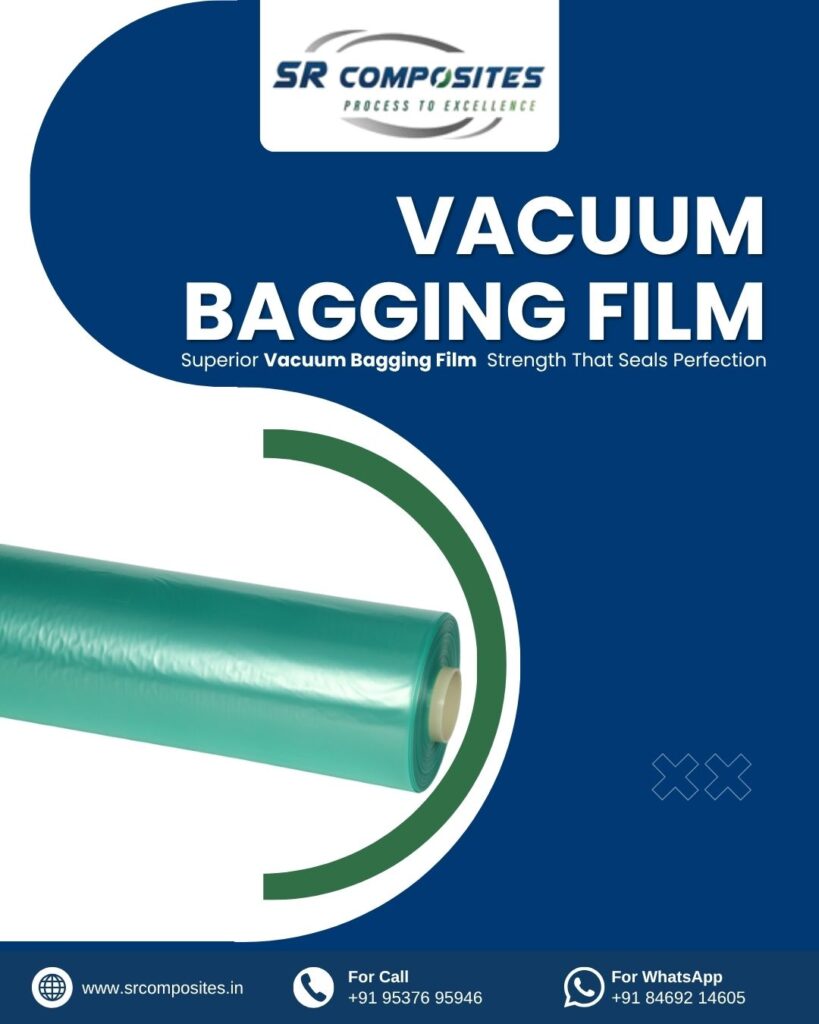
Table of Contents Introduction Vacuum Bagging Film has become a critical component in modern composite manufacturing, enabling industries to produce lightweight, durable, and high-performance products with exceptional consistency. As manufacturing standards continue to evolve, companies are increasingly adopting advanced composite technologies to meet demands for stronger structures, improved efficiency, and reduced material waste. From aerospace and automotive applications to marine construction and renewable energy projects, vacuum-assisted processing plays a significant role in achieving these objectives. Vacuum Bagging Film: The effectiveness of any vacuum bagging process depends on the quality of materials used throughout production. Among these materials, the bagging film serves as the primary barrier that creates and maintains the sealed environment necessary for successful curing and resin infusion. When selected correctly, it contributes to better product quality, improved structural integrity, and more efficient manufacturing operations. What is Vacuum Bagging Film? Vacuum Bagging Film is a specially engineered material used during composite fabrication to create an airtight enclosure around laminate structures. During the manufacturing process, reinforcement materials and resin systems are placed on a mould before the film is carefully positioned over the assembly and sealed using specialised tape. Vacuum Bagging Film Air is then removed from the enclosed space through a vacuum system, creating pressure that compresses the laminate and assists resin distribution. This controlled manufacturing environment helps eliminate trapped air, reduces void formation, and ensures consistent consolidation of composite layers. The result is a stronger and more reliable finished component with improved mechanical properties and enhanced surface quality. Because composite parts often feature complex shapes and intricate geometries, the film must be flexible enough to conform to mould contours while maintaining excellent sealing performance throughout the curing cycle. Key Features and Performance Advantages A high-quality vacuum bagging solution offers several characteristics that contribute directly to manufacturing success. One of the most important features is excellent vacuum retention, which helps maintain stable pressure conditions throughout the production process. Vacuum Bagging Film: Consistent vacuum levels reduce the likelihood of defects and improve overall laminate quality. Flexibility is another important property. Composite structures frequently contain curved surfaces and detailed shapes that require the material to stretch and conform without creating wrinkles or bridging. This adaptability ensures complete coverage and reliable processing. Temperature resistance is equally critical, particularly in applications involving elevated curing temperatures. Premium materials maintain their physical properties under demanding thermal conditions, ensuring dependable performance during manufacturing. Durability also plays a major role in production efficiency. Strong tear resistance helps prevent accidental damage during handling and installation, reducing downtime and minimising material waste. In addition, compatibility with various resin systems, including epoxy, polyester, and vinyl ester resins, allows manufacturers to use the material across a wide range of applications. Applications Across Industries Vacuum Bagging Film Composite manufacturing has expanded significantly over the past decade, leading to increased demand for advanced processing materials across multiple sectors. Aerospace manufacturers use vacuum-assisted production techniques to create lightweight aircraft structures capable of delivering exceptional strength and fuel efficiency. Precision and consistency are essential in this industry, making reliable manufacturing consumables particularly important. The automotive sector also benefits from composite technology. Manufacturers increasingly rely on lightweight materials to improve vehicle performance, enhance energy efficiency, and support electric mobility initiatives. Vacuum-assisted processing helps ensure the structural quality required for these demanding applications. Marine industries utilise composite materials for boat hulls, decks, and structural components exposed to challenging environmental conditions. Vacuum Bagging Film Proper processing contributes to enhanced durability and long-term performance in marine environments. Renewable energy projects, particularly wind turbine manufacturing, depend on composite materials to produce large structural components that must withstand significant mechanical stress. Industrial fabrication companies similarly use advanced composites in tanks, pipes, covers, and specialised engineering products where corrosion resistance and strength are essential. Benefits for Composite Manufacturing Vacuum Bagging Film One of the primary advantages of vacuum-assisted processing is improved laminate consolidation. By applying controlled pressure throughout the manufacturing cycle, composite layers are compacted more effectively, resulting in stronger finished products with fewer internal defects. Manufacturers also benefit from improved resin distribution. Consistent resin flow throughout the laminate structure enhances product quality and helps achieve more predictable manufacturing outcomes. Better resin control contributes to improved mechanical performance and reduced material waste. Surface finish quality is another important benefit. Components produced under controlled vacuum conditions typically require less post-processing, reducing labour requirements and increasing production efficiency. This improvement can significantly impact overall manufacturing costs, particularly in high-volume operations. Weight optimisation is equally valuable. Improved fibre-to-resin ratios enable manufacturers to produce lighter components while maintaining the strength and durability required for demanding applications. This advantage is particularly important in aerospace, automotive, and renewable energy industries where weight reduction directly affects performance. Why Material Quality Matters The success of any composite manufacturing operation depends heavily on the quality of consumable materials used during production. Vacuum Bagging Film Poor-quality materials can compromise vacuum integrity, increase the likelihood of defects, and lead to inconsistent results. These issues often result in rejected parts, production delays, and higher operating costs. High-performance manufacturing materials help maintain stable process conditions throughout the curing cycle, supporting repeatable results and improved quality control. As industry standards continue to become more demanding, manufacturers increasingly recognise the importance of investing in dependable production materials that support long-term operational success. India’s manufacturing sector continues to promote innovation and advanced production technologies through initiatives such as Make in India. Vacuum Bagging Film. Additional information regarding manufacturing growth and industrial development can be found through the official government initiative at www.makeinindia.com. Why Choose SR Composites SR Composites is dedicated to providing high-quality composite manufacturing materials designed to meet the needs of modern industrial applications. Vacuum Bagging Film With a strong focus on reliability, performance, and customer satisfaction, the company supports manufacturers seeking consistent production outcomes and improved operational efficiency. Our products are selected to perform under demanding manufacturing conditions while helping customers achieve superior results across a wide range of applications. Whether serving aerospace, automotive, marine, renewable energy, or industrial sectors, SR Composites delivers solutions that
7 Nylon Braided Hose Pipe: Strength in Every Strand, Clarity in Every Flow
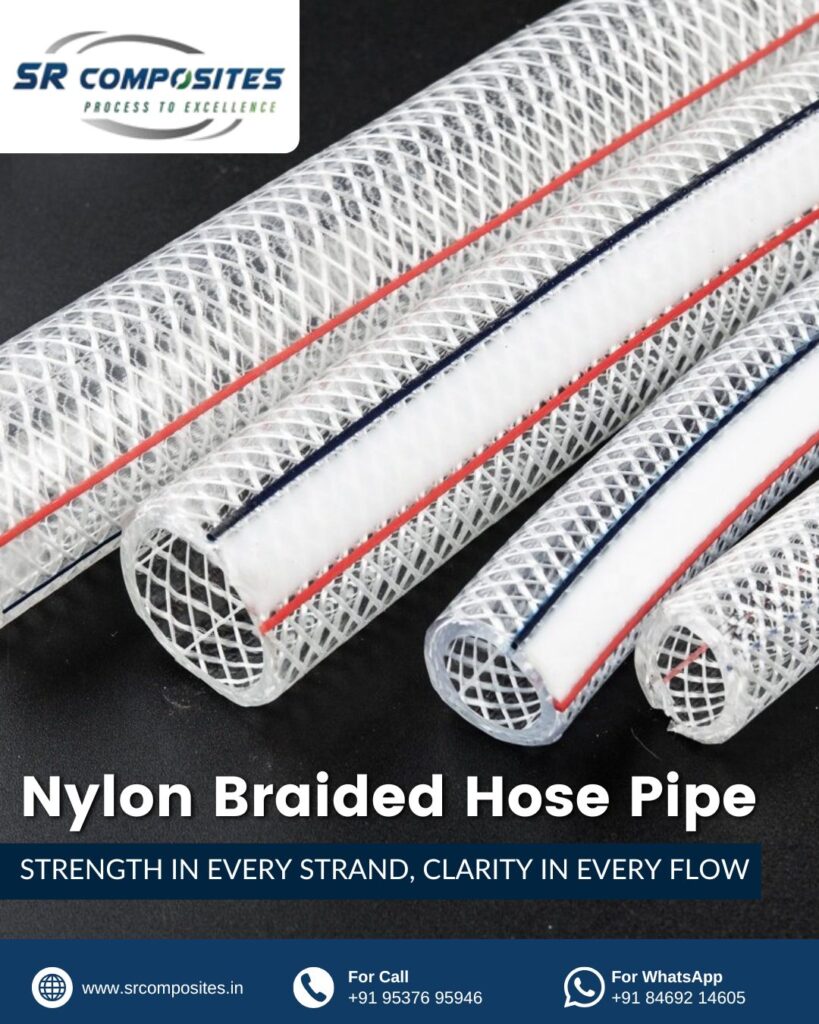
Introduction When it comes to reliable fluid transfer solutions, SR Composites Nylon Braided Hose Pipes have become one of the most preferred choices across industries. Their unique construction combines a flexible PVC inner layer with a strong nylon reinforcement mesh, creating a hose that delivers excellent pressure resistance, durability, and long service life. Unlike ordinary hoses, nylon braided hose pipes are specifically engineered to withstand higher working pressures while maintaining flexibility and transparency. The braided reinforcement provides structural strength, preventing expansion, bursting, and deformation under demanding operating conditions. From industrial manufacturing plants and construction sites to agricultural irrigation systems and pneumatic applications, Nylon Braided Hose Pipes offer a dependable solution for transporting water, air, oils, chemicals, and other compatible fluids safely and efficiently. Their transparency also allows users to visually monitor fluid flow, making maintenance and troubleshooting easier. As industries continue to demand stronger, lighter, and more versatile hose solutions, nylon braided hoses remain an essential component in modern fluid handling systems. Table of Contents What is a Nylon Braided Hose Pipe? A Nylon Braided Hose Pipe is a reinforced flexible hose consisting of a transparent or colored PVC tube strengthened with a layer of high-tensile nylon braiding. The braided mesh acts as reinforcement, significantly increasing the hose’s pressure-handling capacity while maintaining flexibility. The combination of PVC and nylon offers excellent resistance to pressure, abrasion, weather conditions, and regular wear and tear. These hoses are commonly used in applications where durability, visibility, and reliability are essential. Due to their lightweight design and excellent mechanical properties, nylon braided hoses are suitable for both domestic and industrial environments. Construction of Nylon Braided Hose Pipe Inner PVC Layer The inner tube provides a smooth passage for fluid flow and minimizes pressure loss during operation. Nylon Reinforcement Mesh A high-strength nylon braided layer is embedded within the hose wall to improve pressure resistance and structural integrity. Outer Protective Layer The outer PVC layer protects the hose from abrasion, environmental exposure, and physical damage. Transparent Design Many nylon braided hoses feature a transparent body that allows easy inspection of fluid movement and blockage detection. Key Features of Nylon Braided Hose Pipe High Pressure Resistance The reinforced nylon mesh enables the hose to withstand higher operating pressures compared to standard PVC hoses. Excellent Flexibility Maintains flexibility even under continuous bending and movement. Transparent Construction Allows users to monitor fluid flow and detect contamination or air bubbles. Lightweight Design Easy to transport, install, and handle across different applications. Abrasion Resistance Offers protection against wear caused by rough operating environments. Weather Resistance Performs efficiently under varying environmental conditions. Long Service Life Engineered for extended use with minimal maintenance requirements. Leak-Proof Performance Strong construction reduces the risk of leakage and hose failure. Benefits of Using Nylon Braided Hose Pipe Enhanced Durability The nylon reinforcement significantly increases the hose’s lifespan. Improved Safety High-pressure resistance reduces the likelihood of bursting during operation. Cost-Effective Solution Long service life reduces replacement and maintenance costs. Versatile Applications Suitable for multiple industries and fluid transfer requirements. Easy Inspection Transparent construction helps identify flow issues quickly. Reliable Performance Provides consistent operation even in demanding working conditions. Reduced Downtime Durable construction minimizes interruptions caused by hose failures. Technical Specifications Property Description Product Type Nylon Braided Hose Pipe Material PVC with Nylon Reinforcement Structure Multi-Layer Reinforced Construction Color Transparent / Customized Pressure Resistance High Flexibility Excellent Temperature Resistance Suitable for Standard Industrial Applications Fluid Compatibility Water, Air, Oils, Select Chemicals Visibility Transparent Flow Monitoring Installation Easy and Flexible Applications of Nylon Braided Hose Pipe Industrial Fluid Transfer Used for transferring water, coolants, lubricants, and industrial fluids. Pneumatic Systems Ideal for compressed air systems and pneumatic machinery. Agricultural Irrigation Widely used in farming applications for water distribution and irrigation. Construction Industry Supports water supply and fluid transfer operations on construction sites. Manufacturing Plants Suitable for production facilities requiring flexible fluid transport systems. Chemical Handling Can be used for transferring compatible chemicals in industrial environments. Automotive Workshops Useful for air lines, coolant circulation, and maintenance operations. Domestic Water Supply Frequently utilized in household and commercial plumbing systems. Why Choose SR Composites Nylon Braided Hose Pipe? Premium Quality Materials Manufactured using high-grade PVC and strong nylon reinforcement. Consistent Performance Designed to deliver reliable pressure handling and flow efficiency. Superior Manufacturing Standards Produced under strict quality control processes. Multiple Size Availability Available in various diameters and lengths to meet application requirements. Competitive Pricing Offers excellent value without compromising performance. Technical Support Backed by professional assistance for product selection and application guidance. Installation and Maintenance Tips Select the Correct Hose Size Choose the appropriate diameter and pressure rating for your application. Avoid Excessive Bending Prevent sharp bends that may restrict flow or damage the hose structure. Regular Inspection Check for signs of wear, abrasion, or physical damage. Secure Connections Properly Use suitable fittings and clamps to prevent leaks. Protect from Extreme Conditions Avoid exposure to temperatures or chemicals beyond recommended limits. Clean Periodically Remove dirt and contaminants to maintain optimal performance. Frequently Asked Questions (FAQs) What is a Nylon Braided Hose Pipe used for? It is used for transporting water, air, oils, and compatible fluids in industrial, agricultural, and commercial applications. Why is nylon braiding important? The nylon reinforcement increases pressure resistance and prevents hose expansion under load. Can Nylon Braided Hose Pipes handle high pressure? Yes, they are specifically designed to withstand significantly higher pressures than standard PVC hoses. Are these hoses flexible? Yes, they offer excellent flexibility while maintaining structural strength. Can I see the fluid flowing through the hose? Yes, most nylon braided hoses are transparent, allowing visual monitoring of fluid movement. Are Nylon Braided Hose Pipes suitable for industrial use? Yes, they are widely used across manufacturing, construction, agriculture, automotive, and pneumatic industries. How long do Nylon Braided Hose Pipes last? Their lifespan depends on operating conditions, but their reinforced construction provides long-lasting performance. Are they resistant to wear and tear? Yes, the braided reinforcement and protective outer layer improve durability and abrasion resistance. Conclusion Nylon Braided Hose
PVC Steel Wire Hose Pipe: 7 Powerful Benefits of Flexible and Durable Industrial Hose Solutions
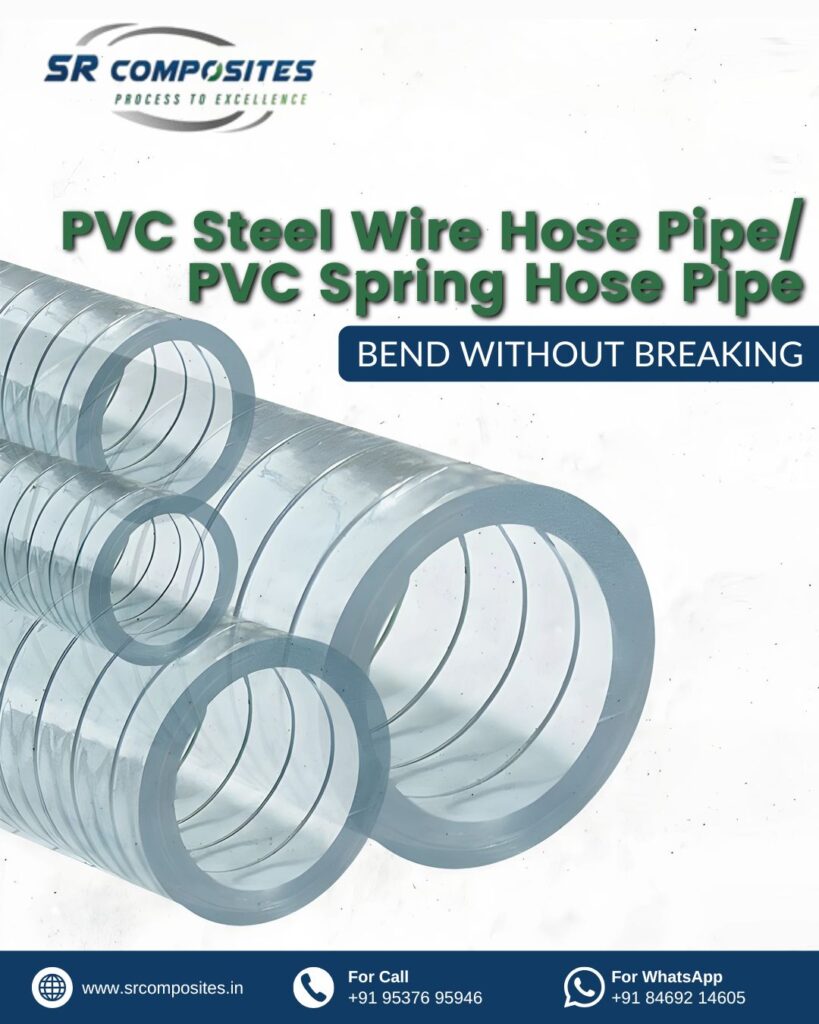
PVC Steel Wire Hose Pipe is one of the most reliable and widely used hose solutions for industries that require efficient fluid transfer, high flexibility, and exceptional durability. Designed with premium-quality PVC reinforced by high-tensile steel wire, these hoses offer superior strength while maintaining excellent transparency and flexibility. Whether used in industrial plants, agricultural operations, construction sites, chemical handling units, or water transfer systems, PVC Steel Wire Hose Pipe delivers consistent performance even in demanding environments. Industries today require hose systems that can withstand pressure, resist wear and tear, and maintain operational efficiency over long periods. Traditional hoses often face challenges such as kinking, cracking, collapsing under vacuum pressure, or reduced flexibility. A PVC Steel Wire Hose Pipe effectively addresses these issues by combining the strength of steel wire reinforcement with the flexibility of high-grade PVC. Table of Contents Sr. No. Topics 1 What is PVC Steel Wire Hose Pipe? 2 Key Features of PVC Steel Wire Hose Pipe 3 Applications Across Industries 4 Benefits of PVC Steel Wire Hose Pipe 5 Why Industries Prefer PVC Spring Hose Pipe 6 Why Choose SR Composites 7 Conclusion 8 FAQs What is PVC Steel Wire Hose Pipe? A PVC Steel Wire Hose Pipe is a transparent, flexible hose reinforced with a spiral of steel wire embedded within the PVC wall. This reinforcement significantly enhances the hose’s ability to handle pressure and vacuum applications while retaining flexibility. The embedded steel wire prevents collapse during suction operations and provides excellent resistance against external impacts. Due to its transparent construction, users can easily monitor the flow of liquids, powders, granules, and other materials passing through the hose, ensuring efficient process control and maintenance. The hose is commonly used for transferring water, oils, chemicals, food-grade liquids, powders, and industrial materials where durability and flexibility are critical requirements. Key Features of PVC Steel Wire Hose Pipe High Flexibility and Bend Resistance One of the most appreciated characteristics of a PVC Steel Wire Hose Pipe is its ability to bend without breaking. The flexible PVC material allows easy installation in confined spaces and complex routing systems while maintaining structural integrity. Strong Steel Wire Reinforcement The integrated steel wire spiral provides additional strength and prevents hose collapse under high suction conditions. This reinforcement makes the hose suitable for both pressure and vacuum applications. Excellent Transparency The clear PVC body enables operators to visually inspect material flow, detect blockages, and monitor system performance without dismantling the setup. Chemical and Abrasion Resistance Industrial environments often expose hoses to chemicals, oils, and abrasive materials. PVC Steel Wire Hose Pipe offers reliable resistance against many industrial chemicals and abrasive substances, helping extend service life. Lightweight Construction Despite its reinforced structure, the hose remains lightweight and easy to handle, reducing installation time and labor costs. Applications of PVC Steel Wire Hose Pipe Across Industries The versatility of PVC Steel Wire Hose Pipe makes it suitable for a wide range of industries. Manufacturing facilities use these hoses for transferring liquids and chemicals. Agricultural operations rely on them for irrigation and water suction systems. Construction sites utilize them for water transportation and dewatering applications. Food processing industries often use specialized variants for transferring liquid ingredients. Chemical plants prefer these hoses due to their transparency and resistance to various fluids. Mining, marine, pharmaceutical, and engineering sectors also benefit from the durability and performance of PVC Steel Wire Hose Pipe systems. For industrial standards and manufacturing guidelines, businesses can refer to the official website of the Bureau of Indian Standards (BIS): DoFollow Government Resource:Bureau of Indian Standards (BIS) Benefits of PVC Steel Wire Hose Pipe Superior Durability The combination of premium PVC and steel wire reinforcement results in a hose capable of handling demanding industrial conditions. This durability reduces replacement frequency and lowers operational costs. Excellent Vacuum Performance Unlike ordinary hoses that may collapse under suction, PVC Steel Wire Hose Pipe maintains its shape and functionality due to the embedded steel wire structure. Easy Installation Its lightweight design and flexibility simplify transportation, installation, and maintenance activities, improving workplace efficiency. Long Service Life Resistance to weathering, abrasion, and chemical exposure contributes to a longer operational lifespan compared to many conventional hose alternatives. Enhanced Safety The transparent hose body enables quick visual inspections, helping identify blockages, contamination, or irregular flow conditions before they become major operational issues. Cost-Effective Solution Because of its durability and low maintenance requirements, PVC Steel Wire Hose Pipe offers an excellent return on investment for industrial users. Wide Temperature Compatibility The hose performs efficiently under varying environmental conditions, making it suitable for indoor and outdoor applications. PVC Spring Hose Pipe for Modern Industrial Requirements Many industries also refer to this product as a PVC Spring Hose Pipe due to the visible steel spring-like reinforcement within the hose structure. The spring reinforcement enhances flexibility while maintaining exceptional mechanical strength. A PVC Spring Hose Pipe is particularly valuable in applications where hoses are frequently moved, bent, or subjected to varying pressure conditions. The ability to maintain shape and performance under such circumstances has made it one of the preferred hose solutions across numerous industrial sectors. Organizations seeking technical information regarding industrial fluid handling technologies can explore resources from: Engineering Toolbox Why Choose SR Composites? When investing in industrial hose solutions, product quality and manufacturing expertise play a significant role in long-term performance. SR Composites has established itself as a trusted manufacturer and supplier of high-quality PVC hose products designed to meet diverse industrial requirements. The company focuses on maintaining stringent quality standards, utilizing premium raw materials, and adopting advanced manufacturing processes to deliver reliable and durable hose solutions. Customers benefit from products that offer consistent performance, excellent flexibility, and long service life. SR Composites understands the varying demands of industries such as agriculture, construction, manufacturing, chemical processing, and engineering. By providing customized solutions and maintaining a customer-centric approach, the company continues to build strong relationships across multiple sectors. For more information about available products and specifications, visit: SR Composites Official Website FAQs 1. What is a PVC
7 Non-Perforated Release Film: The Invisible Touch for Perfect Composite Surfaces
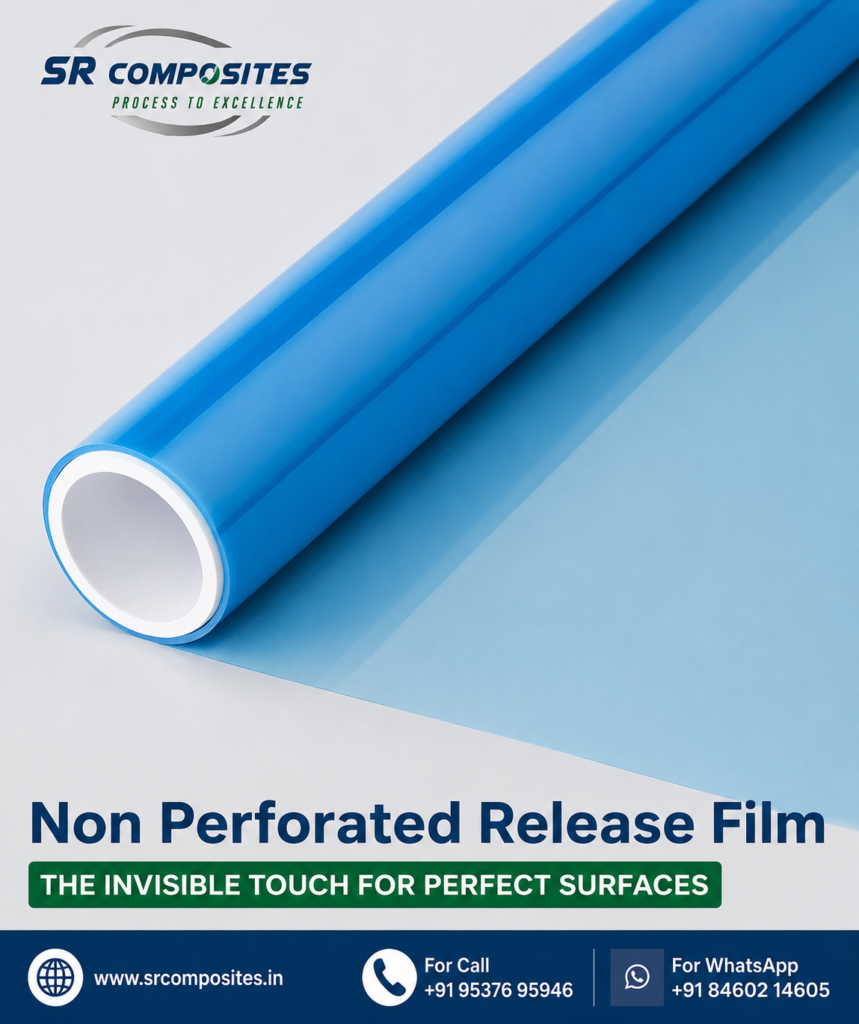
Table of Contents Non-Perforated Release Film is a specialized consumable material widely used in SR Composite manufacturing and vacuum bagging processes. Designed to create a clean separation between composite laminates and auxiliary materials, it prevents unwanted bonding while maintaining an exceptionally smooth surface finish. Unlike perforated films that allow resin bleed-through, Non-Perforated Release Film creates a complete barrier, helping manufacturers retain resin within the laminate structure. This results in improved mechanical properties, better surface aesthetics, and greater process control. For industries where precision and quality are critical, such as aerospace, automotive, marine, wind energy, and industrial composites, Non-Perforated Release Film plays a vital role in achieving consistent and reliable results. What is Non-Perforated Release Film? Non-Perforated Release Film is a thin polymer-based film designed for composite layup and vacuum bagging applications. The film acts as a separation layer between the laminate and other vacuum bagging materials, preventing adhesion while preserving surface quality. Since the film contains no perforations, resin remains within the laminate rather than bleeding into breather or absorber layers. This characteristic makes it ideal for applications requiring precise resin retention and superior surface finish. Key Features of Non-Perforated Release Film Complete Resin Barrier Prevents resin flow through the film, ensuring maximum resin retention within the laminate. Excellent Release Properties Allows easy removal after curing without damaging the composite surface. Smooth Surface Finish Produces high-quality cosmetic surfaces with minimal defects. High Temperature Resistance Suitable for elevated-temperature curing processes commonly used in advanced composites. Chemical Compatibility Compatible with a wide range of epoxy, polyester, vinyl ester, and other resin systems. Consistent Thickness Provides uniform performance throughout the manufacturing process. Easy Handling Flexible and lightweight design simplifies application and removal. Benefits of Using Non-Perforated Release Film Improved Composite Quality Maintains the desired resin content, resulting in stronger and more durable composite parts. Superior Surface Appearance Creates smooth and defect-free surfaces that require less post-processing. Reduced Material Waste Minimizes resin loss and improves production efficiency. Enhanced Process Control Provides greater consistency across manufacturing batches. Increased Productivity Simplifies demolding and reduces cleanup time after curing. Cost Efficiency Helps manufacturers reduce material consumption and rework costs. Technical Specifications Property Description Product Type Non-Perforated Release Film Material High-Performance Polymer Film Surface Finish Smooth Perforation None Temperature Resistance High Temperature Compatible Resin Compatibility Epoxy, Polyester, Vinyl Ester Application Method Vacuum Bagging & Composite Layup Removal Easy Release After Cure Applications of Non-Perforated Release Film Aerospace Components Used in aircraft structures and high-performance composite parts requiring precise resin control. Automotive Manufacturing Supports the production of lightweight and durable automotive composite components. Marine Industry Ideal for boat hulls, decks, and structural marine composite applications. Wind Energy Used in wind turbine blade manufacturing where consistency and strength are critical. Industrial Composite Parts Suitable for panels, tooling, tanks, pipes, and custom composite structures. Sports & Recreation Equipment Applied in the production of bicycles, sporting goods, and high-performance recreational products. Why Choose SR Composites Non-Perforated Release Film? Premium Manufacturing Standards Produced using high-quality materials and advanced manufacturing processes. Reliable Performance Ensures consistent release characteristics and surface quality. Industry Expertise Backed by extensive experience in composite consumable solutions. Wide Application Range Suitable for multiple industries and manufacturing processes. Customer-Focused Support Technical guidance and product assistance for optimal results. Best Practices for Usage Clean the Mold Surface Ensure the mold is free from dust, moisture, and contaminants. Apply Film Correctly Position the film smoothly to avoid wrinkles and air pockets. Maintain Proper Vacuum Pressure Use recommended vacuum settings for optimal laminate consolidation. Follow Cure Cycle Requirements Adhere to resin manufacturer guidelines for temperature and curing duration. Inspect After Demolding Check surface quality and ensure proper release performance. Frequently Asked Questions (FAQs) What is the purpose of a Non-Perforated Release Film? It prevents adhesion between composite laminates and vacuum bagging materials while retaining resin within the laminate. How is it different from a perforated release film? A non-perforated film blocks resin flow completely, whereas perforated films allow controlled resin bleed. Which resins are compatible with this film? It is generally compatible with epoxy, polyester, and vinyl ester resin systems. Can it be used in high-temperature curing processes? Yes, it is designed to withstand elevated curing temperatures commonly used in composite manufacturing. Does it improve surface finish? Yes, it helps create smoother and cleaner composite surfaces with minimal defects. Is it suitable for aerospace applications? Yes, it is widely used in aerospace composite manufacturing where quality and consistency are essential. Can it reduce production costs? Yes, by minimizing resin loss, reducing rework, and improving process efficiency. Is the film easy to remove after curing? Yes, it is specifically engineered for easy release after the curing process. Conclusion Non-Perforated Release Film is an essential component in modern composite manufacturing. By providing excellent release characteristics, superior resin retention, and outstanding surface finish, it helps manufacturers achieve higher-quality composite parts with greater efficiency. Whether used in aerospace, automotive, marine, wind energy, or industrial applications, Non-Perforated Release Film delivers reliable performance and process consistency. Choosing a premium-quality solution from SR Composites ensures improved productivity, reduced waste, and exceptional finished products that meet demanding industry standards. Check this :- https://www.indiamart.com/
7 Dynamic T Connector in Composite Manufacturing: Features, Benefits & Applications
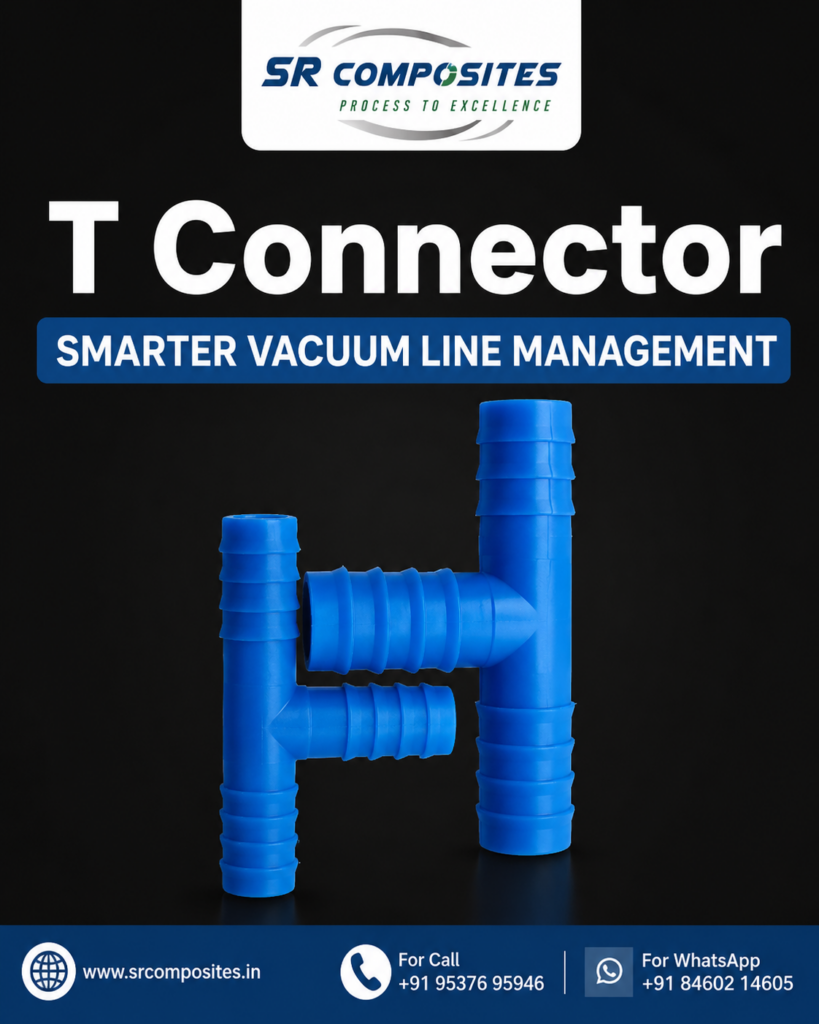
Table of Contents Introduction A T Connector is an essential component used in vacuum bagging, resin infusion, and SR composite manufacturing processes. Designed to split or combine vacuum lines efficiently, it helps maintain smooth airflow distribution throughout the system. These connectors play a vital role in ensuring consistent vacuum pressure, improving process reliability, and enhancing overall production efficiency. Widely used in FRP fabrication, aerospace manufacturing, marine applications, and industrial composite production, this fitting provides a practical solution for managing multiple vacuum lines without compromising system performance. What is a T Connector? A T Connector is a specially designed fitting that joins three tubing connections in a T-shaped configuration. It allows vacuum flow to be distributed between multiple channels or collected into a single pathway. These fittings are commonly integrated into vacuum bagging systems to improve airflow control and simplify tubing layouts during manufacturing operations. Key Features Strong and Durable Construction Manufactured from high-quality materials for long-term industrial use. Efficient Airflow Distribution Helps maintain balanced vacuum flow throughout the system. Easy Hose Integration Compatible with various vacuum tubing sizes. Leak-Resistant Design Supports reliable vacuum performance during operation. Lightweight Structure Easy to install, transport, and replace. Reusable Performance Can be used repeatedly with proper maintenance. Benefits Improves Vacuum Management Allows better organization of multiple vacuum lines. Enhances Process Efficiency Supports uninterrupted manufacturing operations. Reduces System Complexity Simplifies tubing arrangements in production setups. Reliable Performance Maintains consistent vacuum pressure distribution. Cost-Effective Solution Provides long service life with minimal maintenance requirements. Flexible Installation Suitable for different composite manufacturing configurations. Applications Resin Infusion Processes Used to manage vacuum flow during resin transfer operations. Vacuum Bagging Systems Helps distribute vacuum pressure across multiple sections. FRP Manufacturing Supports fiberglass and composite fabrication projects. Marine Industry Applied in boat and yacht composite production. Aerospace Components Used in advanced composite manufacturing systems. Industrial Production Facilities Suitable for vacuum-based processing applications. Technical Specifications Property Description Product Type T Connector Configuration Three-Way Connection Application Vacuum Line Distribution Compatibility Vacuum Tubing Systems Usage Composite Manufacturing Installation Easy Push-Fit Connection Reusability Yes Industry Use FRP, Aerospace, Marine, Industrial Working Principle Vacuum Line Connection The fitting connects multiple vacuum hoses into a single network. Airflow Distribution Vacuum pressure is evenly distributed through connected channels. Pressure Management Supports stable vacuum performance during manufacturing. Efficient Process Control Helps improve consistency throughout production cycles. Why Use This Vacuum Fitting? Better Workflow Organization Keeps tubing layouts clean and manageable. Consistent Vacuum Performance Supports reliable process outcomes. Easy System Expansion Allows additional vacuum lines to be integrated when required. Reduced Downtime Quick installation and replacement save valuable production time. Suitable for Multiple Industries Can be used across various vacuum-based manufacturing applications. Installation and Maintenance Tips Verify Hose Compatibility Ensure tubing dimensions match connector specifications. Check for Secure Connections Prevent vacuum leaks by properly fitting hoses. Inspect Regularly Monitor fittings for wear and damage. Clean Before Reuse Remove dust, resin, or debris before installation. Store Properly Keep in a dry and contamination-free environment. About SR Composites SR Composites is a trusted manufacturer and supplier of composite processing materials, vacuum bagging accessories, resin infusion products, industrial consumables, and FRP manufacturing solutions. With a focus on quality, innovation, and performance, the company provides dependable products that support efficient production processes across aerospace, marine, automotive, wind energy, and industrial sectors. Guided by its commitment to “Process to Excellence,” SR Composites continues to deliver reliable solutions designed to improve manufacturing efficiency and product quality. Frequently Asked Questions (FAQs) What is a T Connector used for? It is used to distribute or combine vacuum lines within vacuum bagging and composite manufacturing systems. Can this fitting be reused? Yes, it can be reused multiple times when maintained properly. Is it suitable for resin infusion applications? Yes, it is commonly used in resin infusion and vacuum-assisted manufacturing processes. Does it help improve vacuum distribution? Yes, it helps ensure efficient and balanced vacuum flow. Can it be used in FRP production? Absolutely, it is widely used in fiberglass and composite fabrication. Is installation complicated? No, most systems allow quick and straightforward installation. Which industries use these fittings? Aerospace, marine, automotive, wind energy, and industrial manufacturing sectors frequently use them. Conclusion A T Connector is a simple yet highly effective component for managing vacuum lines in composite manufacturing and vacuum bagging systems. Its ability to distribute airflow efficiently, simplify tubing arrangements, and support consistent vacuum performance makes it an important accessory in modern production environments. Check this:-https://www.indiamart.com/ Whether used in resin infusion, FRP fabrication, aerospace manufacturing, or industrial applications, this fitting contributes to improved workflow efficiency, reduced complexity, and reliable process performance.