7 Powerful Mohair Roller – Soft on the Roller, Smooth on the Finish
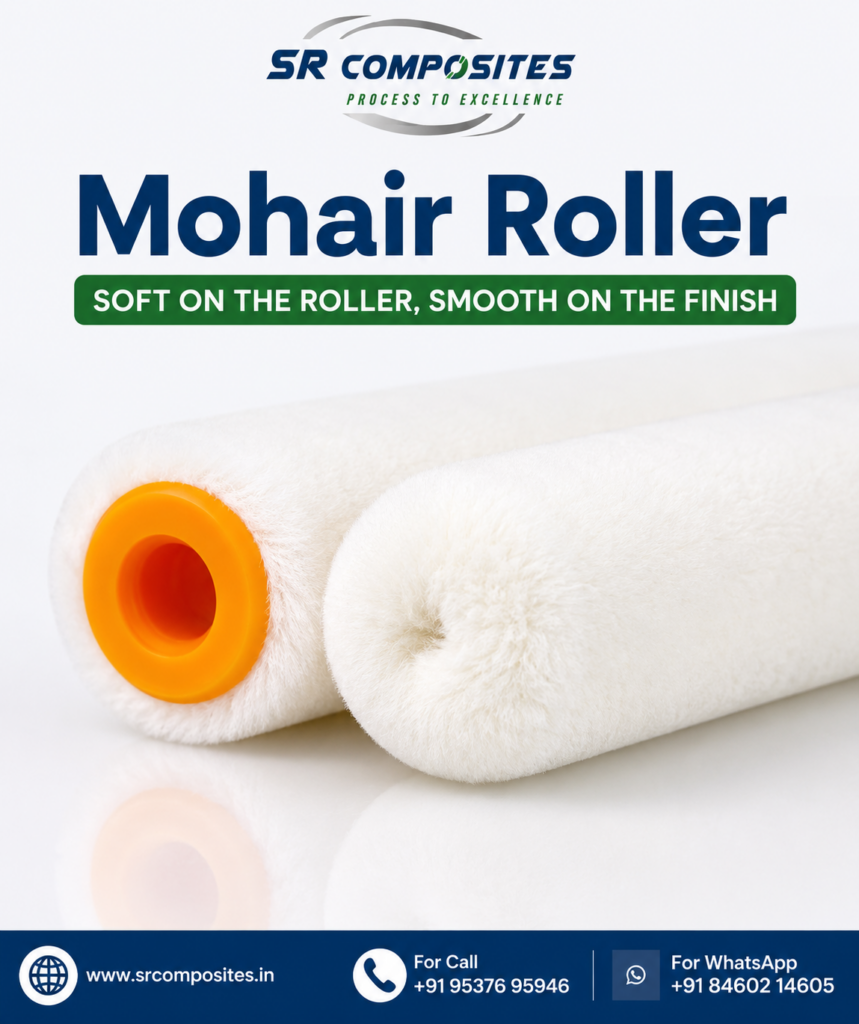
Table of Contents Introduction Mohair rollers are widely recognized for delivering exceptionally smooth and professional paint finishes. Manufactured using premium mohair fibers, these rollers provide excellent paint pickup, controlled release, and uniform coverage across a variety of surfaces. SR Composites is a trusted manufacturer and supplier of high-quality composite materials, painting accessories, industrial rollers, adhesive solutions, and FRP-related products. With a strong commitment to quality, innovation. What is a Mohair Roller? A mohair roller is a premium painting applicator made from natural or blended mohair fibers. These fibers create a smooth and consistent paint application, making the roller ideal for gloss paints, enamels, varnishes, lacquers, and specialty coatings. Unlike standard rollers, mohair-based applicators provide enhanced finishing quality while reducing surface imperfections and paint splatter. Key Features of Mohair Rollers Smooth Paint Application Ensures uniform paint distribution across surfaces. Lint-Free Performance Minimizes fiber shedding during painting. Excellent Paint Pickup Absorbs paint efficiently for better coverage. Controlled Paint Release Helps achieve consistent coating thickness. Soft Fiber Construction Provides a smooth and professional finish. Durable Design Suitable for repeated use with proper maintenance. Benefits of Using Mohair Rollers Professional Finishing Results Creates smooth and attractive painted surfaces. Reduced Roller Marks Helps eliminate streaks and uneven textures. Better Paint Efficiency Improves paint transfer and reduces wastage. Suitable for Fine Finishes Ideal for high-gloss and decorative applications. Easy Handling Lightweight construction supports comfortable use. Versatile Applications Compatible with multiple coating systems. Applications of Mohair Rollers Residential Painting Used for walls, doors, cabinets, and decorative surfaces. Furniture Refinishing Provides premium finishes on wooden furniture. Commercial Projects Suitable for offices, hotels, and retail interiors. Industrial Coatings Used for protective and specialty coating applications. Metal Surface Painting Supports smooth coating on metal components. Woodworking Projects Ideal for varnish and lacquer application. Technical Specifications Property Description Product Type Mohair Roller Material Premium Mohair Fiber Finish Quality Smooth & Uniform Paint Compatibility Enamel, Gloss, Varnish, Lacquer Fiber Type Lint-Free Application Professional & DIY Painting Reusable Yes Surface Compatibility Wood, Metal, Drywall & Furniture How Mohair Rollers Work Paint Absorption The mohair fibers absorb paint evenly. Uniform Distribution Paint is released consistently during application. Smooth Coverage The roller glides smoothly across surfaces. Fine Finish Creation Produces a high-quality finish with minimal texture. Why Choose Mohair Rollers? Superior Finish Quality Delivers cleaner and smoother painting results. Reduced Paint Splatter Helps maintain a cleaner work environment. Excellent Durability Provides long service life with proper care. Professional Performance Trusted by painters and finishing specialists. Cost-Effective Solution Combines efficiency, quality, and reliability. Maintenance and Storage Tips Clean After Every Use Remove paint residues immediately after completion. Use Recommended Cleaning Products Follow the paint manufacturer’s cleaning instructions. Store in a Dry Area Protect from moisture and dust. Avoid Excessive Compression Maintain fiber quality and roller shape. Frequently Asked Questions (FAQs) What is a Mohair Roller used for? A Mohair Roller is used for applying paints, varnishes, enamels, and coatings while achieving smooth and professional finishes. Are Mohair Rollers suitable for gloss paints? Yes, they are highly recommended for gloss, enamel, and lacquer applications. Do Mohair Rollers leave lint behind? High-quality rollers are designed to provide lint-free performance. Can Mohair Rollers be reused? Yes, they can be reused multiple times when cleaned properly. Which surfaces are suitable for Mohair Rollers? Wood, metal, furniture, cabinets, doors, and smooth wall surfaces. Do Mohair Rollers reduce paint wastage? Yes, their efficient paint pickup and release help optimize paint usage. Are Mohair Rollers suitable for professional painters? Absolutely. They are widely used in professional finishing and coating applications. Conclusion Mohair rollers are among the most trusted painting tools for achieving smooth, high-quality finishes across various applications. Their soft fiber construction, excellent paint distribution, and lint-free performance make them ideal for professionals and homeowners alike. Whether you are working Whether you are working on furniture refinishing, decorative painting, industrial coatings, or residential projects, these premium applicators provide reliable results and enhanced finishing quality. Their ability to deliver smooth coatings with minimal effort truly reflects the promise of being soft on the roller and smooth on the finish. On furniture refinishing, decorative painting, industrial coatings, or residential projects, these premium applicators provide reliable results and enhanced finishing quality. Their ability to deliver smooth coatings with minimal effort truly reflects the promise of being soft on the roller and smooth on the finish. Check this:- https://www.npcindia.gov.in/
7 Powerful Foam Roller – Effortless Painting, Beautifully Done
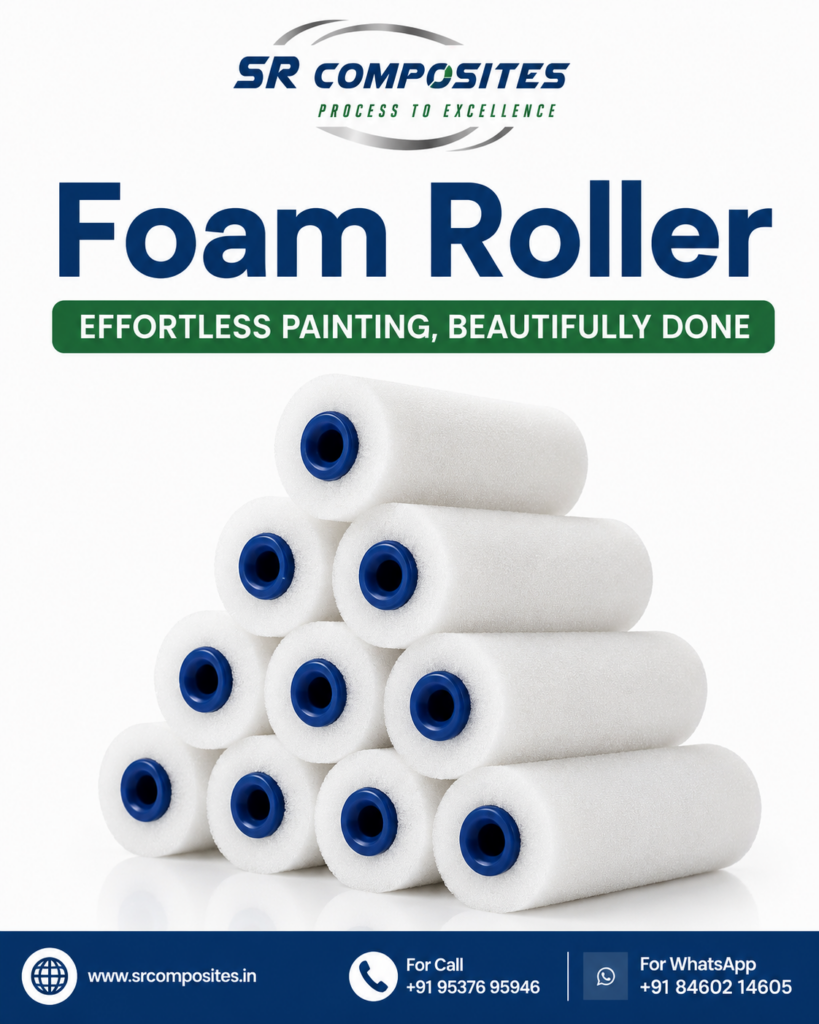
Table of Contents Introduction A foam roller is one of the most effective painting tools for achieving a smooth, uniform, and professional-quality finish. Designed with high-density foam material, it helps painters apply paint evenly while minimizing brush marks, roller lines, and surface imperfections. SRComposites Whether used for residential interiors, commercial spaces, furniture refinishing, or industrial coating applications, foam rollers provide excellent paint coverage and a clean finish. Their ability to hold and distribute paint consistently makes them a preferred choice for both professionals and DIY enthusiasts. What is a Foam Roller? A foam roller is a painting applicator made from high-quality foam material attached to a roller core. It is specifically designed to apply paints, varnishes, enamels, stains, and protective coatings smoothly across various surfaces. Unlike traditional fabric rollers, foam-based applicators create a finer finish and are ideal for surfaces where a smooth appearance is essential. Key Features of Foam Rollers Smooth Paint Application Provides even coating distribution for professional results. High-Density Foam Material Ensures better paint absorption and controlled release. Lightweight Design Makes painting comfortable and reduces user fatigue. Minimal Roller Marks Helps achieve streak-free and uniform finishes. Easy Handling Suitable for both professional painters and homeowners. Versatile Compatibility Works with a variety of paints and coating materials. Benefits of Using Foam Rollers Professional Finish Produces smooth and consistent paint coverage. Improved Efficiency Covers surfaces quickly and evenly. Reduced Paint Waste Optimizes paint usage through controlled application. Easy to Use Requires minimal experience to achieve excellent results. Cost-Effective Solution Provides quality performance at an affordable cost. Suitable for Fine Finishes Ideal for doors, cabinets, furniture, and smooth walls. Applications of Foam Rollers Residential Painting Used for walls, ceilings, doors, and decorative finishes. Commercial Projects Suitable for offices, retail spaces, and commercial interiors. Furniture Refinishing Helps achieve smooth coatings on wooden furniture. Industrial Coating Applications Used for applying protective and specialty coatings. DIY Home Improvement Perfect for renovation and home decoration projects. Woodworking Projects Provides clean finishes on wooden surfaces and panels. Technical Specifications Property Description Product Type Foam Roller Material High-Density Foam Color White Application Paint, Varnish, Enamel, Coatings Surface Compatibility Wood, Metal, Drywall, Furniture Finish Type Smooth and Uniform Usage Professional & DIY Reusability Yes (with proper cleaning) How Foam Rollers Work Paint Absorption The foam material absorbs paint evenly across the roller surface. Controlled Paint Release Paint is distributed uniformly during rolling. Smooth Surface Coverage The roller glides easily, creating consistent coverage. Reduced Surface Marks Helps eliminate streaks and uneven paint textures. Why Choose Foam Rollers for Painting? Better Surface Finish Provides a cleaner appearance than many traditional applicators. Faster Project Completion Allows efficient paint application across large areas. User-Friendly Design Simple to handle and suitable for all skill levels. Versatile Performance Works well on multiple surfaces and coating types. Reliable Results Consistently delivers smooth and attractive finishes. Maintenance and Storage Tips Clean Immediately After Use Remove excess paint before it dries. Use Appropriate Cleaning Solutions Follow paint manufacturer recommendations. Store in a Dry Place Protect from moisture and dust. Avoid Excessive Pressure Maintains the foam structure and extends product life. Frequently Asked Questions (FAQs) What is a foam roller used for? A foam roller is used to apply paint, varnish, enamel, and coatings smoothly on various surfaces. Can foam rollers provide a smooth finish? Yes, they are specifically designed to create smooth, streak-free finishes. Are foam rollers reusable? Yes, they can be reused when cleaned and stored properly. Which paints work best with foam rollers? Foam rollers are commonly used with water-based paints, enamels, varnishes, and specialty coatings. Can foam rollers be used on furniture? Yes, they are excellent for furniture refinishing and cabinet painting projects. Do foam rollers reduce paint waste? Yes, controlled paint absorption and release help minimize wastage. Are foam rollers suitable for professional painters? Absolutely. They are widely used by professionals for fine finishing applications. Conclusion Foam rollers have become an essential painting tool for achieving smooth, professional-quality finishes with minimal effort. Their high-density foam construction, consistent paint distribution, and ease of use make them ideal for residential, commercial, and industrial painting projects. Whether you are painting walls, furniture, doors, cabinets, or applying specialty coatings, foam rollers offer reliable performance and efficient coverage. Their ability to deliver effortless painting and beautifully finished results makes them a valuable addition to any painting toolkit. Check this:- https://www.bis.gov.in/
7 Powerful Polyester Peel Ply – Less Sanding, More Perfecting
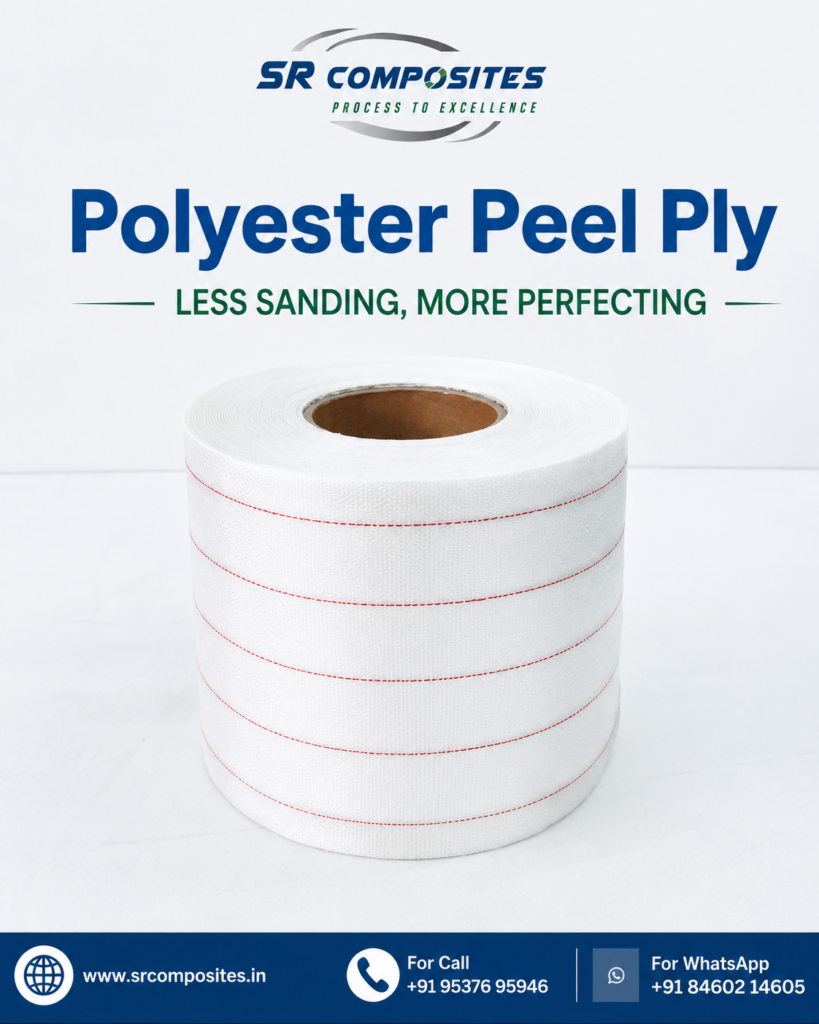
Table of Contents Introduction Polyester Peel Ply is an essential material used in SR composite manufacturing processes to achieve clean, textured, and bond-ready surfaces. It is commonly applied during vacuum bagging and resin infusion processes, helping manufacturers reduce surface preparation time while improving the quality of the finished composite part. By creating a controlled surface texture after removal, Polyester Peel Ply eliminates the need for extensive sanding and grinding, making production more efficient and cost-effective. Industries such as aerospace, marine, automotive, wind energy, and FRP fabrication widely rely on peel ply fabrics to enhance bonding performance and surface consistency. What is Polyester Peel Ply? Polyester Peel Ply is a tightly woven synthetic fabric designed to be placed over composite laminates during manufacturing. After the resin cures, the fabric is peeled away, leaving behind a clean and textured surface that is ideal for secondary bonding, painting, or coating applications. Unlike traditional finishing methods that require extensive sanding, peel ply simplifies the preparation process while ensuring a uniform finish across the entire composite component. Key Features of Polyester Peel Ply Excellent Surface Preparation Creates a bond-ready surface after removal. Reduces Sanding Requirements Minimizes labor-intensive surface finishing work. Easy Removal Designed to peel away cleanly without damaging the laminate. High Durability Maintains structural integrity during resin curing processes. Consistent Fabric Structure Provides uniform surface texture for reliable bonding. Compatible with Various Resin Systems Works effectively with polyester, epoxy, and vinyl ester resins. Benefits of Using Polyester Peel Ply Saves Production Time Reduces the need for manual sanding and surface preparation. Improves Bond Strength Creates an optimal surface profile for secondary bonding operations. Enhances Surface Quality Produces cleaner and more consistent composite finishes. Reduces Manufacturing Costs Lower labor requirements contribute to overall cost savings. Supports Efficient Workflow Speeds up production cycles in composite fabrication facilities. Minimizes Surface Contamination Protects laminate surfaces during curing and handling. Applications of Polyester Peel Ply Aerospace Industry Used in aircraft composite structures requiring precision bonding. Marine Industry Applied to boat hulls, decks, and fiberglass components. Automotive Industry Used for lightweight composite panels and structural parts. Wind Energy Sector Supports blade manufacturing and composite assembly processes. FRP Manufacturing Widely used in fiberglass-reinforced plastic fabrication. Industrial Composite Components Suitable for tanks, pipes, panels, and custom composite products. Technical Specifications Property Description Product Type Polyester Peel Ply Material Woven Polyester Fabric Color White Resin Compatibility Polyester, Epoxy, Vinyl Ester Surface Finish Textured Bonding Surface Application Method Vacuum Bagging / Hand Lay-Up Removal Type Easy Peel Industry Use Composite Manufacturing How Polyester Peel Ply Works Placement on Laminate The fabric is applied directly over the wet composite laminate. Resin Curing Process During curing, the peel ply remains in contact with the composite surface. Fabric Removal After full cure, the peel ply is removed by peeling it away from the laminate. Surface Ready for Bonding The exposed surface is clean, textured, and ready for secondary operations without additional sanding. Why Choose Polyester Peel Ply for Composite Manufacturing? Improved Productivity Reduces post-processing requirements significantly. Reliable Surface Consistency Provides repeatable results across multiple production batches. Better Adhesion Performance Enhances bonding effectiveness for structural applications. Professional Finishing Results Supports high-quality composite manufacturing standards. Cost-Effective Solution Balances performance and affordability for industrial users. Storage and Handling Guidelines Store in a Dry Environment Keep the material away from moisture and humidity. Protect from Dust Store in sealed packaging until use. Avoid Direct Sunlight Maintain product quality by storing in a cool location. Handle Carefully Prevent contamination before application. Frequently Asked Questions (FAQs) What is Polyester Peel Ply used for? Polyester Peel Ply is used to create a clean, textured, and bond-ready surface in composite manufacturing. Does Polyester Peel Ply eliminate sanding? In many applications, it significantly reduces or eliminates the need for sanding before secondary bonding. Can Polyester Peel Ply be used with epoxy resin? Yes, it is compatible with epoxy, polyester, and vinyl ester resin systems. Is Polyester Peel Ply reusable? No, it is generally designed for single-use applications. Which industries commonly use Polyester Peel Ply? Aerospace, marine, automotive, wind energy, and FRP manufacturing industries commonly use it. Does Peel Ply improve bonding strength? Yes, it creates a textured surface that enhances adhesive bonding performance. How is Peel Ply removed? After curing, the fabric is manually peeled away from the composite surface. Conclusion Peel ply fabric has become an essential component in modern composite manufacturing because it simplifies surface preparation while improving bonding performance. Its ability to create a clean and uniform texture helps reduce labor costs, minimize finishing work, and enhance production efficiency. Whether used in aerospace structures, marine components, automotive panels, or FRP products, this composite surface fabric delivers reliable performance and professional-quality results. For manufacturers looking to achieve better adhesion and smoother workflows, peel ply remains a practical and cost-effective solution. Check this:- https://www.cipet.gov.in/
7 Double Adhesive Tape: The Strong, Versatile Bonding Solution for Industrial and Commercial Applications
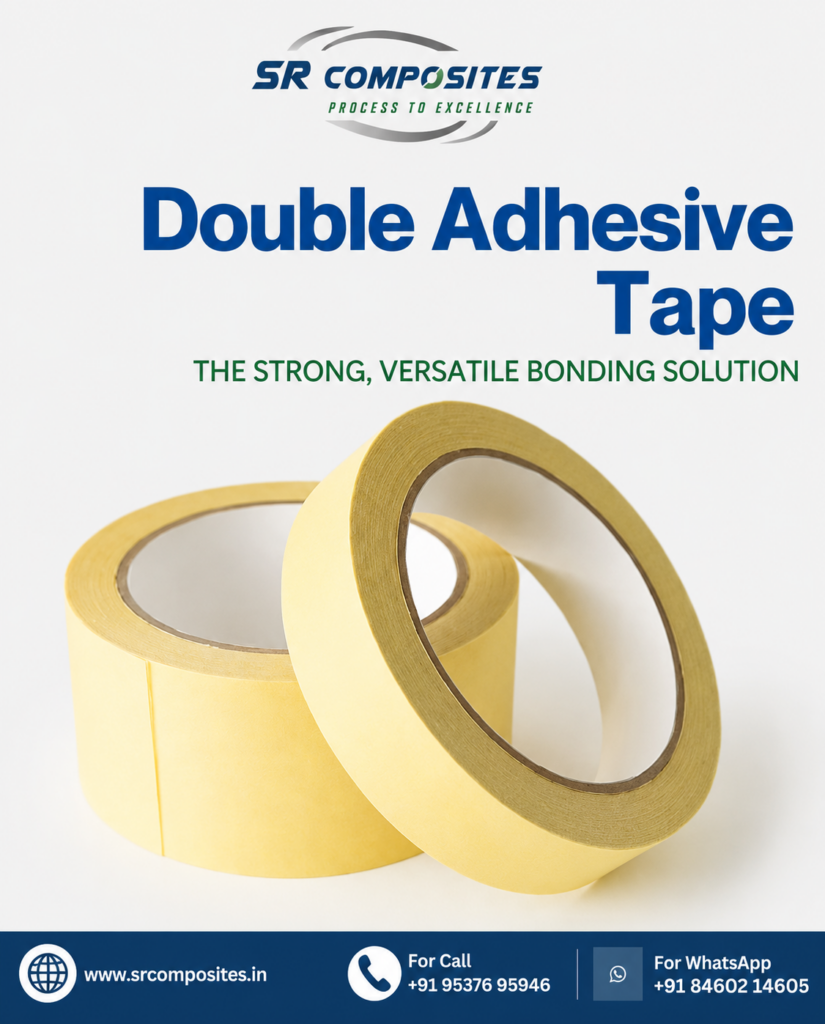
Table of Contents Introduction srcomposites Discover the benefits, features, applications, and advantages of double adhesive tape. Learn why it is the preferred bonding solution for industrial, commercial, automotive, and construction projects. Double adhesive tape has become one of the most reliable bonding solutions across various industries. Designed with adhesive coating on both sides, it provides a strong and clean bond between two surfaces without the need for screws, nails, or liquid adhesives. From industrial manufacturing and automotive assembly to home décor and signage installation, double adhesive tape offers excellent adhesion, durability, and ease of use. Its ability to bond different materials while maintaining a neat appearance makes it a preferred choice for professionals and DIY users alike. What is Double Adhesive Tape? Double adhesive tape, also known as double-sided tape, is a pressure-sensitive tape coated with adhesive on both sides. It is designed to join two surfaces together while remaining hidden between them. These tapes are available in various thicknesses, adhesive types, and backing materials to suit different applications and environmental conditions. Key Features of Double Adhesive Tape Strong Bonding Performance Provides reliable adhesion to various surfaces, including metal, plastic, glass, wood, and composites. Easy Application No need for drilling, welding, or additional fastening methods. Clean and Professional Finish Creates an invisible bond that enhances aesthetics. High Durability Resistant to moisture, temperature changes, and environmental factors. Versatile Compatibility Suitable for both smooth and textured surfaces. Shock and Vibration Resistance Helps absorb vibrations and reduces noise in industrial applications. Types of Double Adhesive Tape Tissue Double-Sided Tape Ideal for lightweight bonding applications such as paper, cardboard, and packaging. Foam Double-Sided Tape Provides cushioning and excellent adhesion for uneven surfaces. Acrylic Double-Sided Tape Offers superior strength, weather resistance, and long-term durability. PET Double-Sided Tape Suitable for electronic and industrial applications requiring dimensional stability. Cloth Double-Sided Tape Used for carpet fixing, mounting, and temporary installations. Applications of Double Adhesive Tape Automotive Industry Construction Industry Electronics Industry Advertising & Signage Furniture Industry Household Applications Benefits of Using Double Adhesive Tape Eliminates Mechanical Fasteners Reduces the need for screws, rivets, and bolts. Faster Installation Speeds up assembly and installation processes. Improved Appearance Provides seamless bonding without visible hardware. Lightweight Solution Adds minimal weight compared to traditional fastening methods. Cost Effective Reduces labor costs and installation time. Enhanced Durability Maintains long-lasting adhesion under various environmental conditions. Technical Specifications Property Description Product Type Double Adhesive Tape Adhesive Type Acrylic / Rubber Based Color White / Transparent / Custom Thickness Various Options Available Temperature Resistance High Moisture Resistance Excellent UV Resistance Available in Specific Grades Application Surface Metal, Plastic, Glass, Wood, Composite Usage Industrial & Commercial How to Choose the Right Double Adhesive Tape Consider Surface Material Different materials require specific adhesive formulations for maximum bonding strength. Evaluate Environmental Conditions Choose weather-resistant tapes for outdoor applications. Check Load Requirements Determine the weight and stress the tape must withstand. Select Appropriate Thickness Thicker tapes work better on uneven surfaces and provide cushioning. Consider Long-Term Performance Industrial applications often require high-performance acrylic adhesive tapes. Installation Tips for Best Results Clean the Surface Remove dust, oil, and contaminants before application. Apply Uniform Pressure Press firmly to ensure complete adhesive contact. Allow Proper Bonding Time Many tapes achieve maximum strength after 24–72 hours. Maintain Recommended Temperature Apply within the manufacturer’s specified temperature range. Avoid Frequent Repositioning Repeated removal may reduce adhesive effectiveness. Why Choose SR Composites Double Adhesive Tape? Superior Bond Strength Engineered to provide reliable adhesion across multiple surfaces. Consistent Quality Manufactured with strict quality control standards. Industrial-Grade Performance Suitable for demanding commercial and industrial applications. Multiple Application Possibilities Can be used in automotive, construction, electronics, and general manufacturing sectors. Cost-Effective Solution Delivers strong performance while reducing installation costs. Frequently Asked Questions (FAQs) What is double adhesive tape used for? Double adhesive tape is used for bonding, mounting, fixing, and assembling materials without mechanical fasteners. Can double adhesive tape replace screws and nails? In many applications, yes. High-strength double-sided tapes can provide durable bonding without visible fasteners. Is double adhesive tape waterproof? Many industrial-grade double-adhesive tapes offer excellent moisture and water resistance. Can it be used outdoors? Yes, weather-resistant and UV-resistant variants are specifically designed for outdoor applications. How long does double adhesive tape last? Depending on the application and environment, high-quality tapes can provide long-lasting performance for several years. Which surfaces can be bonded? Double adhesive tape can bond metal, plastic, glass, wood, composites, and many other materials. Does temperature affect adhesive performance? Extreme temperatures can impact performance; therefore, selecting the correct tape grade is important. Conclusion Double adhesive tape is a versatile, durable, and cost-effective bonding solution widely used across industrial, commercial, and residential applications. Its strong adhesion, clean finish, easy installation, and compatibility with various materials make it an excellent alternative to traditional fastening methods. Whether you need reliable mounting, assembly, signage installation, automotive bonding, or construction applications, double adhesive tape provides a dependable solution that enhances efficiency while maintaining professional results. SR Composites offers high-quality double adhesive tapes designed to deliver exceptional performance and long-term reliability. Check this:- https://msme.gov.in/
7 Perforated Release Film: Achieve Flawless Composite Surfaces with Superior Resin Control
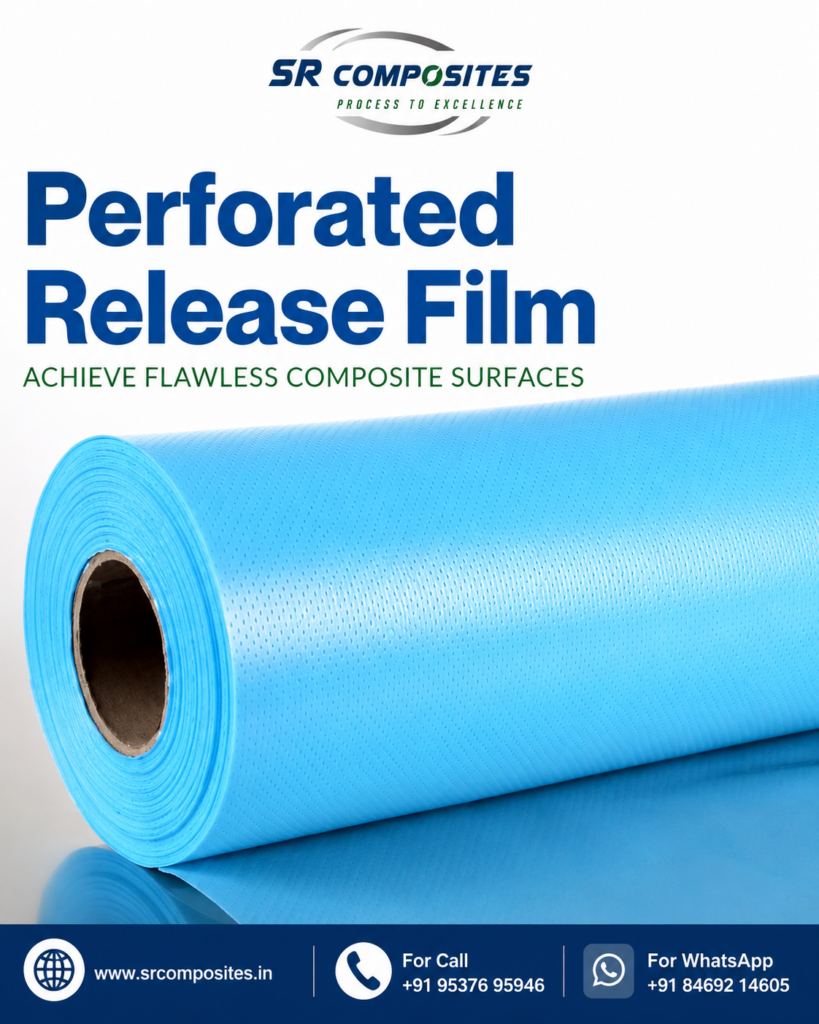
Table of Contents Introduction to Perforated Release Film SR Composite manufacturing requires precision, consistency, and high-quality surface finishes. One of the most critical materials used during vacuum infusion and composite lamination is Perforated Release Film. This specialized film helps regulate resin flow, prevents bonding between layers, and ensures easy separation after curing. Whether used in aerospace, marine, automotive, wind energy, or industrial composite applications, perforated release films contribute significantly to achieving professional-grade composite surfaces while reducing manufacturing defects. What is Perforated Release Film? Perforated Release Film is a thin polymer-based film containing precisely engineered holes or perforations. It is placed between the laminate and absorbent breather materials during composite manufacturing. The perforations allow excess resin to pass through in a controlled manner while preventing unwanted adhesion between layers. This controlled resin management helps create uniform laminate thickness and superior surface quality. Key Features of Perforated Release Film Controlled Resin Bleeding Designed perforations enable excess resin to move through the film efficiently, ensuring optimal fiber-to-resin ratios. Excellent Release Properties Provides clean separation from composite laminates after the curing process. Consistent Surface Finish Helps achieve smooth, professional-quality composite surfaces. Temperature Resistance Suitable for high-temperature curing applications commonly used in advanced composite manufacturing. Chemical Compatibility Compatible with epoxy, polyester, vinyl ester, and various resin systems. Easy Handling Lightweight, flexible, and simple to install during vacuum bagging processes. Technical Specifications Table Property Description Material Polymer-Based Release Film Surface Type Smooth and Uniform Perforation Options Multiple Hole Patterns Temperature Resistance High Temperature Compatible Resin Compatibility Epoxy, Polyester, Vinyl Ester Application Method Vacuum Bagging & Infusion Removal Easy Peel-Off After Cure Industry Use Aerospace, Marine, Automotive Benefits of Using Perforated Release Film Improved Resin Distribution Perforations allow controlled resin movement, helping create stronger and more consistent laminates. Enhanced Surface Quality Reduces imperfections and improves the final component appearance. Easier Demolding The release film prevents direct bonding, making part removal quick and efficient. Reduced Material Waste Optimized resin flow helps minimize excess resin usage. Increased Manufacturing Efficiency Faster production cycles and reduced cleanup requirements improve productivity. Better Composite Performance Consistent resin content contributes to stronger, lighter, and more reliable composite structures. Applications of Perforated Release Film Vacuum Infusion Processes Widely used in vacuum infusion systems to manage resin flow during laminate fabrication. Aerospace Components Supports high-performance aerospace structures requiring precision manufacturing. Marine Structures Used in boat hulls, decks, and marine composite components. Automotive Parts Helps produce lightweight automotive panels and structural components. Wind Energy Blades Supports large-scale composite blade manufacturing. Industrial Composite Products Used in tanks, pipes, panels, and various industrial composite applications. Perforated Release Film in Vacuum Infusion Processes Vacuum infusion is one of the most popular composite manufacturing techniques. During this process, perforated release film acts as an intermediary layer between the laminate and breather fabric. Its perforations control how much resin passes through during vacuum pressure application. This ensures: The result is a high-quality composite part with excellent mechanical properties. How to Choose the Right Perforated Release Film Selecting the correct release film depends on several factors: Resin System Ensure compatibility with epoxy, polyester, or vinyl ester resins. Cure Temperature Choose a film rated for your processing temperature. Perforation Pattern Different perforation sizes affect resin flow rates. Surface Finish Requirements Select a film that meets desired finish quality specifications. Part Complexity Complex molds may require more flexible release films. Best Practices for Installation and Use Prepare the Mold Properly Ensure clean mold surfaces before layup. Position Film Correctly Place the release film evenly across the laminate surface. Avoid Wrinkles Smooth application prevents resin flow inconsistencies. Select Suitable Breather Materials Combine with appropriate breather fabrics for optimal performance. Monitor Vacuum Levels Maintain consistent vacuum pressure throughout curing. Industries That Rely on Perforated Release Film Aerospace Industry Aircraft structures and lightweight composite components. Marine Industry Boat manufacturing and marine infrastructure. Automotive Industry Lightweight vehicle panels and performance components. Renewable Energy Sector Wind turbine blade manufacturing. Construction Industry Architectural composite panels and advanced building materials. Comparison with Other Release Materials Feature Perforated Release Film Non-Perforated Release Film Resin Control Excellent Limited Surface Finish High Quality Good Resin Bleeding Controlled Minimal Vacuum Infusion Use Ideal Limited Composite Consistency Excellent Moderate Production Efficiency High Moderate Frequently Asked Questions What is the purpose of perforated release film? It controls resin flow, prevents sticking, and improves composite surface quality during manufacturing. Can perforated release film be used with epoxy resin? Yes, it is commonly used with epoxy, polyester, and vinyl ester resin systems. Is perforated release film reusable? Most release films are designed for single-use applications to ensure consistent performance. Which industries use perforated release film? Aerospace, marine, automotive, renewable energy, and industrial manufacturing sectors extensively use it. How does perforation size affect performance? Different perforation sizes regulate resin bleed rates and influence final laminate properties. Does perforated release film improve composite quality? Yes, it helps achieve better resin distribution, smoother surfaces, and stronger laminates. Conclusion Perforated Release Film plays a vital role in modern composite manufacturing by ensuring controlled resin flow, easy release, and exceptional surface quality. Its ability to optimize vacuum infusion and lamination processes makes it an essential material for aerospace, marine, automotive, wind energy, and industrial applications. Check this :- https://heavyindustries.gov.in/ Manufacturers seeking superior composite performance, improved productivity, and consistent results can greatly benefit from incorporating high-quality perforated release films into their production processes.
7 PTFE Teflon Tape: High-Performance Solution for Strong Adhesion and Heat Resistance
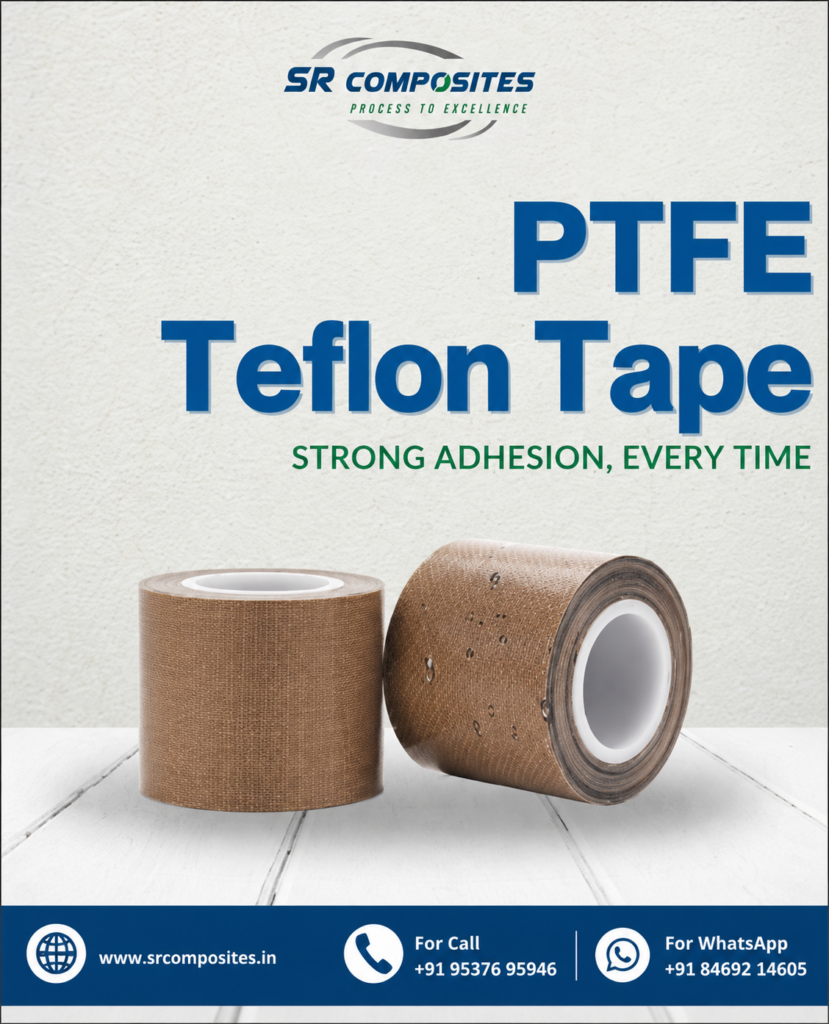
Table of Contents Introduction PTFE Teflon Tape, PTFE Adhesive Tape, High Temperature Tape, Heat Resistant Tape, Industrial Adhesive Tape, Composite Manufacturing Tape, Non Stick Tape, Teflon Coated Tape, PTFE Glass Cloth Tape, Industrial Sealing Tape In modern manufacturing and industrial processing environments, materials are exposed to extreme temperatures, aggressive chemicals, continuous friction, and demanding operating conditions. Standard adhesive tapes often fail when subjected to such challenges, leading to equipment downtime, maintenance issues, and reduced productivity. PTFE Teflon Tape has emerged as one of the most reliable solutions for industries requiring exceptional heat resistance, non-stick performance, and long-lasting durability. Designed using Polytetrafluoroethylene (PTFE), this advanced tape provides outstanding thermal stability, low friction properties, and strong adhesion, making it suitable for a wide range of industrial applications. From SR composite manufacturing and packaging equipment to electrical insulation and aerospace components, PTFE Teflon Tape delivers dependable performance where conventional tapes cannot. What is PTFE Teflon Tape? PTFE Teflon Tape is a high-performance industrial tape manufactured using PTFE-coated fiberglass fabric combined with a pressure-sensitive adhesive backing. The tape is specifically engineered to provide: Its unique construction allows it to maintain performance even under continuous exposure to demanding industrial environments. Why is PTFE Teflon Tape Widely Used Industrial processes often involve heat, pressure, chemicals, and moving surfaces. PTFE-based tapes help solve many operational challenges by providing a protective and durable surface. Key reasons for its popularity include: These characteristics make it an essential material in many production facilities worldwide. Key Features of PTFE Teflon Tape Exceptional Heat Resistance Designed to withstand high operating temperatures without degrading or losing performance. Strong Adhesion Provides secure bonding to various industrial surfaces. Non-Stick Surface Prevents materials from sticking during manufacturing processes. Chemical Resistance Resists oils, solvents, acids, and industrial chemicals. Low Friction Coefficient Reduces wear and improves equipment movement. Excellent Durability Offers long service life in demanding applications. Easy Installation Can be applied quickly without complex tools or equipment. Technical Specifications Property Description Material PTFE Coated Fiberglass Adhesive Type Pressure Sensitive Adhesive Temperature Resistance High Temperature Performance Surface Property Non-Stick Chemical Resistance Excellent Electrical Insulation High Durability Long Service Life Applications of PTFE Teflon Tape Composite Manufacturing Used extensively in vacuum bagging, resin processing, and composite molding operations. Heat Sealing Equipment Provides non-stick surfaces for packaging and sealing machines. Electrical Insulation Offers insulation protection in electrical and electronic systems. Aerospace Industry Used in high-performance aircraft and aerospace manufacturing applications. Automotive Manufacturing Supports heat-resistant and friction-reducing requirements. Conveyor Systems Prevents material buildup on conveyor surfaces. Food Processing Equipment Suitable for applications requiring non-stick and easy-clean surfaces. Printing and Packaging Industry Used in heat sealing bars, rollers, and packaging equipment. Benefits of PTFE Teflon Tape Benefit Advantage Heat Resistance Performs in high-temperature environments Non-Stick Surface Easy release of materials Chemical Resistance Protection from harsh chemicals Reduced Friction Improved equipment efficiency Strong Adhesion Reliable bonding performance Long Lifespan Reduced maintenance costs Industries That Use PTFE Teflon Tape Composite Manufacturing Industry Supports resin infusion and vacuum bagging processes. Aerospace Sector Used in advanced aircraft manufacturing systems. Automotive Industry Provides thermal protection and friction reduction. Packaging Industry Improves sealing and packaging operations. Electronics Industry Offers insulation and heat management solutions. Food Processing Industry Ensures smooth and hygienic production operations. Textile Industry Used in heat processing and fabric manufacturing equipment. Installation and Usage Tips Clean the Surface Remove dirt, oil, and contaminants before application. Apply Even Pressure Ensure proper bonding across the entire tape surface. Avoid Stretching Apply the tape without excessive tension. Monitor Operating Conditions Use within recommended temperature limits. Perform Regular Inspections Check for wear and replace when necessary. PTFE Teflon Tape vs Conventional Adhesive Tapes Feature PTFE Teflon Tape Standard Tape Heat Resistance Excellent Limited Chemical Resistance High Moderate Non-Stick Performance Excellent Low Durability Long-lasting Shorter Life Industrial Applications Extensive Limited Friction Reduction Excellent Minimal Frequently Asked Questions What is PTFE Teflon Tape used for? It is used for heat resistance, non-stick applications, electrical insulation, packaging equipment, and composite manufacturing processes. Can PTFE Teflon Tape withstand high temperatures? Yes, it is specifically designed for elevated temperature environments. Is PTFE Teflon Tape chemically resistant? Yes, it offers excellent resistance against many industrial chemicals and solvents. Which industries commonly use PTFE Teflon Tape? Aerospace, automotive, packaging, electronics, food processing, and composite manufacturing industries. Does PTFE Teflon Tape reduce friction? Yes, its low-friction surface helps improve equipment efficiency and performance. Is PTFE Teflon Tape durable? Absolutely. It is engineered for long-term industrial use and demanding operating conditions. Conclusion PTFE Teflon Tape is one of the most versatile and reliable industrial materials available today. Combining exceptional heat resistance, strong adhesion, chemical resistance, and non-stick performance, it plays a critical role in improving productivity and operational efficiency across numerous industries. Check this:- https://msme.gov.in/ Whether used in composite manufacturing, packaging systems, electrical insulation, aerospace applications, or industrial processing equipment, PTFE Teflon Tape delivers dependable performance under the most demanding conditions. Its durability, versatility, and long service life make it a valuable investment for businesses seeking high-performance industrial solutions.
7 Velour Roller for Composite Manufacturing: The Ultimate Tool for Flawless Coating and Resin Application
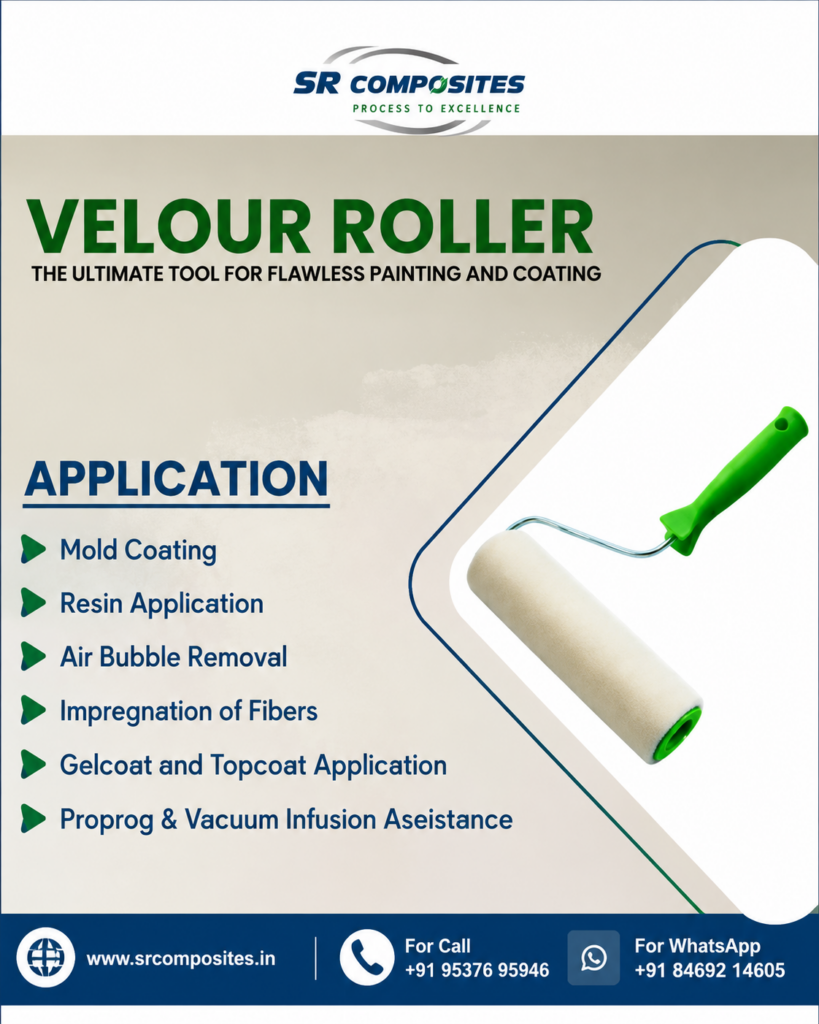
Table of Contents Introduction Discover the benefits of Velour Rollers in composite manufacturing, resin application, mold coating, air bubble removal, and vacuum infusion processes. Improve surface quality and production efficiency. In SR composite manufacturing and industrial coating processes, achieving a smooth and uniform finish is critical for product quality and performance. Whether applying resin, gelcoat, topcoat, or mold release systems, the choice of application tool significantly impacts the final result. Among the most trusted tools in the composites industry is the Velour Roller. Known for its excellent absorption, smooth application, and ability to minimize air entrapment, the Velour Roller has become an essential tool for professionals working in aerospace, marine, automotive, and industrial composite production. Its versatility makes it suitable for resin application, mold coating, air bubble removal, fiber impregnation, and vacuum infusion support, helping manufacturers achieve superior surface finishes and improved process efficiency. What is a Velour Roller? A Velour Roller is a specialized coating and resin application tool designed with a high-density fabric surface that provides smooth and consistent material distribution. Unlike standard paint rollers, Velour Rollers are engineered for precision applications in composite manufacturing, where uniform resin coverage and bubble-free surfaces are critical. The roller’s texture allows it to hold and release materials evenly, reducing defects and improving laminate quality. Why Velour Rollers are Essential in Composite Manufacturing Composite manufacturing often requires precise application of resins and coatings to ensure structural integrity and surface quality. Velour Rollers help manufacturers by: These advantages contribute to stronger, lighter, and more reliable composite components. Key Features of Velour Rollers Smooth Material Distribution Provides consistent application of resin, gelcoat, and topcoat materials. Excellent Absorption Capacity Holds sufficient material for continuous application without excessive dripping. Air Bubble Reduction Helps remove trapped air during composite layup processes. Durable Construction Designed to withstand industrial environments and repeated use. Lightweight and Easy Handling Offers improved control and reduced operator fatigue. Compatible with Multiple Materials Suitable for resins, coatings, adhesives, gelcoats, and topcoats. Applications of Velour Rollers Mold Coating Ensures uniform mold surface preparation for composite part production. Resin Application Provides smooth and even resin distribution during lamination. Air Bubble Removal Helps eliminate trapped air that can weaken composite structures. Fiber Impregnation Improves resin penetration into reinforcement fibers. Gelcoat Application Creates smooth and aesthetically appealing surface finishes. Topcoat Application Ensures professional-quality protective coating layers. Vacuum Infusion Assistance Supports resin movement and laminate wet-out during infusion processes. Benefits of Using a Velour Roller Benefit Description Uniform Coating Consistent material distribution Better Surface Finish Reduced imperfections and defects Air Bubble Reduction Improved laminate quality Increased Efficiency Faster application process Lower Material Waste Optimized resin utilization Professional Results High-quality surface appearance Technical Overview Feature Specification Product Type Velour Roller Primary Function Resin & Coating Application Industries Composite Manufacturing Applications Resin, Gelcoat, Topcoat Benefits Smooth Finish & Air Removal Usage Manual Application Tool Industries That Use Velour Rollers Aerospace Industry Used for precision composite manufacturing and structural components. Marine Industry Supports boat hull manufacturing and repair applications. Automotive Industry Assists in lightweight composite component production. Wind Energy Sector Used in turbine blade manufacturing processes. Industrial Manufacturing Ideal for coating, reinforcement, and composite fabrication tasks. Construction Industry Supports advanced composite and protective coating applications. Best Practices for Effective Roller Application Prepare the Surface Properly Ensure surfaces are clean and free from dust or contaminants. Apply Even Pressure Maintain consistent pressure for uniform material distribution. Use Appropriate Resin Quantities Avoid overloading the roller with excessive resin. Work in Controlled Conditions Maintain recommended temperature and humidity levels. Clean Equipment After Use Proper cleaning extends roller lifespan and maintains performance. Velour Roller vs Traditional Application Methods Feature Velour Roller Brush Application Surface Finish Excellent Moderate Air Bubble Removal Effective Limited Resin Distribution Uniform Variable Speed Faster Slower Material Waste Lower Higher Professional Finish High Medium Frequently Asked Questions What is a Velour Roller used for? Velour Rollers are used for resin application, mold coating, gelcoat application, topcoat application, and composite manufacturing processes. Can Velour Rollers remove air bubbles? Yes. They help eliminate trapped air and improve laminate quality. Are Velour Rollers suitable for vacuum infusion? Yes. They assist in resin distribution and fiber wet-out during vacuum infusion processes. Which industries commonly use Velour Rollers? Aerospace, marine, automotive, wind energy, industrial manufacturing, and construction industries. Can Velour Rollers be used with gelcoats and topcoats? Absolutely. They provide smooth and professional coating application. Why are Velour Rollers preferred over brushes? They offer better coverage, reduced material waste, improved finish quality, and faster application. Conclusion Velour Rollers are an essential tool in modern composite manufacturing and industrial coating applications. Their ability to provide smooth resin distribution, eliminate air bubbles, improve fiber impregnation, and create high-quality surface finishes makes them a preferred choice across multiple industries. Check this:- https://www.bis.gov.in/ Whether used for mold coating, resin application, gelcoat finishing, or vacuum infusion support, Velour Rollers deliver superior performance, improved efficiency, and professional results. For manufacturers seeking consistency, reliability, and enhanced product quality, investing in high-quality Velour Rollers is a smart and cost-effective solution.
7 Powerful Omega Profile for Vacuum Infusion: Improving Resin Flow and Composite Manufacturing Efficiency
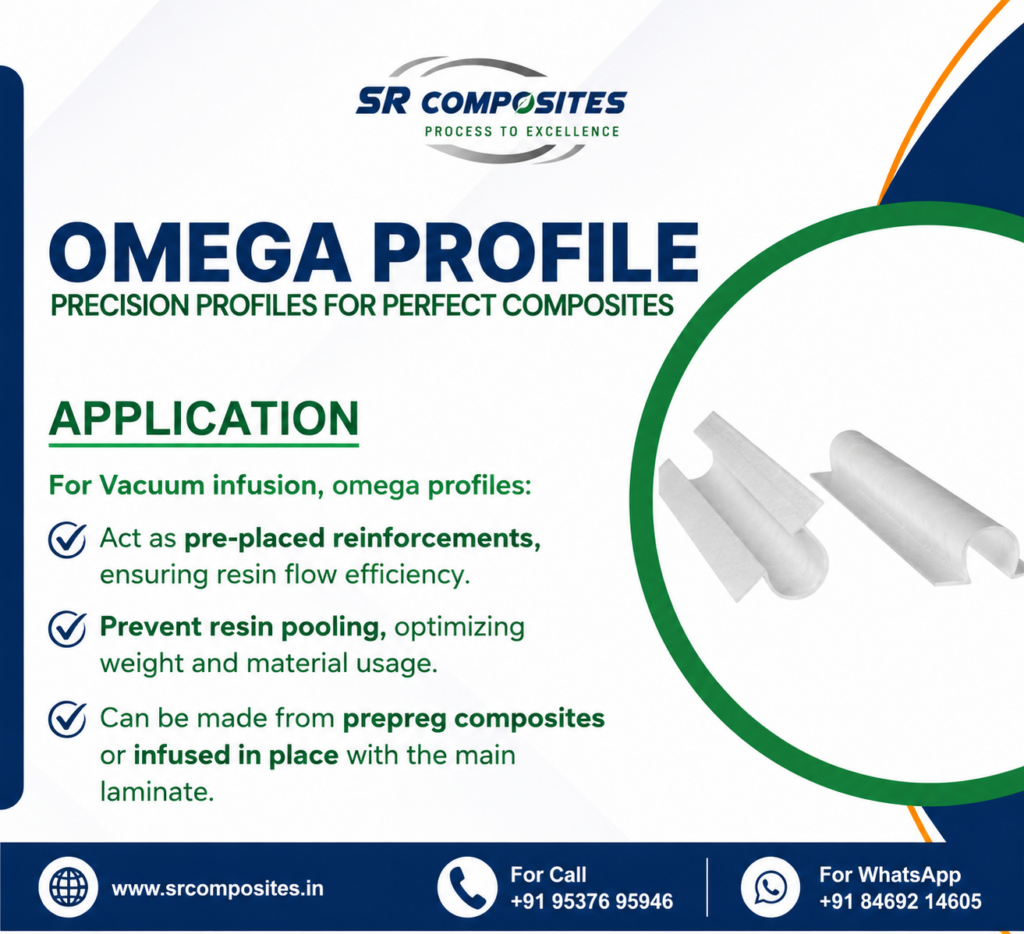
Table of Contents Introduction SR Composite manufacturing has transformed industries such as aerospace, automotive, marine, renewable energy, and industrial engineering. One of the most important processes in composite fabrication is vacuum infusion, where resin is distributed evenly throughout reinforcement materials to create strong and lightweight composite structures. Achieving uniform resin flow can be challenging, especially in large or complex components. This is where Omega Profiles become an essential solution. Designed specifically for vacuum infusion applications, Omega Profiles improve resin distribution, prevent dry spots, reduce resin pooling, and enhance overall manufacturing efficiency. By optimizing resin flow paths, Omega Profiles help manufacturers produce high-quality composite parts with improved consistency and reduced material waste. What is an Omega Profile? An Omega Profile is a specially designed composite reinforcement profile used in vacuum infusion systems. Its unique shape creates dedicated resin channels that allow resin to flow efficiently across the laminate during the infusion process. Omega Profiles are commonly placed on the laminate surface before vacuum bagging and serve as controlled pathways that distribute resin quickly and evenly throughout the composite structure. These profiles are widely used in industries where precision, strength, and manufacturing efficiency are critical. How Omega Profiles Work in Vacuum Infusion During vacuum infusion, resin is drawn into a mold through vacuum pressure. Without proper flow channels, resin may distribute unevenly, leading to defects and inconsistent part quality. Omega Profiles solves this challenge by: The result is a stronger and more reliable composite component. Key Features of Omega Profiles Pre-Placed Reinforcement Design Omega Profiles act as integrated reinforcement channels that improve resin movement throughout the laminate. Efficient Resin Flow The profile geometry allows smooth and controlled resin distribution during vacuum infusion. Reduced Resin Pooling The structured design prevents excess resin accumulation in localized areas. Lightweight Construction Omega Profiles contribute to weight optimization by reducing unnecessary resin usage. Compatibility with Composite Systems Suitable for prepreg composites, vacuum infusion systems, and advanced composite manufacturing processes. Customizable Dimensions Available in various sizes and specifications to meet different manufacturing requirements. Benefits of Using Omega Profiles Improved Resin Distribution Ensures consistent resin flow throughout the laminate for superior part quality. Faster Manufacturing Cycles Accelerates resin infusion and reduces production time. Enhanced Structural Integrity Uniform resin distribution improves mechanical performance and durability. Lower Material Waste Minimizes resin wastage by optimizing resin flow paths. Better Surface Finish Reduces defects, dry spots, and air entrapment during manufacturing. Cost Savings Increased efficiency and reduced material consumption lower overall production costs. Applications of Omega Profiles Industry Application Aerospace Aircraft composite components Automotive Lightweight vehicle structures Marine Boat hulls and deck panels Wind Energy Wind turbine blades Construction Composite structural elements Industrial Equipment High-performance composite parts Transportation Railway and transit components Omega Profile Technical Overview Feature Description Product Type Resin Flow Profile Manufacturing Process Vacuum Infusion Function Resin Distribution Material Compatibility Composite Laminates Installation Pre-placed on laminate Benefits Faster infusion and reduced resin pooling Why Composite Manufacturers Choose Omega Profiles Manufacturers increasingly rely on Omega Profiles because they provide a practical solution to common infusion challenges. Key reasons include: These advantages make Omega Profiles an essential component in modern composite manufacturing facilities. Omega Profile vs Traditional Resin Flow Methods Feature Omega Profile Traditional Methods Resin Flow Efficiency High Moderate Infusion Speed Faster Slower Resin Pooling Minimal Higher Risk Material Waste Lower Higher Quality Consistency Excellent Variable Manufacturing Efficiency High Medium Best Practices for Installation Proper Placement Position Omega Profiles strategically along resin flow paths. Maintain Vacuum Integrity Ensure vacuum bagging is properly sealed before infusion begins. Optimize Resin Entry Points Design resin feed locations to maximize flow efficiency. Monitor Resin Flow Observe infusion progress to ensure complete laminate wet-out. Follow Manufacturer Guidelines Use recommended installation procedures for optimal results. Frequently Asked Questions What is the primary purpose of an Omega Profile? Omega Profiles create efficient resin flow channels during vacuum infusion processes. Can Omega Profiles reduce resin consumption? Yes. They help distribute resin efficiently and reduce unnecessary resin accumulation. Which industries use Omega Profiles? Aerospace, automotive, marine, wind energy, transportation, and industrial manufacturing sectors commonly use them. Are Omega Profiles suitable for large composite structures? Yes. They are particularly effective in large and complex composite components. Can Omega Profiles be used with prepreg materials? Yes. Omega Profiles can be manufactured from prepreg composites or infused directly with the laminate. Do Omega Profiles improve product quality? Absolutely. They help eliminate dry spots, improve wet-out, and create more consistent composite structures. Conclusion Omega Profiles play a vital role in modern vacuum infusion and composite manufacturing processes. By improving resin flow, preventing resin pooling, reducing manufacturing defects, and increasing production efficiency, they help manufacturers achieve superior composite part quality. Whether used in aerospace, automotive, marine, or industrial applications, Omega Profiles provide a reliable and cost-effective solution for achieving high-performance composite structures. As composite technology continues to evolve, Omega Profiles remain an important component for optimizing manufacturing processes and delivering consistent, high-quality results. Check this:- https://msme.gov.in/
7 High Temperature Sealant Tape: The Ultimate Solution for Heat-Resistant Industrial Applications
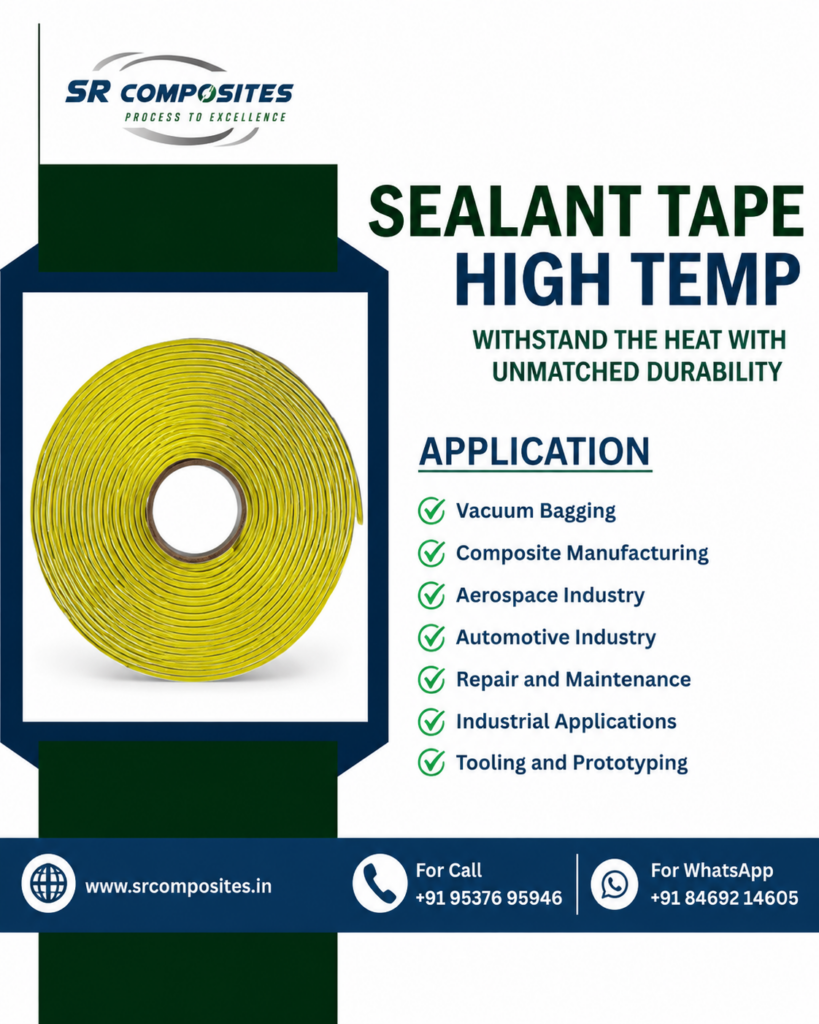
Introduction In industries where extreme temperatures, precision sealing, and long-lasting performance are critical, High Temperature Sealant Tape plays a vital role. Designed to withstand intense heat while maintaining exceptional adhesion and sealing capabilities, this specialized tape has become an essential component in manufacturing, aerospace, automotive, composite processing, and industrial maintenance operations. Unlike conventional tapes that lose effectiveness under high temperatures, High Temperature Sealant Tape offers unmatched durability, reliable sealing performance, and resistance to thermal degradation. Whether used in vacuum bagging processes, tooling applications, or industrial repairs, this advanced tape ensures consistent results even under demanding conditions. For manufacturers seeking efficiency, reliability, and superior performance, High Temperature Sealant Tape is a trusted solution that delivers exceptional value across a wide range of industrial applications. Key Features Feature Benefit High Temperature Resistance Performs efficiently under extreme heat conditions Strong Adhesion Creates secure and reliable seals Excellent Durability Long-lasting industrial performance Flexible Construction Adapts to various surfaces and shapes Chemical Resistance Withstands exposure to industrial chemicals Easy Application Reduces installation time Vacuum Integrity Ideal for vacuum bagging processes Industrial-Grade Quality Suitable for demanding environments Table of Contents No. Topic 1 What is High Temperature Sealant Tape? 2 Importance of Heat-Resistant Sealing Solutions 3 Key Features of High Temperature Sealant Tape 4 Benefits of Using High-Temperature Sealant Tape 5 Vacuum Bagging Applications 6 Composite Manufacturing Applications 7 Aerospace Industry Applications 8 Automotive Industry Applications 9 Repair and Maintenance Uses 10 Industrial Applications 11 Tooling and Prototyping Applications 12 Factors to Consider When Choosing Sealant Tape 13 Installation Best Practices 14 Frequently Asked Questions 15 Conclusion What is High Temperature Sealant Tape? SR Composites High Temperature Sealant Tape is a specialized sealing material designed to maintain its adhesive and sealing properties even when exposed to elevated temperatures. It is widely used in industrial environments where traditional tapes fail due to heat exposure. The tape creates airtight and secure seals that help improve manufacturing efficiency, product quality, and operational reliability. Check this:- https://www.bis.gov.in/ Primary Functions Importance of Heat-Resistant Sealing Solutions Many industrial processes involve high temperatures that can compromise standard sealing materials. Maintaining Process Integrity Reliable seals prevent leaks and maintain controlled manufacturing environments. Improving Product Quality Consistent sealing ensures better production outcomes. Reducing Downtime Durable sealant solutions minimize maintenance requirements. Enhancing Operational Safety Proper sealing reduces risks associated with equipment failures and process disruptions. Key Features of High Temperature Sealant Tape Exceptional Heat Resistance Designed to withstand elevated temperatures without losing performance. Strong Adhesion Provides reliable bonding across various industrial surfaces. Superior Flexibility Conforms easily to complex shapes and irregular surfaces. Long-Term Durability Maintains effectiveness throughout extended operational cycles. Chemical Resistance Suitable for environments involving industrial chemicals and solvents. Benefits of Using High-Temperature Sealant Tape Reliable Performance Under Extreme Conditions Maintains sealing integrity even during prolonged heat exposure. Improved Manufacturing Efficiency Supports uninterrupted production processes. Reduced Material Waste Prevents leaks and product defects. Cost-Effective Solution Long service life reduces replacement and maintenance costs. Enhanced Product Quality Ensures consistency across manufacturing operations. Vacuum Bagging Applications Vacuum bagging is one of the most common uses of High Temperature Sealant Tape. Why Vacuum Bagging Requires Specialized Tape Vacuum processes demand airtight seals that can withstand heat and pressure. Benefits of Vacuum Bagging Industries Using Vacuum Bagging Composite Manufacturing Applications Composite manufacturing requires precision and consistency. Role of Sealant Tape in Composite Production The tape helps create airtight environments during curing and molding operations. Advantages Common Composite Products Aerospace Industry Applications The aerospace sector demands materials capable of performing under strict quality requirements. Aerospace Requirements Typical Uses Automotive Industry Applications Automotive manufacturing involves numerous high-temperature production processes. Common Automotive Uses Benefits for Automotive Manufacturers Repair and Maintenance Applications Industrial facilities often require reliable sealing solutions for maintenance activities. Maintenance Benefits Typical Maintenance Uses Industrial Applications High Temperature Sealant Tape serves a wide range of industrial sectors. Manufacturing Facilities Supports production processes requiring thermal resistance. Energy Industry Used in specialized sealing applications. Construction and Engineering Provides reliable sealing for industrial projects. Process Industries Maintains operational efficiency in demanding environments. Tooling and Prototyping Applications Tooling and prototype development require precision materials. Why Sealant Tape is Important It helps create controlled manufacturing environments necessary for accurate prototyping. Key Benefits Factors to Consider When Choosing Sealant Tape Temperature Range Select a tape suitable for the expected operating temperatures. Adhesion Requirements Evaluate compatibility with application surfaces. Chemical Exposure Consider resistance to chemicals and solvents. Application Environment Assess environmental conditions and performance requirements. Durability Expectations Choose products capable of supporting long-term operations. Installation Best Practices Surface Preparation Ensure surfaces are clean and free from contaminants. Proper Application Apply consistent pressure during installation. Seal Verification Inspect seals to ensure complete adhesion. Routine Monitoring Check performance periodically in critical applications. Frequently Asked Questions (FAQs) What is High Temperature Sealant Tape used for? It is used for sealing applications that require resistance to high temperatures, pressure, and industrial operating conditions. Can it be used for vacuum bagging? Yes, it is widely used in vacuum bagging and composite manufacturing processes. Which industries use High Temperature Sealant Tape? Aerospace, automotive, composite manufacturing, tooling, maintenance, and industrial sectors commonly use it. Why is heat resistance important? Heat resistance ensures the tape maintains performance under extreme operating conditions. Does the tape provide strong adhesion? Yes, it is designed to offer reliable bonding and sealing on various surfaces. Can it be used for repairs? Yes, it is suitable for industrial repair and maintenance applications. Is it suitable for composite manufacturing? Absolutely. It is commonly used in composite curing and vacuum bagging processes. How does it improve manufacturing quality? By preventing leaks and maintaining controlled production environments, it helps improve product consistency and quality. Conclusion High Temperature Sealant Tape is a critical solution for industries that demand reliable sealing performance under extreme heat conditions. Its exceptional durability, strong adhesion, and resistance to thermal degradation make it ideal for vacuum bagging, composite manufacturing, aerospace, automotive, repair, maintenance, and tooling applications. By improving process efficiency, reducing defects, and ensuring long-term reliability, High Temperature Sealant Tape
7 Powerful Breather Fabric: Enhancing Vacuum Bagging Performance in Composite Manufacturing
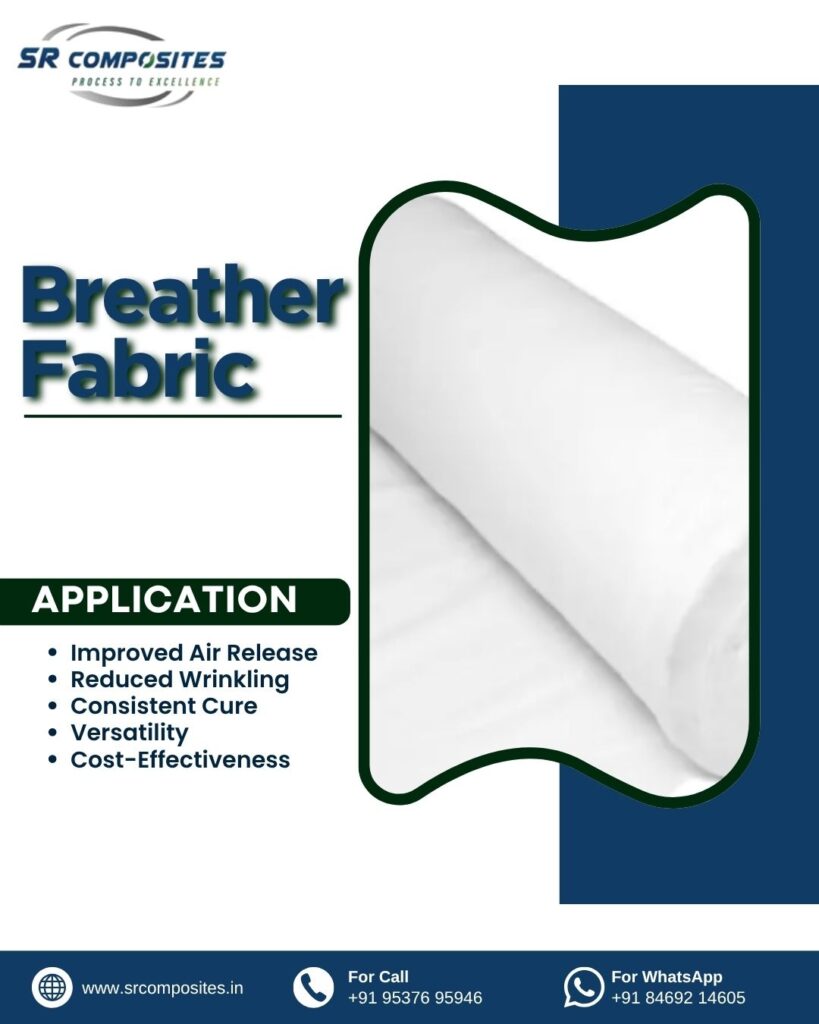
Table of Contents Introduction Discover high-quality Breather Fabric from SR Composites for vacuum bagging and SR composite manufacturing. Improve air release, reduce wrinkling, achieve consistent curing, and enhance laminate quality with cost-effective composite solutions. In composite manufacturing, achieving high-quality laminates requires precise control over air evacuation, resin flow, and curing conditions. One of the most important materials used during the vacuum bagging process is Breather Fabric. It plays a crucial role in ensuring consistent pressure distribution and effective air removal throughout the laminate SR Composites offers premium-quality Breather Fabric designed to improve air release, reduce wrinkling, ensure consistent curing, and enhance overall manufacturing efficiency. Whether used in aerospace, marine, automotive, or industrial composite applications, Breather Fabric contributes significantly to producing strong and defect-free composite components. Check this: – https://www.indiamart.com/ What is Breather Fabric? Breather Fabric is a non-woven polyester material used in vacuum bagging processes. It allows air and gases to move freely beneath the vacuum bag while maintaining even pressure across the laminate surface. The material acts as an air passage, enabling trapped air and volatile gases to escape during curing. This helps manufacturers achieve superior laminate quality and minimize defects caused by air entrapment. Why Breather Fabric is Important in Composite Manufacturing During vacuum bagging, trapped air can create voids, weak spots, and surface imperfections within composite structures. Breather Fabric provides a pathway for air evacuation and helps maintain uniform vacuum pressure throughout the curing cycle. By improving airflow and pressure distribution, Breather Fabric ensures stronger laminates, better surface finish, and improved structural integrity. Breather Fabric at a Glance Feature Description Product Name Breather Fabric Brand SR Composites Material Type Non-Woven Polyester Fabric Primary Function Air Evacuation During Vacuum Bagging Application Composite Manufacturing & Vacuum Infusion Key Advantage Improved Air Release Curing Performance Consistent and Uniform Cure Wrinkle Prevention Reduces Surface Wrinkling Reusability Depending on Application Industries Served Aerospace, Marine, Automotive, Industrial Key Features of Breather Fabric Feature Benefit Improved Air Release Helps remove trapped air and gases efficiently Reduced Wrinkling Minimizes laminate distortion during curing Consistent Cure Maintains uniform pressure across the laminate High Versatility Suitable for multiple composite manufacturing processes Cost-Effective Solution Reduces defects and rework costs Excellent Airflow Supports efficient vacuum bagging operations Lightweight Design Easy to handle and apply Improved Air Release Breather Fabric provides efficient pathways for air evacuation, reducing voids and improving laminate quality. Reduced Wrinkling The fabric helps maintain smooth pressure distribution, preventing wrinkles and surface irregularities. Consistent Cure Uniform airflow and pressure contribute to consistent resin curing throughout the composite structure. Versatility Suitable for vacuum bagging, resin infusion, prepreg processing, and various composite manufacturing techniques. Cost-Effectiveness By minimizing defects and reducing material waste, Breather Fabric helps lower overall production costs. Applications of Breather Fabric Aerospace Industry Used in aircraft composite structures where high-quality laminates are essential. Marine Manufacturing Supports the production of boats, yachts, and marine composite components. Automotive Components Ensures reliable curing and high-strength composite parts. Wind Energy Sector Used in manufacturing wind turbine blades and structural composite components. Industrial Fabrication Ideal for tanks, panels, ducts, and custom composite products. Sports & Recreation Equipment Used in advanced composite sporting goods and performance equipment. Benefits of Using Breather Fabric Benefit Manufacturing Impact Better Air Evacuation Reduces void formation Improved Laminate Quality Produces stronger composite parts Uniform Pressure Distribution Ensures consistent curing Lower Defect Rate Minimizes rework and scrap Enhanced Productivity Improves manufacturing efficiency Cost Savings Reduces material wastage Better Surface Finish Improves final product appearance Frequently Asked Questions (FAQs) 1. What is the purpose of Breather Fabric? Breather Fabric allows air and gases to escape during vacuum bagging, ensuring proper laminate consolidation and curing. 2. Can Breather Fabric be used in vacuum infusion processes? Yes. It is commonly used in vacuum infusion, vacuum bagging, and prepreg composite manufacturing. 3. How does Breather Fabric improve composite quality? It helps remove trapped air, maintain uniform pressure, and achieve a consistent cure throughout the laminate. 4. Which industries commonly use Breather Fabric? Aerospace, marine, automotive, wind energy, and industrial manufacturing sectors frequently use Breather Fabric. 5. Is Breather Fabric a cost-effective solution? Yes. It reduces defects, minimizes material waste, and lowers overall production costs. Conclusion Breather Fabric is an essential component in modern composite manufacturing and vacuum bagging processes. Its ability to improve air release, reduce wrinkling, maintain consistent curing conditions, and enhance laminate quality makes it a valuable material for producing high-performance composite parts. SR Composites’ Breather Fabric is engineered to deliver reliable performance across a wide range of applications, helping manufacturers achieve stronger laminates, improved productivity, and superior product quality. Whether for aerospace, marine, automotive, or industrial applications, Breather Fabric remains a critical element in successful composite fabrication.