7 Fabric Roller: The Key to Achieving a Smooth and Professional Composite Finish
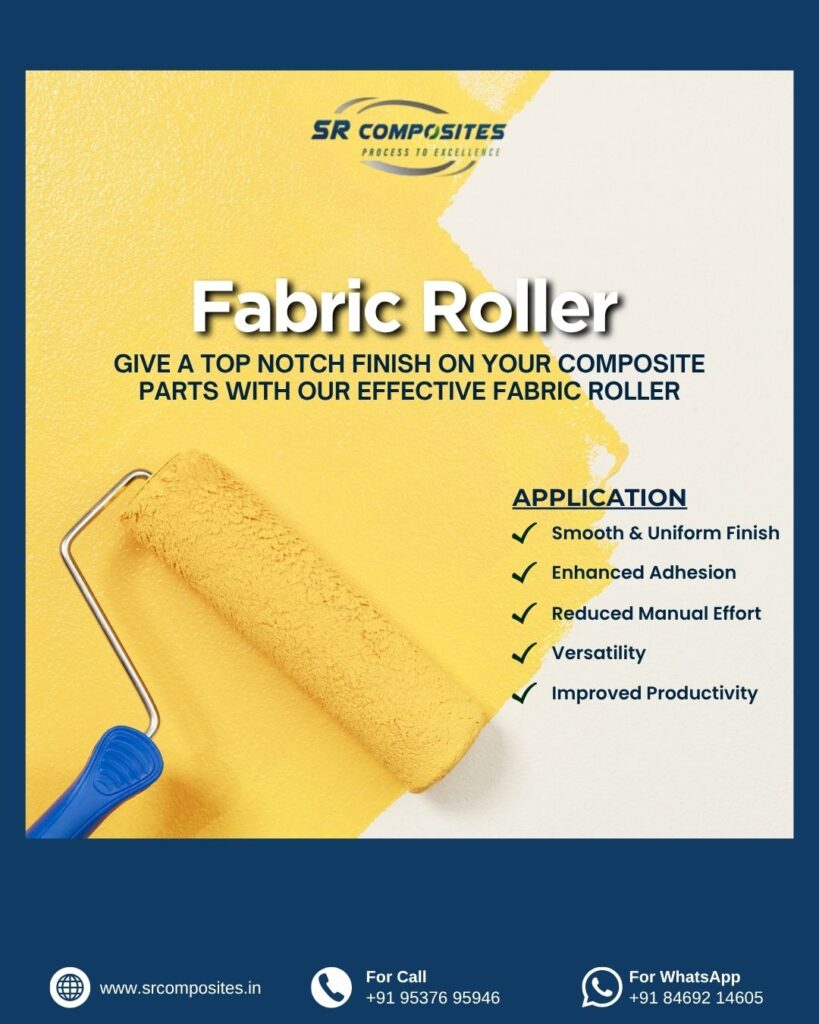
Table of Contents Introduction Discover how SR Composites Fabric Rollers improve composite manufacturing with smooth finishes, enhanced adhesion, reduced manual effort, and increased productivity. Ideal for FRP, fiberglass, marine, automotive, and industrial applications. In the world of composite manufacturing, achieving a smooth, durable, and professional finish is essential for producing high-quality products. Whether you are working with fiberglass, carbon fiber, or other composite materials, proper resin distribution and fabric consolidation play a crucial role in the final outcome. A Fabric Roller is one of the most effective tools used during the lamination process. Designed to provide a smooth and uniform finish, it helps manufacturers improve adhesion, reduce manual effort, and increase productivity. SR Composites offers high-quality Fabric Rollers engineered to deliver reliable performance across a wide range of composite applications. What is a Fabric Roller? A Fabric Roller is a specialized tool used in composite fabrication and fiberglass lamination processes. It is designed to apply pressure evenly across composite fabrics, helping resin penetrate effectively while removing trapped air bubbles. This ensures proper bonding between layers and results in stronger, more durable composite parts. The roller helps achieve a consistent finish while reducing imperfections that can affect the structural integrity and appearance of the final product. Feature Description Product Name Fabric Roller Brand SR Composites Primary Use Composite Lamination & Surface Finishing Application FRP, Fiberglass, Carbon Fiber Composites Finish Quality Smooth & Uniform Finish Key Benefit Enhanced Adhesion Between Layers Productivity Improves Manufacturing Efficiency Manual Effort Reduces Operator Fatigue Industries Served Marine, Automotive, Aerospace, Industrial Durability Designed for Long-Term Industrial Use Why Fabric Rollers are Important in Composite Manufacturing Composite manufacturing requires precision and consistency. Uneven resin distribution can lead to weak bonding, air pockets, and surface defects. Fabric Rollers help eliminate these issues by ensuring resin is evenly spread throughout the reinforcement fabric. Check this:- https://www.indiamart.com/ By improving laminate consolidation and reducing manual effort, Fabric Rollers contribute to higher production efficiency and better product quality. Key Features of SR Composites Fabric Roller Smooth & Uniform Finish Ensures even resin distribution across the composite surface, resulting in a professional-quality finish. Enhanced Adhesion Improves bonding between fabric layers and resin systems, increasing strength and durability. Reduced Manual Effort Designed for efficient operation, helping reduce labor-intensive work and operator fatigue. Versatile Applications Suitable for fiberglass, carbon fiber, FRP components, and various composite manufacturing processes. Improved Productivity Speeds up the lamination process and helps manufacturers achieve consistent results with less effort. Durable Construction Built using high-quality materials for long-lasting performance in demanding industrial environments. Benefits of Using a Fabric Roller Using a Fabric Roller provides several advantages in composite manufacturing: These benefits make Fabric Rollers an essential tool for manufacturers seeking better quality and productivity. Applications of Fabric Rollers Fabric Rollers are widely used across various industries, including: Fiberglass Reinforced Plastic (FRP) Manufacturing Helps ensure proper resin penetration and laminate consolidation. Marine Industry Used in boat building and marine component fabrication. Automotive Industry Supports the production of lightweight and high-strength composite parts. Aerospace Applications Ensures precision and consistency in advanced composite structures. Industrial Equipment Manufacturing Used in tanks, panels, ducts, and other composite products. Wind Energy Sector Supports the fabrication of composite components used in wind turbine systems. Frequently Asked Questions (FAQs) 1. What is the primary purpose of a Fabric Roller? A Fabric Roller is used to distribute resin evenly, remove trapped air, and improve adhesion during composite manufacturing. 2. Can Fabric Rollers be used with fiberglass materials? Yes, Fabric Rollers are commonly used with fiberglass and other reinforcement fabrics in FRP manufacturing. 3. How does a Fabric Roller improve composite quality? It ensures proper resin penetration, reduces air bubbles, and creates a smoother, stronger laminate structure. 4. Are Fabric Rollers suitable for industrial applications? Absolutely. They are widely used in marine, automotive, aerospace, and industrial composite manufacturing. 5. Why choose SR Composites Fabric Rollers? SR Composites Fabric Rollers are designed for durability, efficiency, and consistent performance, helping manufacturers achieve superior results. Conclusion A Fabric Roller is an indispensable tool in composite manufacturing, helping achieve smooth finishes, improved adhesion, and enhanced productivity. Ensuring proper resin distribution and reducing air entrapment contribute significantly to the strength, appearance, and reliability of composite products. SR Composites Fabric Rollers are designed to meet the demands of modern manufacturing processes, offering durability, efficiency, and exceptional performance. Whether you are involved in FRP production, marine fabrication, automotive components, or industrial composites, investing in a high-quality Fabric Roller can greatly improve
10 Powerful Masking Tape Applications and Benefits for Professional-Quality Finishes
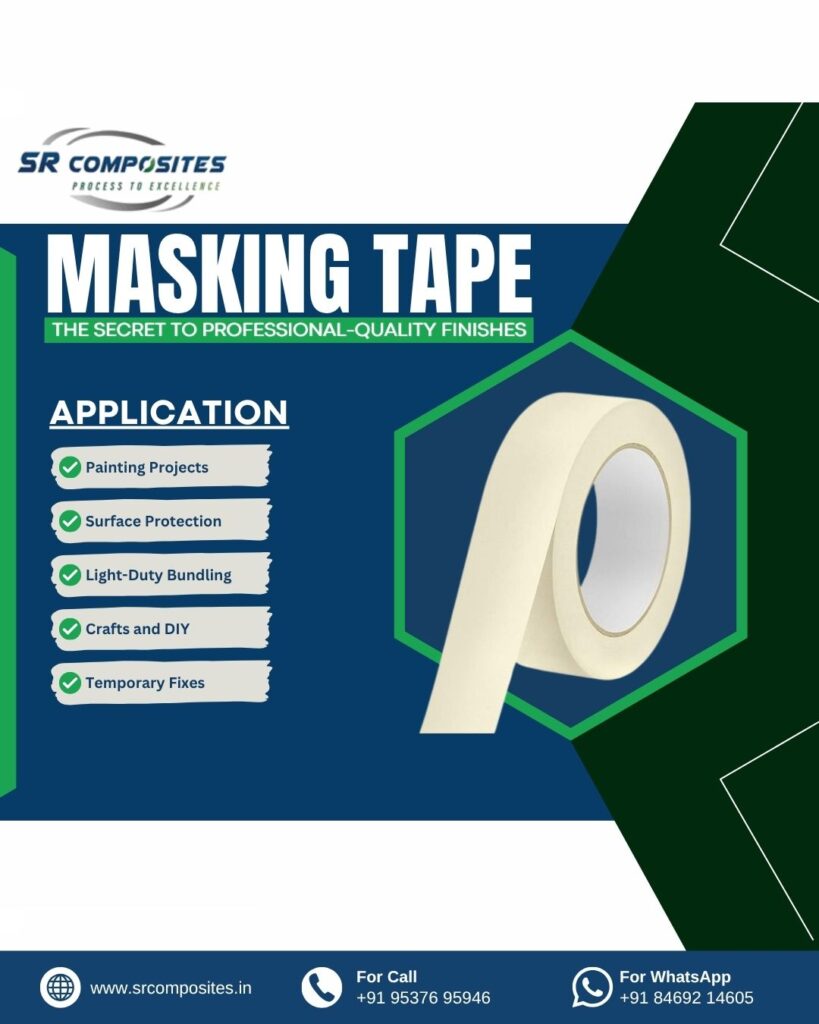
Table of Contents Masking Tape: A Small Product That Makes a Big Difference Masking Tape plays an important role in achieving clean, professional results across a wide range of industries. From residential painting and construction projects to advanced manufacturing operations, this simple adhesive product helps improve precision, protect surfaces, and reduce costly mistakes. While often overlooked, it is one of the most useful tools available to professionals who require accuracy and efficiency. In many finishing applications, Masking Tape, the quality of the final result depends heavily on preparation. Even the most advanced paints, coatings, and finishing materials can fail to deliver a professional appearance if nearby surfaces are not properly protected. Masking Tape. This is where a reliable adhesive masking solution becomes essential. By creating temporary barriers and clearly defined boundaries, users can complete projects with greater confidence and control. Over the years, the demand for precision finishing has increased significantly. Industries are expected to maintain high-quality standards while controlling costs and improving productivity. As a result, protective adhesive products have become a standard component of modern operations. Whether the task involves painting, coating, bundling, labeling, or temporary surface protection, the right tape can make a noticeable difference in both efficiency and final appearance. Understanding the Role of Masking Tape A Masking Tape product is a pressure-sensitive adhesive tape designed for temporary applications. Unlike permanent bonding solutions, it is engineered to provide reliable adhesion during use and clean removal afterward. This combination makes it ideal for tasks that require temporary protection or separation. The product is commonly manufactured using a crepe paper backing combined with specially formulated adhesives. This construction allows it to conform to irregular surfaces while maintaining consistent performance. Users can easily tear, apply, and remove the tape without requiring specialized tools. Because of its flexibility, it can be used on painted walls, metal surfaces, glass panels, composite materials, wood, plastics, and numerous other substrates. Its ability to protect surfaces without causing damage has made it an essential item in workshops, factories, construction sites, and homes. Table 1: Core Characteristics Feature Advantage Flexible Backing Adapts to curved surfaces Temporary Adhesion Easy removal after use Clean Edges Supports precise finishing Lightweight Design Convenient handling Surface Compatibility Suitable for multiple materials Cost Efficiency Helps reduce project expenses Why Surface Preparation Matters Every successful finishing project begins with preparation. Whether applying paint, coatings, laminates, or decorative treatments, protecting adjacent areas is crucial. Masking Tape. Poor preparation can result in uneven lines, overspray, contamination, and additional corrective work. Professional contractors understand that protecting surrounding surfaces often saves more time than repairing mistakes afterward. Temporary protective barriers help maintain cleanliness and prevent accidental damage to finished areas. This is particularly important in projects involving premium materials where repairs can be expensive. Accurate preparation also contributes to workplace efficiency. Employees spend less time cleaning unwanted spills, removing overspray, or correcting alignment issues. As a result, projects move forward more smoothly and productivity improves. For businesses managing large-scale operations, even minor improvements in efficiency can generate substantial savings over time. A simple protective tape often becomes an important tool for maintaining quality standards and controlling operational costs. Applications Across Multiple Industries One of the reasons this adhesive product remains popular is its versatility. Masking Tape. It serves numerous functions across industrial, commercial, and residential environments. Painting projects represent one of the most common applications. Contractors use the tape to create crisp lines around ceilings, trim, windows, and decorative features. The result is a cleaner appearance and reduced touch-up work. Manufacturing facilities frequently use temporary adhesive solutions during production and finishing operations. Sensitive components can be protected from scratches, dust, paint, and contaminants while work is being performed. Automotive workshops also rely on precision masking products during painting and detailing procedures. Technicians use them to shield areas that should remain untouched while ensuring accurate color masking, transitions, and professional finishes. Creative professionals benefit from these products as well. Artists, designers, and hobbyists use them to create patterns, secure templates, and protect delicate surfaces during projects. Table 2: Common Uses Application Area Purpose Painting Clean paint boundaries Manufacturing Component protection Automotive Precision detailing Construction Surface safeguarding Crafts & DIY Creative projects Packaging Temporary bundling Beyond these applications, many organizations use adhesive masking materials for temporary labeling, inventory management, equipment marking, and assembly operations. Their versatility continues to support countless industries worldwide. Advantages of High-Quality Adhesive Solutions Not all products offer the same level of performance. Premium-quality materials provide significant advantages that can influence project outcomes. One major benefit is residue-free removal. Inferior products often leave adhesive traces that require additional cleaning. Quality solutions help avoid this issue and maintain surface integrity. Another advantage is consistency. Professional users need products that perform predictably from one project to the next. Consistent adhesion and removal characteristics contribute to better quality control. Improved edge definition is another important factor. When creating paint lines or protective boundaries, precision matters. High-quality products help reduce bleeding and maintain sharper results. Durability during use is equally valuable. Reliable performance throughout a project helps prevent unexpected lifting or failure that could compromise the final outcome. Table 3: Performance Benefits Benefit Result Clean Removal Reduced cleanup Consistent Adhesion Reliable performance Sharp Edges Better visual appearance Surface Protection Lower damage risk Easy Application Faster workflow Professional Results Higher customer satisfaction Organizations that invest in quality materials often experience lower rework rates, fewer delays, and improved project efficiency. Industrial and Commercial Importance Industrial environments require products capable of supporting demanding processes. Temporary protective materials play an important role in helping businesses maintain quality standards while increasing productivity. Construction companies use protective tapes during renovation and finishing work to safeguard windows, fixtures, flooring, and architectural details. These measures reduce cleanup requirements and improve overall project quality. Automotive manufacturers depend on masking products during painting operations. Precise coverage ensures that coatings are applied accurately while protecting nearby surfaces. Composite manufacturers also benefit from temporary adhesive solutions. During fabrication, trimming, finishing, and assembly activities, surfaces often require protection from contamination and
VAP Membrane: 10 Powerful Benefits for Superior Moisture Protection and Building Performance
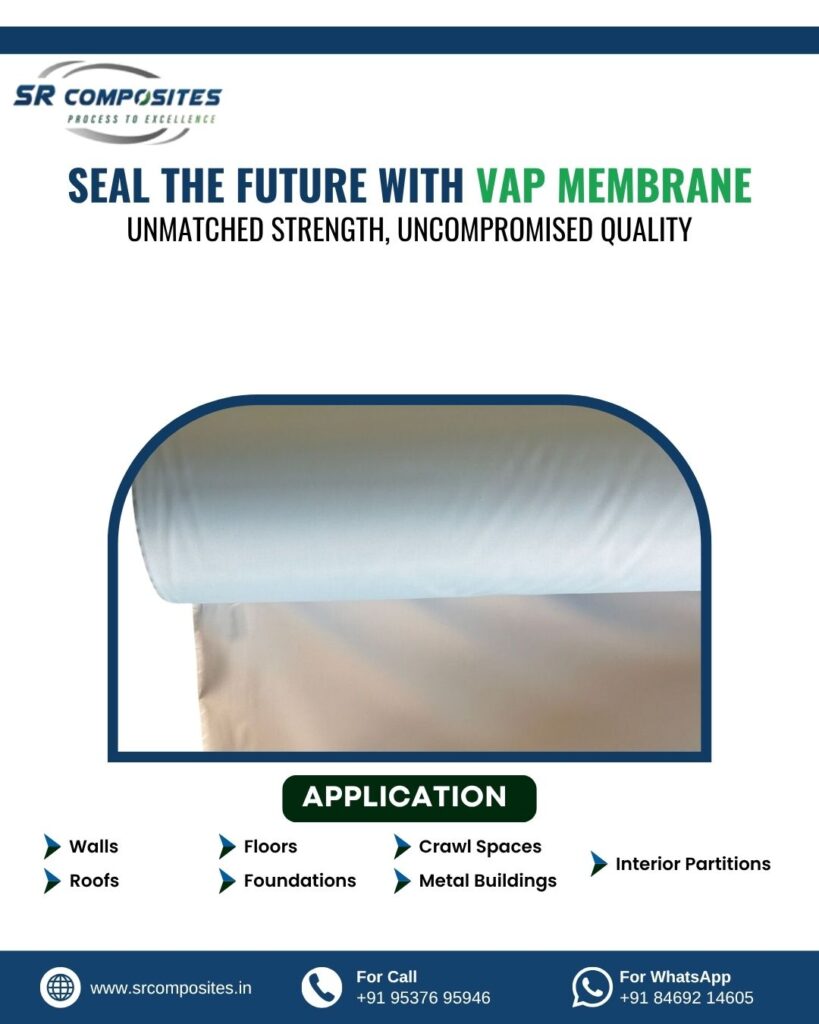
VAP Membrane: 10 Proven Benefits for Stronger and More Durable Buildings Table of Contents Introduction VAP Membrane technology has become an essential part of modern construction projects where long-term durability, energy efficiency, and moisture protection are critical requirements. Whether a building is located in a humid coastal region, an industrial zone, or an area experiencing significant seasonal temperature variations, controlling moisture movement within the building envelope is necessary to ensure structural integrity and occupant comfort. Many construction problems begin when water vapor enters walls, roofs, and flooring systems. Over time, trapped moisture can reduce insulation performance, encourage mold growth, damage construction materials, and increase maintenance costs. A properly installed vapor barrier helps prevent these issues and contributes to a healthier and more efficient building environment. As construction standards continue to evolve, architects, engineers, and contractors increasingly rely on advanced moisture-control systems to protect investments and improve building performance. This is where high-quality solutions from SR Composites provide significant value. Understanding VAP Membrane Technology A VAP Membrane is a specially engineered material designed to limit the movement of water vapor through various components of a building structure. While liquid water intrusion is often visible and easier to address, water vapor can silently penetrate construction assemblies and create hidden problems over time. Table 1: Key Features of VAP Membrane Feature Description Benefit Moisture Resistance Prevents water vapor penetration Protects building materials High Durability Designed for long-term performance Reduces replacement costs Flexible Structure Easy to install on different surfaces Faster construction Tear Resistance Withstands handling and installation stress Reliable performance Lightweight Material Easy transportation and storage Lower installation effort Thermal Support Helps insulation perform effectively Better energy efficiency Mold Prevention Limits moisture accumulation Improved indoor air quality Chemical Resistance Suitable for industrial environments Enhanced durability The purpose of a vapor control layer is to regulate moisture transfer before condensation occurs inside walls, ceilings, or floor systems. When warm air carrying moisture comes into contact with cooler surfaces, condensation can develop. If this moisture remains trapped, it can gradually deteriorate insulation materials, weaken structural components, and create ideal conditions for biological growth. Modern membrane technology is developed using advanced materials that offer durability, flexibility, and long-term resistance against moisture transmission. These characteristics make it a reliable solution for both residential and industrial applications. Why Moisture Protection Matters in Modern Buildings Moisture management plays a major role in determining the lifespan of any structure. Excess moisture can affect everything from indoor air quality to energy efficiency. Many building owners underestimate the long-term impact of uncontrolled vapor movement until significant repairs become necessary. Applications of VAP Membrane in Construction Application Area Purpose Advantage Walls Controls moisture movement Prevents dampness and mold Roofs Reduces condensation Extends roof lifespan Floors Blocks ground moisture Protects floor finishes Foundations Prevents moisture ingress Improves structural durability Crawl Spaces Controls humidity levels Healthier indoor environment Metal Buildings Minimizes condensation Prevents corrosion and rust Interior Partitions Moisture management Better building performance Buildings that lack adequate moisture protection often experience recurring issues such as peeling finishes, damp insulation, corrosion, mold development, and reduced thermal performance. These problems not only increase operating costs but can also affect the comfort and safety of occupants. By integrating a high-performance moisture barrier into the building envelope, construction professionals can significantly reduce these risks and create structures that perform more effectively throughout their service life. Major Benefits of Using VAP Membrane One of the primary advantages of using this type of moisture protection system is its ability to maintain the effectiveness of insulation. Insulation materials perform best when they remain dry. When moisture enters insulation layers, thermal resistance decreases, causing heating and cooling systems to work harder and consume more energy. Benefits of Using VAP Membrane Benefit Impact on Building Moisture Protection Prevents water vapor damage Energy Efficiency Maintains insulation effectiveness Structural Protection Reduces deterioration of materials Mold Control Creates healthier indoor spaces Lower Maintenance Reduces repair costs Longer Building Life Enhances durability Better Comfort Improves indoor conditions Sustainable Construction Supports energy-saving practices Another important benefit is the protection of structural materials. Wood, steel, and other construction components can suffer deterioration when exposed to long-term moisture accumulation. A vapor barrier helps preserve these materials and supports long-term building stability. Indoor air quality also improves when moisture is properly controlled. Excess humidity can encourage mold and mildew growth, which may affect occupant comfort and health. By limiting vapor migration, building owners can create healthier indoor environments. Financially, moisture protection systems offer excellent value because they help reduce future repair expenses. Preventing damage is often significantly less expensive than addressing structural deterioration after it occurs. In industrial and commercial facilities, vapor control solutions contribute to improved operational efficiency by protecting equipment, insulation systems, and sensitive building components from moisture-related issues. Applications Across Construction Projects The versatility of modern membrane systems allows them to be used in a wide range of construction environments. Residential buildings frequently incorporate moisture barriers within wall assemblies and roof structures to improve thermal efficiency and durability. Commercial developments such as office complexes, shopping centers, and educational institutions benefit from improved building envelope performance and reduced maintenance requirements. Large-scale projects often demand reliable moisture management solutions to meet long-term operational goals. Industrial facilities and warehouses are among the most common applications. Metal structures are particularly vulnerable to condensation because of temperature differences between indoor and outdoor environments. Installing a vapor control layer helps minimize corrosion risks and improves overall building performance. Foundation systems also benefit from moisture protection. Ground moisture can migrate through concrete and other structural materials if adequate barriers are not incorporated during construction. By controlling vapor movement at the foundation level, builders can improve the longevity of the entire structure. Similarly, crawl spaces, flooring systems, and interior partition walls can all benefit from advanced moisture management technologies designed to create more stable and durable building environments. 10 Powerful Benefits for Superior Moisture Protection and Building Performance 1. Superior Moisture Protection Prevents water vapor from penetrating walls, roofs, floors, and foundations, protecting the building structure
10 Powerful Benefits of Vacuum Infusion Mesh for Superior Composite Manufacturing
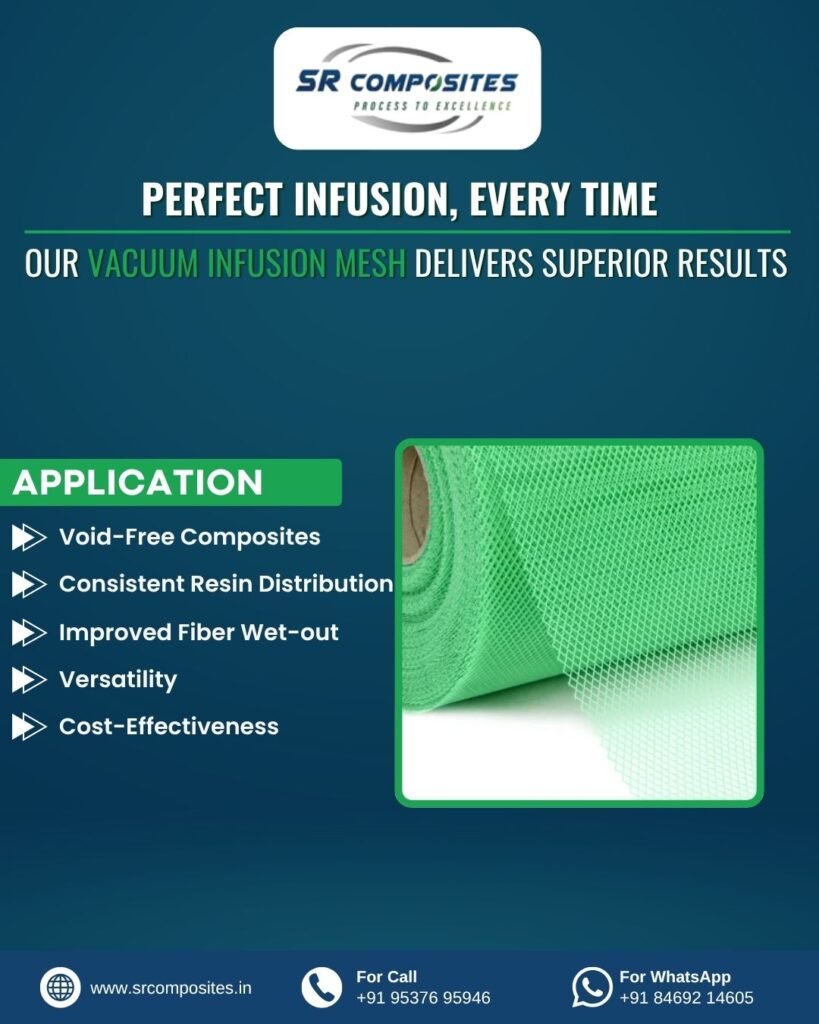
Vacuum Infusion Mesh: The Key to Consistent and High-Performance Composite Production Table of Contents Introduction Vacuum Infusion Mesh plays a critical role in modern composite manufacturing by helping resin travel efficiently throughout reinforcement materials during the vacuum infusion process. As industries increasingly demand lightweight, durable, and high-strength composite structures, manufacturers are turning toward advanced infusion techniques that ensure consistency and precision. Whether producing marine components, wind turbine blades, automotive panels, or industrial structures, manufacturers need reliable resin distribution to achieve superior product quality. The effectiveness of the infusion process depends heavily on the consumable materials used, and among them, infusion mesh remains one of the most important. The ability to produce void-free laminates, improve fiber impregnation, and reduce material waste makes this technology a valuable asset in today’s competitive manufacturing environment. Understanding Vacuum Infusion Technology Vacuum Infusion Mesh is a manufacturing process used to produce high-quality composite components. During the process, dry reinforcement materials are placed inside a mold and sealed beneath a vacuum bag. Vacuum pressure removes trapped air and compacts the laminate before resin is introduced. As resin enters the mold, it must spread uniformly across the entire surface before penetrating the reinforcement layers. Efficient resin movement is essential because uneven flow can create dry spots, trapped air pockets, and structural weaknesses. This is where specialized flow media become crucial. By providing dedicated channels for resin movement, they help ensure complete laminate saturation and consistent product quality. What Is Vacuum Infusion Mesh? Vacuum Infusion Mesh is a lightweight flow media designed to accelerate and control resin distribution during composite manufacturing. Positioned above reinforcement layers and below the vacuum bag, it creates pathways that allow resin to travel quickly across large surfaces. Instead of relying solely on the natural permeability of reinforcement fabrics, manufacturers use infusion mesh to guide resin flow more effectively. This results in shorter infusion times, improved wet-out, and better laminate consolidation. The material is widely used in industries where precision, repeatability, and structural performance are essential. How Vacuum Infusion Mesh Improves Resin Distribution Vacuum Infusion Mesh. One of the biggest challenges in composite manufacturing is achieving uniform resin distribution throughout the laminate. Uneven flow can create inconsistencies that affect both appearance and mechanical performance. Infusion mesh creates an efficient network for resin movement, allowing the material to spread evenly before entering the reinforcement layers. This controlled flow minimizes the risk of dry areas and helps manufacturers achieve more predictable results. Because resin reaches all areas of the laminate more effectively, finished components demonstrate improved strength and reliability. Better Fiber Wet-Out for Stronger Composites Fiber wet-out refers to the process of thoroughly impregnating reinforcement materials with resin. Vacuum Infusion Mesh. Incomplete wet-out can weaken a composite structure and reduce its durability. By improving resin flow characteristics, infusion mesh helps ensure that fibers receive sufficient resin throughout the manufacturing process. Better saturation leads to stronger bonding between fibers and resin, ultimately producing composite parts with enhanced mechanical properties. Manufacturers often report improved laminate quality and greater consistency when using high-quality infusion materials. Reduced Voids and Manufacturing Defects Vacuum Infusion Mesh Air entrapment is a common problem in composite fabrication. Trapped air can create voids that compromise structural integrity and increase the likelihood of product failure. Efficient resin distribution helps eliminate these issues by allowing resin to replace air more effectively during infusion. As a result, manufacturers can produce cleaner laminates with fewer defects and improved performance. Lower rejection rates also contribute to significant cost savings over time. Faster Production and Improved Efficiency Vacuum Infusion Mesh Production efficiency is a major concern for manufacturers working with large or complex composite structures. Slow resin flow can increase cycle times and reduce overall productivity. The use of dedicated flow media accelerates resin movement, allowing infusion to be completed more quickly. Faster processing means manufacturers can increase throughput while maintaining strict quality standards. This advantage becomes particularly valuable when producing large composite components or operating in high-volume manufacturing environments. Cost Savings Through Process Optimization Reducing waste is a key objective in any manufacturing operation. Efficient resin distribution helps minimize excess material usage while reducing the likelihood of defective parts. When infusion processes operate consistently, manufacturers spend less on rework, repairs, and material losses. Over time, these improvements can significantly lower overall production costs. The result is a more efficient manufacturing process that delivers better value without sacrificing quality. Industries That Benefit from Infusion Mesh Technology Marine Manufacturing Boat builders rely heavily on Vacuum Infusion Mesh processes to create strong and lightweight hulls, decks, and structural components. Controlled resin distribution helps ensure durability and long-term performance in harsh marine environments. Wind Energy Large wind turbine blades require precise resin infusion to achieve structural integrity across extensive surfaces. Flow media supports efficient manufacturing and helps maintain consistent quality throughout production. Automotive Industry Vehicle manufacturers increasingly use composite materials to reduce weight and improve fuel efficiency. Reliable infusion techniques contribute to the production of strong and lightweight automotive components. Aerospace Applications Aircraft structures demand exceptional strength-to-weight ratios and strict quality standards. Advanced infusion systems help manufacturers meet these requirements while maintaining consistency. Industrial Manufacturing Numerous industrial products, including tanks, panels, covers, and specialized equipment, benefit from controlled resin infusion and improved laminate quality. Factors to Consider When Selecting Infusion Materials Choosing the right infusion solution can significantly impact manufacturing performance. Factors such as flow rate, resin compatibility, durability, and application requirements should be evaluated carefully. Manufacturers should work with trusted suppliers who understand composite manufacturing and can provide materials designed for consistent performance. For additional information about composite manufacturing standards and industry developments, manufacturers can refer to the American Composites Manufacturers Association:https://acmanet.org/ Why Choose SR Composites At SR Composites, we understand the importance of reliable consumable materials in achieving successful manufacturing outcomes. Our products are designed to support efficient resin flow, improved laminate quality, and consistent production performance. We supply advanced composite consumables that help manufacturers reduce defects, increase productivity, and achieve superior finished products. Our commitment to quality and customer satisfaction has
Innovative Breathable Fabric for Composites: A Powerful 7-Step Industrial Guide
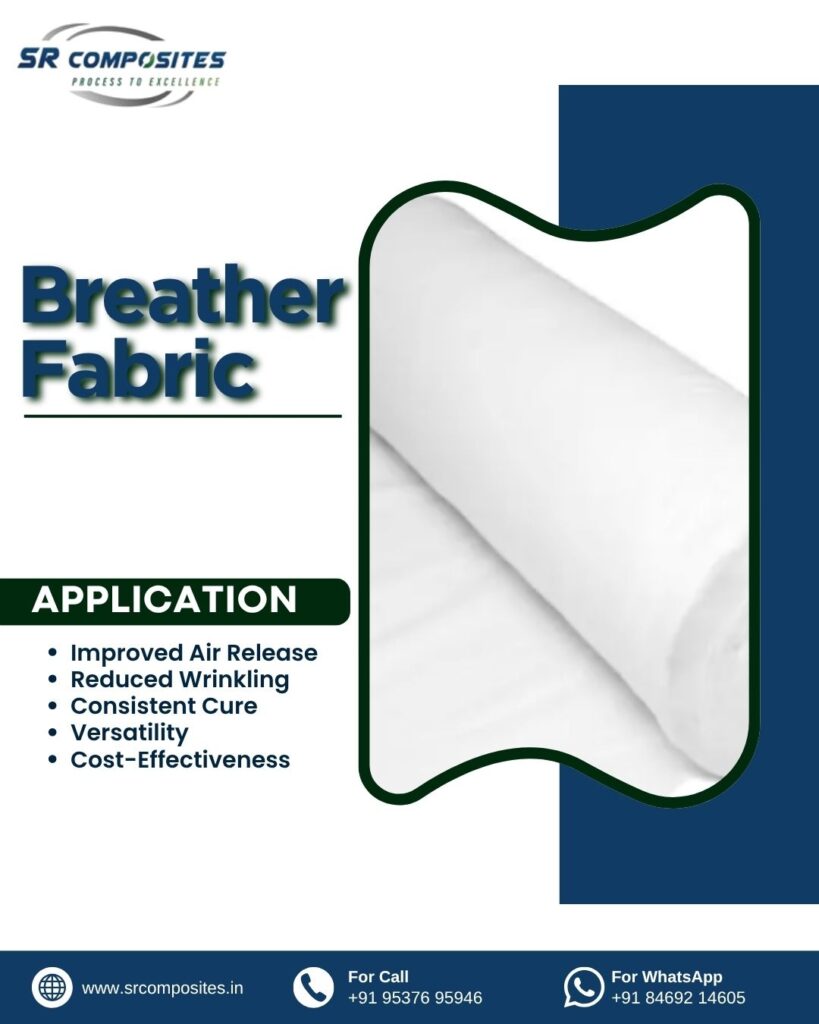
Table of Contents Introduction In modern industrial engineering, material performance is no longer limited to strength alone. Industries now demand materials that are lightweight, durable, and capable of maintaining structural efficiency under extreme conditions. One such innovation is Breathable Fabric for Composites, widely used in advanced manufacturing systems. Companies like SR Composites are increasingly focusing on high-performance composite materials that integrate breathable fabric layers to improve efficiency, airflow management, and long-term durability in industrial applications. What is Breathable Fabric for Composites? This is a specially engineered textile layer used within composite structures to allow controlled air and moisture flow while maintaining structural integrity. It is commonly used in: The primary role of this fabric is to prevent trapped air, reduce defects during manufacturing, and improve bonding between layers. How It Works in Industrial Applications Breathable fabrics function as a controlled ventilation layer during composite manufacturing. When resin is applied, the fabric allows: This ensures the final composite structure is stronger, more stable, and less prone to internal stress failures. Key Features of Breathable Fabric for Composites used in composites offer several advanced engineering properties: 1. High Air Permeability Allows controlled airflow without compromising structural strength. 2. Thermal Stability Maintains performance under high-temperature industrial processes. 3. Chemical Resistance Compatible with resins, adhesives, and industrial coatings. 4. Lightweight Structure Reduces overall material weight in composite systems. 5. Uniform Resin Flow Ensures better bonding and reduced defects. Applications Across Industries Fabric for Composites is used in multiple sectors: Each application benefits from improved durability and structural efficiency. Benefits of Using Breathable Fabric for Composites The use of breathable fabric significantly improves composite performance in industrial environments. Improved Structural Integrity By eliminating air pockets, the material becomes more uniform and reliable. Enhanced Manufacturing Efficiency Reduces production errors and material waste. Long-Term Durability Composites last longer under mechanical and thermal stress. Better Surface Finish Ensures smoother final product appearance. Cost Efficiency Reduces repair and maintenance costs over time. Why Choose SR Composites Industries prefer SR Composites due to its focus on advanced composite engineering solutions and quality-controlled manufacturing processes. Key reasons include: The company’s approach ensures that breathable fabric solutions meet modern engineering demands efficiently. Fabrics used in composites are widely studied in advanced material engineering, with international standards and testing guidelines published by organizations such as ISO (https://www.iso.org) and material research bodies like NIST (https://www.nist.gov). Featured Snippet (Quick Answer) What is Breathable Fabric for Composites? Fabric for Composites is a specialized textile layer used in composite manufacturing that allows air and moisture to pass through while improving resin flow, reducing voids, and increasing structural strength in industrial materials. FAQ 1. What is the main purpose of breathable fabric in composites? Breathable fabric helps remove trapped air and ensures uniform resin distribution during composite manufacturing, improving overall strength and durability. 2. Where is breathable fabric for composites commonly used? It is widely used in automotive, aerospace, marine, wind energy, and industrial insulation applications due to its performance benefits. 3. Does breathable fabric affect the strength of composites? Yes, positively. It enhances structural integrity by reducing voids and improving bonding between composite layers. 4. Why is it important in industrial manufacturing? It improves production efficiency, reduces defects, and ensures high-quality output in composite-based systems. 5. How does SR Composites contribute to this technology? The company focuses on delivering advanced composite materials that integrate breathable fabric technology for improved industrial performance. Conclusion Fabric for Composites has become a critical component in modern industrial manufacturing. Its ability to improve airflow, reduce defects, and enhance structural performance makes it essential across multiple high-performance sectors. With companies like SR Composites advancing material engineering, industries are moving toward more efficient, durable, and cost-effective composite solutions.
Fabric Roller Guide: 7 Powerful Benefits for Industrial Performance
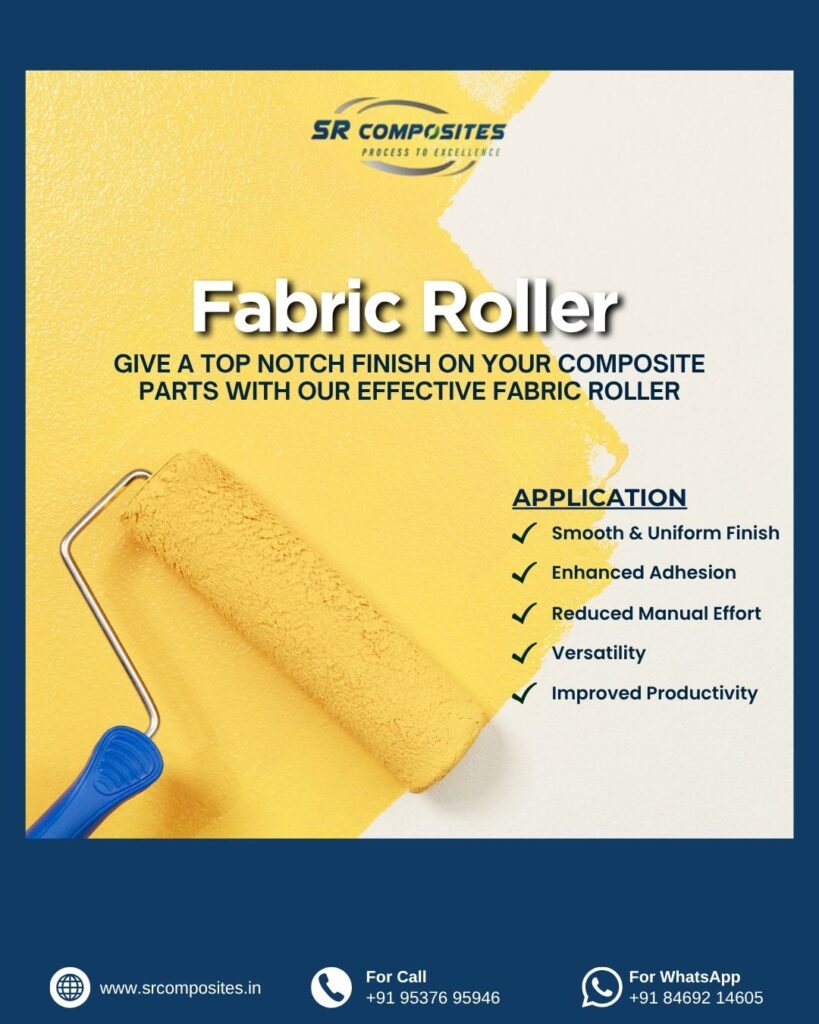
Table of Contents 1. Introduction In modern manufacturing systems, smooth material handling is essential for consistent production output. A fabric roller plays a critical role in guiding, supporting, and controlling flexible materials during processing. It is widely used in textile production, composite manufacturing, packaging lines, and conveyor-based systems where precision and stability are required. The demand for advanced roller systems has increased due to automation and high-speed production environments. 2. What is a Fabric Roller? A fabric roller is a cylindrical mechanical component designed to guide fabric, sheets, or flexible industrial materials through machines with controlled movement. It reduces friction, maintains alignment, and ensures that materials move smoothly without deformation or damage. These rollers are typically made using: External reference on roller systems:https://en.wikipedia.org/wiki/Roller 3. How It Works The working principle is based on controlled rotation. As material passes over the roller surface, it rotates either freely or through a driven system. This mechanism ensures: The design may vary depending on load capacity, speed, and application requirements. 4. Key Features Industrial-grade roller systems offer several technical advantages: These features make them suitable for demanding industrial environments. 5. Industrial Applications Material handling rollers are used in multiple industries, including: Internal reference:SR Composites In composite manufacturing systems, rollers ensure uniform layering and defect-free processing of materials. 6. Benefits in Manufacturing Using advanced roller systems provides several operational advantages: Improved Efficiency Continuous material flow reduces downtime and improves productivity. Better Product Quality Uniform handling prevents defects, stretching, or surface damage. Lower Energy Consumption Reduced friction leads to smoother machine operation. Reduced Maintenance High-quality rollers require minimal servicing and downtime. Higher Process Stability Maintains consistent alignment in high-speed production systems. 7. Why Quality Rollers Matter The performance of any production line depends heavily on material handling components. Poor-quality rollers can lead to: High-quality engineered systems from industrial solution providers such as SR Composites ensure long-term stability and efficiency. 8. Featured Insight A fabric roller is an essential industrial component used for controlled movement of flexible materials in production systems. It enhances efficiency, reduces friction, and ensures precise alignment, making it critical in textile, composite, and packaging industries. 9. FAQs Q1. What is the main purpose of a fabric roller? It is used to guide and control flexible materials during industrial processing, ensuring smooth movement and reduced friction. Companies like SR Composites provide engineered roller systems for industrial applications. Q2. Where are these rollers commonly used? They are widely used in textile industries, composite manufacturing, packaging systems, and conveyor-based production lines. Q3. What materials are used to manufacture them? They are made from stainless steel, aluminum alloys, rubber coatings, and composite materials depending on the application. Q4. How do they improve efficiency? They reduce friction, ensure smooth material flow, and maintain alignment, which increases production speed and reduces errors. 10. Conclusion A fabric roller system is a fundamental part of modern industrial manufacturing. It ensures smooth material handling, improves production quality, and enhances operational efficiency.
Unleash the Flow: 7 Powerful Ways to Boost Performance
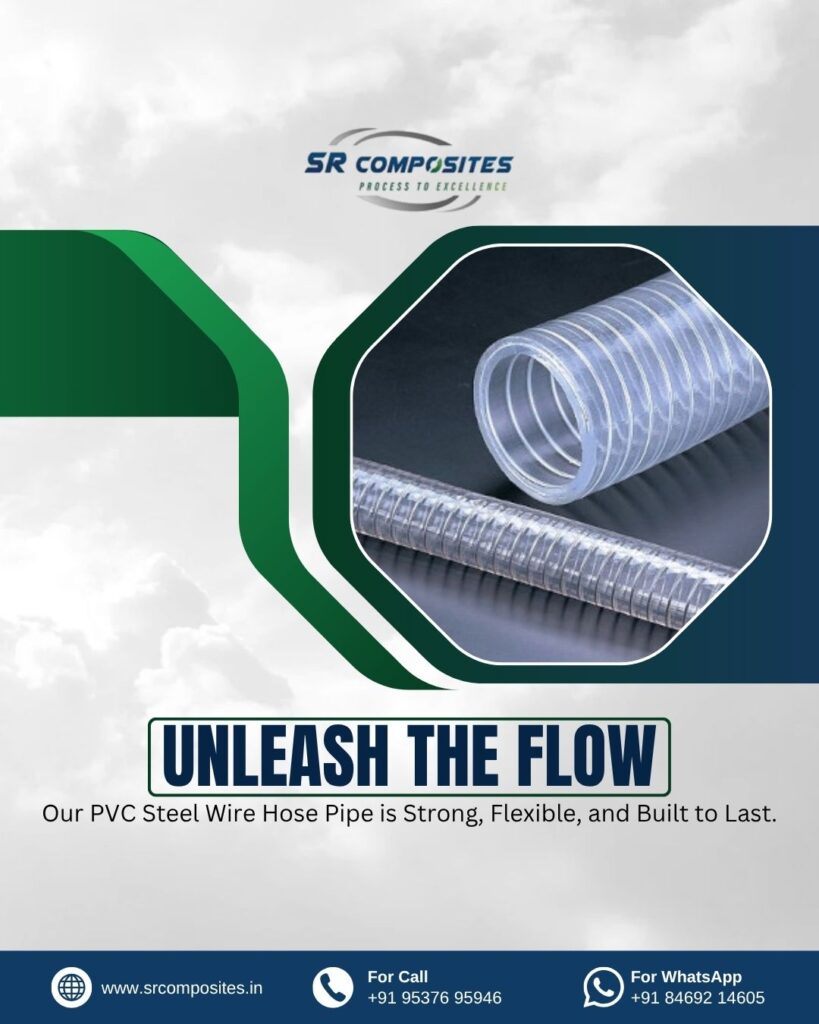
Introduction: Why Flow Matters More Than You Think In most industrial setups, problems don’t appear suddenly. They build slowly—reduced efficiency, rising energy costs, unstable performance, and material fatigue. On the surface, everything looks fine, but internally, the system starts resisting its own flow. This is where the idea to unleash the flow becomes important. It is not just a technical phrase; it is a practical way of thinking about how materials, energy, and processes move inside a system. When flow is smooth, performance feels effortless. When it is blocked, everything becomes expensive and inconsistent. In real-world engineering terms, flow decides whether a system is working at 60% or 95% efficiency. What is Unleash the Flow? To unleash the flow means removing resistance inside any industrial or structural system so that energy, heat, or materials move in a controlled and efficient way. In simple terms, it is about making systems behave in a predictable and optimized manner. In composite engineering, this can mean better thermal stability, stronger load distribution, and reduced internal energy loss. Most people don’t realize this, but even a small improvement in flow design can significantly increase durability and reduce long-term operational cost. Why is Unleash the Flow Important? Industrial systems fail more often due to inefficiency than actual breakdown. When flow is not optimized, energy starts leaking in different forms—heat loss, mechanical resistance, or structural stress. Over time, this leads to higher maintenance, lower output quality, and shorter material lifespan. In industries like construction, cold storage, and manufacturing, these losses can quietly increase operational costs without being immediately visible. When you focus on unleashing the flow, you are essentially improving the internal health of the entire system, which directly reflects in performance and cost savings. How Does It Work in Real Systems? Flow optimization works by improving the way materials and energy interact within a system. It begins with selecting the right material that naturally reduces resistance. Advanced composites are often used because they are engineered for stability and controlled performance. Next comes structural design. If the design creates unnecessary stress points or thermal leakage paths, flow gets disturbed. Unleash the Flow A well-designed system distributes load and energy evenly, avoiding unnecessary pressure buildup. Finally, insulation and environmental control play a major role. In temperature-sensitive industries, even small fluctuations can interrupt flow stability, which is why modern engineered panels are widely used. When Should Industries Focus on Flow Optimization? Flow optimization becomes important when systems start showing signs of inefficiency. This could be increasing energy bills without production changes, Unleash the Flow, inconsistent output quality, or frequent material degradation. It is also crucial during system upgrades, especially when shifting from traditional materials to advanced composite-based solutions. At that stage, ignoring flow design often leads Unleash the Flow to underperformance of otherwise high-quality materials. Who Needs This Approach the Most? This concept is most relevant for engineers, architects, and industrial planners who deal with performance-based systems. It is also important for cold storage developers, manufacturing units, Unleash the Flow, and infrastructure projects where even small inefficiencies scale into large financial losses. In practice, anyone responsible for system durability, energy efficiency, or structural performance benefits from understanding flow behavior. Which System Performs Better? Traditional materials often struggle to maintain consistent performance under stress. They may work well initially, but over time, they allow energy loss, heat leakage, or structural fatigue. On the other hand, composite systems are designed to maintain stability under varying conditions. They reduce internal resistance and ensure smoother energy transfer, which helps in maintaining long-term efficiency without frequent maintenance. In simple terms, traditional systems react to problems, while composite systems prevent them. For a deeper technical understanding of industrial efficiency and material standards, you can refer to global guidelines on composite material performance at https://www.iso.org. Why SR Composites is Relevant Here At SR Composites (https://srcomposites.in/), the focus is on building materials that improve real-world industrial performance rather than just meeting basic structural requirements. The advantage lies in engineering precision. Instead of generic materials, the focus is on composite systems designed for stability, thermal efficiency, and long service life. This makes them suitable for industries where performance consistency matters more than short-term cost savings. In practical applications, these materials help industries reduce energy loss, improve durability, and maintain smoother operational flow across systems. Featured Snippet (40–60 Words) Unleashing the flow means improving industrial systems by removing resistance in energy, material, or thermal movement. It enhances efficiency, reduces loss, and improves long-term performance by using optimized design and advanced composite materials in construction and manufacturing systems. FAQs What does unleash the flow mean? It means optimizing systems so energy, heat, or materials move efficiently with minimal resistance. Why is flow important in industry? Because poor flow increases energy loss, reduces efficiency, and shortens system lifespan. Where is flow optimization used? It is widely used in construction, cold storage, manufacturing, and infrastructure systems. Do composite materials improve flow? Yes, they are designed to reduce resistance and improve system stability. When should flow be improved? During system design, upgrades, or when efficiency starts decreasing. Conclusion To unleash the flow is to improve how an entire system behaves internally. It is not about adding more power but about removing resistance. When flow is optimized, systems become more stable, efficient, and cost-effective. For industries looking to improve long-term performance, SR Composites provides material solutions that support better flow, better design, and better results. 👉 Explore more at https://srcomposites.in/
Nylon Peel Ply: Industrial Guide for Strong Composite Bonding (2026)
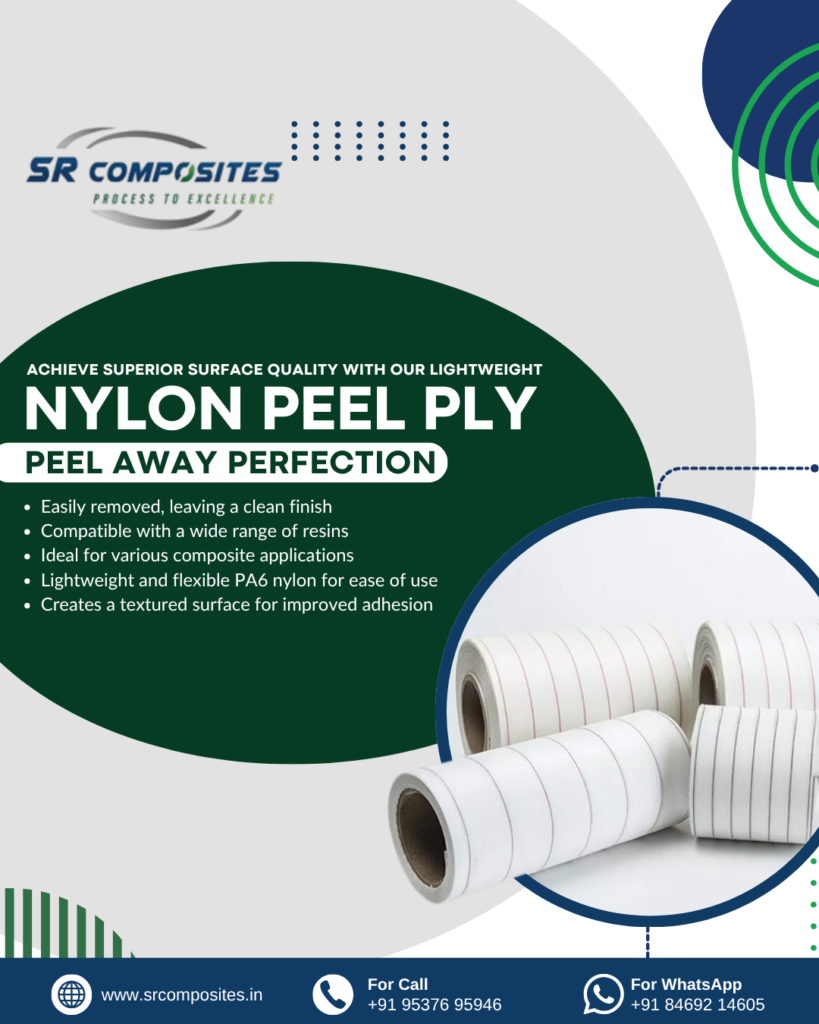
📌 Quick Summary Nylon peel ply is a woven composite release fabric used during curing to create a clean, textured surface for secondary bonding. It improves adhesion strength, reduces finishing work, and ensures consistent surface quality in aerospace, automotive, marine, and wind energy manufacturing. 📌 Introduction In composite manufacturing, surface preparation often decides whether a component performs well or fails prematurely. Many engineers focus on resin systems and reinforcement fibers, but the real challenge usually lies in achieving a clean, bond-ready surface after curing. This is where nylon peel ply becomes highly important. It is widely used in industrial production lines to eliminate contamination, reduce manual sanding, and improve bonding consistency between composite layers. In practical manufacturing environments, even minor surface contamination—dust, oil, or uneven resin exposure—can significantly reduce adhesion strength. Nylon peel ply helps solve this problem in a controlled and repeatable way. 📌 What is Nylon Peel Ply? It is a specially engineered woven fabric placed on top of wet composite laminates during the curing process. Once curing is complete, the fabric is removed, leaving behind a uniform, slightly textured surface. This surface is ideal for secondary bonding, painting, or coating without additional sanding. In simple terms, nylon peel ply acts as a temporary finishing layer that improves long-term structural reliability. Key characteristics: 📌 Why Nylon Peel Ply is Important The importance of nylon peel ply comes from its direct impact on manufacturing efficiency and product reliability. In traditional composite workflows, surface preparation requires sanding, cleaning, and inspection. These steps are time-consuming and often inconsistent due to human variation. By using nylon peel ply, manufacturers achieve: In real industrial applications, this leads to fewer rejections and more predictable output quality. 📌 How Nylon Peel Ply Works The working process of this is straightforward but highly effective in production environments. First, composite fibers are placed in a mold, and resin is applied. A layer of nylon peel ply is then placed over the wet surface. During vacuum bagging and curing, heat and pressure consolidate the laminate. Once the curing process is complete, the peel ply is removed manually. What remains is a clean, textured surface that is immediately ready for bonding or coating. This eliminates the need for post-curing sanding and ensures repeatable surface quality across production batches. 📌 Industrial Applications of Nylon Peel Ply Nylon peel ply is widely used in industries where composite performance and structural reliability are critical. In aerospace manufacturing, it is used for structural panels and interior components where safety and precision are essential. In automotive applications, it supports lightweight structural parts and performance components. Marine industries rely on it for hull and deck fabrication, where strength and corrosion resistance are important. Wind energy manufacturers also use peel ply extensively in turbine blade production, where large composite surfaces must maintain consistent bonding quality. 📌 Nylon Peel Ply vs Polyester Peel Ply Both nylon and polyester peel ply are used in composite manufacturing, but their performance differs depending on application requirements. Nylon peel ply offers higher temperature resistance and better surface finish consistency, making it suitable for aerospace and high-performance engineering. Polyester peel ply is more cost-effective and is generally used in less demanding applications. Simple comparison: Feature Nylon Peel Ply Polyester Peel Ply Heat resistance High Moderate Surface quality Excellent Good Cost Higher Lower Industrial use High-performance General use 📌 Common Mistakes in Usage Even though nylon peel ply is easy to use, incorrect handling can reduce its effectiveness. One common mistake is reusing peel ply, which leads to inconsistent surface quality. Another issue is improper storage in humid conditions, which can degrade material performance. Some manufacturers also fail to match peel ply with the correct resin system, resulting in bonding inconsistencies. Avoiding these mistakes ensures stable production output and better material performance. 🇮🇳 Government of India – Ministry of Textiles (Technical Textiles Mission)👉 https://texmin.gov.in/ 📌 Why Choose SR Composites Choosing the right supplier is critical in composite manufacturing because material consistency directly affects final product quality. SR Composites provides industrial-grade composite materials designed for real production environments. Their focus is on maintaining consistent weave quality, reliable supply chains, and technical support for manufacturers. This makes them suitable for OEM-level production where repeatability and quality control are essential. 👉 https://srcomposites.in/ 📌 FAQs What is nylon peel ply used for? It is used to create a clean and textured surface on composite parts after curing for better bonding. Can nylon peel ply be reused? No, it is designed for single-use to maintain quality consistency. Why is nylon peel ply important in composites? It improves bonding strength and removes the need for sanding. Where is nylon peel ply commonly used? It is used in aerospace, automotive, marine, and wind energy industries. Is nylon peel ply better than polyester? Yes, for high-performance applications due to better heat resistance and surface quality. 📌 Conclusion Nylon peel ply plays a vital role in modern composite manufacturing by ensuring clean, consistent, and bond-ready surfaces. It improves production efficiency, reduces manual errors, and enhances structural performance across multiple industries. For manufacturers looking to improve quality and consistency in composite production, SR Composites offers reliable industrial-grade solutions. 👉 https://srcomposites.in/
Vacuum Bagging Film: 10 Powerful Benefits for High-Performance Composite Manufacturing
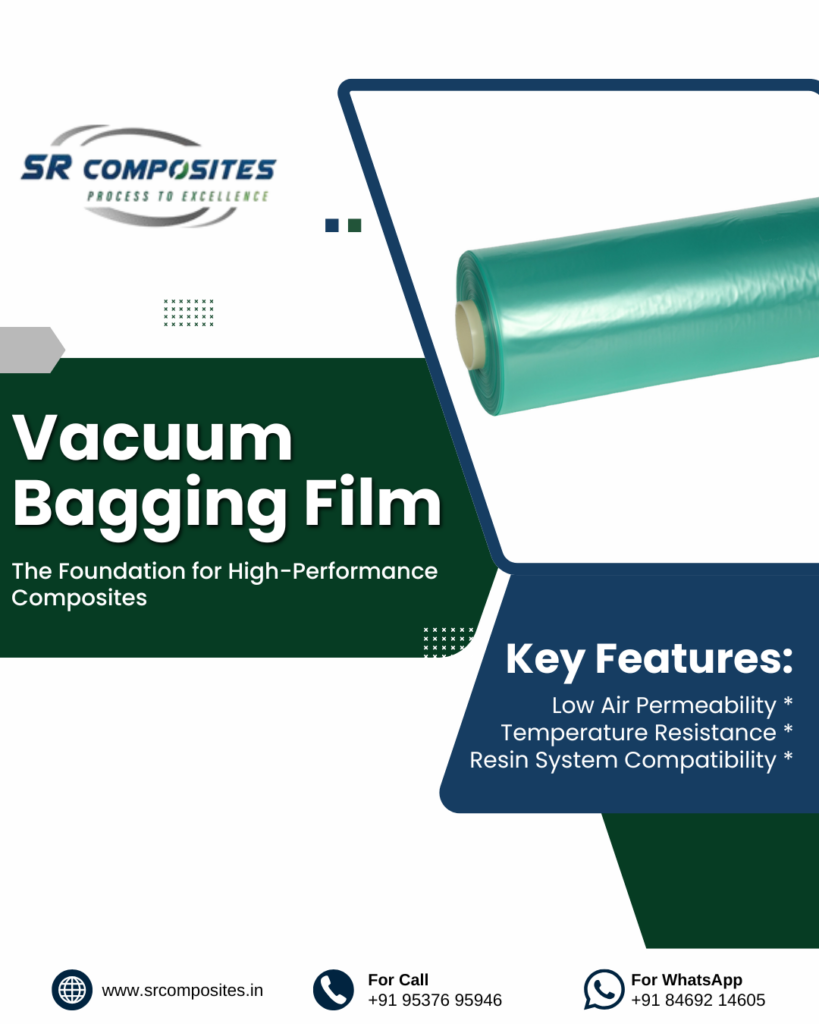
Vacuum Bagging Film: The Key to Stronger and More Reliable Composite Parts Modern industries are constantly searching for materials that offer exceptional strength while keeping weight to a minimum. Vacuum Bagging Film. From aircraft and wind turbines to racing vehicles and marine structures, composite materials have become the preferred choice for engineers who need high performance without sacrificing durability. However, producing a high-quality composite component is not simply about choosing the right fiber reinforcement or resin system. The manufacturing process itself plays an equally important role. Even the best materials can produce disappointing results if air becomes trapped inside the laminate or if pressure is not distributed evenly during curing. This is where Vacuum Bagging Film becomes essential. Although it may appear to be a simple consumable material, it is one of the most important elements in composite production. Creating an airtight environment around a laminate, it helps manufacturers achieve better consolidation, fewer defects, and more consistent results. For decades, manufacturers around the world have relied on this process to produce lightweight structures capable of performing in some of the most demanding environments. Whether the application involves aerospace components, marine products, sporting equipment, or industrial tooling, proper vacuum bagging often determines the difference between average quality and exceptional performance. Table of Contents What Is Vacuum Bagging Film? Vacuum Bagging Film is a flexible barrier material used to seal composite laminates during manufacturing. Once the reinforcement materials have been placed on a mold, the film covers the entire layup and creates a closed environment. Air is then removed using a vacuum pump, generating pressure across the laminate surface. This pressure compresses the layers, improves contact between fibers and resin, and minimizes the risk of trapped air. The process is widely used in advanced composites because it improves structural consistency while helping manufacturers achieve precise engineering requirements. Without an effective vacuum enclosure, it becomes difficult to produce components with the strength, reliability, and surface quality expected in modern industries. Why Vacuum Bagging Is Important Many manufacturing defects begin with something that cannot easily be seen: air trapped inside the laminate. These tiny voids may seem insignificant, but they can reduce mechanical performance and create weak points within the structure. Consider a carbon-fiber panel designed for a racing vehicle. Even a small amount of trapped air can affect stiffness and long-term durability. Over time, repeated loading and vibration may cause these hidden imperfections to grow into larger problems. Vacuum processing helps eliminate this risk by applying uniform pressure across the entire component. As the laminate cures, the layers are compacted together, creating a denser and stronger structure. This controlled environment allows manufacturers to produce parts that are lighter, stronger, and more reliable while maintaining consistent quality from one production cycle to the next. Key Features of Vacuum Bagging Materials Excellent Air Retention One of the most important characteristics of any bagging system is its ability to maintain vacuum pressure throughout the curing cycle. Vacuum Bagging Film: Stable pressure contributes directly to improved laminate quality and reduced defects. High Temperature Performance Many composite processes require elevated curing temperatures. Modern bagging materials are engineered to withstand these conditions without losing their structural integrity. Outstanding Flexibility Complex molds often include deep contours and challenging shapes. Flexible films conform to these geometries while maintaining an effective seal. Strong Tear Resistance Durability is critical during installation and processing. A high-quality film resists punctures and tears that could compromise vacuum performance. Resin Compatibility Composite manufacturers use a variety of resin systems. Reliable bagging materials remain stable when exposed to epoxy, polyester, and vinyl ester formulations. How the Process Works The vacuum bagging process begins with preparing the mold and positioning the reinforcement materials. Once the laminate stack is complete, supporting consumables such as peel ply, release films, and breather fabrics are added. The bagging membrane is then carefully placed over the assembly and sealed around the mold perimeter using specialized sealant tape. A vacuum pump removes air from inside the enclosure, causing atmospheric pressure to compress the laminate. This pressure remains active throughout the curing cycle. As the resin hardens, the laminate becomes fully consolidated. The result is a finished component with improved structural integrity, fewer voids, and a more uniform appearance. The Benefits of Vacuum Bagging Film Improved Structural Strength Removing trapped air and enhancing fiber consolidation creates stronger composite structures capable of handling demanding loads. Better Surface Quality Uniform pressure helps produce smoother surfaces, reducing the need for extensive finishing work after curing. Reduced Manufacturing Defects Vacuum processing minimizes air pockets, dry spots, and inconsistencies that can affect final product performance. Consistent Production Results Manufacturers can achieve repeatable quality standards across multiple production cycles, improving reliability and customer confidence. Optimized Resin Distribution Proper pressure helps distribute resin more evenly throughout the laminate, contributing to improved mechanical properties. Lower Material Waste Fewer defects mean less scrap material, reduced rework, and improved production efficiency. Lightweight Performance Enhanced consolidation allows engineers to maximize strength while minimizing unnecessary weight. Greater Process Control A controlled curing environment helps ensure predictable results and higher manufacturing standards. A Real Manufacturing Success Story A boat-building company producing fiberglass hulls struggled with recurring laminate defects despite using premium reinforcement materials. The engineering team initially suspected issues with the resin system. After several investigations, they discovered that inconsistent vacuum pressure was causing air pockets to form during curing. By upgrading their vacuum bagging setup and improving sealing procedures, they dramatically reduced defect rates. Within months, production efficiency improved, customer complaints decreased, and overall product quality increased. The lesson was simple: even small improvements in vacuum processing can have a major impact on manufacturing success. Industries That Use Vacuum Bagging Technology Aerospace Aircraft manufacturers use advanced composite structures to reduce weight and improve fuel efficiency while maintaining strict safety requirements. Automotive Performance vehicles frequently utilize lightweight composite components to improve acceleration, handling, and efficiency. Marine Boat builders rely on vacuum-assisted manufacturing to produce durable hulls with excellent strength-to-weight ratios. Wind Energy Large turbine blades require precise manufacturing
Ultimate Vacuum Infusion Process Guide: 7 Powerful Steps
TABLE OF CONTENTS Introduction The vacuum infusion process is one of the most efficient methods used in modern composite manufacturing today. It is widely adopted in industries where strength, lightweight structure, and consistency are critical. In simple terms, this method allows manufacturers to produce high-performance composite parts by using controlled vacuum pressure to distribute resin evenly across dry fiber materials. Over the past few years, the vacuum infusion process has become increasingly important in sectors like wind energy, marine engineering, aerospace, and automotive manufacturing because it reduces defects and improves overall product reliability. What is Vacuum Infusion? The vacuum is a closed-mold manufacturing method where dry fibers are placed in a mold and resin is pulled through them using vacuum pressure. Instead of manual resin application, the system ensures controlled and even distribution across the material layers. This makes the vacuum infusion process highly suitable for producing large and complex composite parts. Why It Matters in Industry Manufacturers prefer the vacuum infusion process because it improves product quality while reducing waste. Key advantages include: In real manufacturing environments, even small inconsistencies can affect performance, which is why the vacuum infusion process is widely adopted. Step-by-Step Process 1. Mold Preparation The mold is cleaned and coated for easy demolding. 2. Fiber Placement Fiberglass or carbon fiber layers are arranged carefully. 3. Vacuum Sealing A vacuum bag is placed to create an airtight system. 4. Flow Setup Materials like peel ply and flow media are added to guide resin movement. 5. Vacuum Creation Air is removed, compressing the fiber stack. 6. Resin Injection Resin is drawn evenly through the fibers. 7. Curing The material hardens into a solid composite structure. Each stage of the vacuum infusion process ensures uniform quality and strength. Applications The vacuum infusion process is used in: It is preferred wherever high strength and low weight are required. Traditional vs Modern Methods Feature Vacuum Infusion Process Hand Lay-Up Strength High Medium Waste Low High Quality Consistent Variable Finish Smooth Rough Control Precise Manual The vacuum infusion process clearly provides better consistency and efficiency. Role of SR Composites SR Composites (https://srcomposites.in/) supplies essential consumables used in the vacuum infusion process. Their materials support proper resin flow, stable curing, and improved composite quality. This helps manufacturers achieve better results in production environments where consistency is critical. Government reference on composites and advanced materials (India):CSIR–National Aerospace Laboratories (NAL) – Advanced Composites Research According to research and development work by government institutions like CSIR–NAL, composite materials play a crucial role in improving the strength-to-weight ratio and performance in advanced engineering applications. Featured Snippet The vacuum infusion process is a closed-mold composite manufacturing method where resin is pulled into dry fiber materials using vacuum pressure, producing strong, lightweight, and high-quality composite parts with minimal defects. FAQs What is the vacuum infusion process used for? It is used to manufacture strong and lightweight composite parts in industrial applications. Why is it better than traditional methods? It offers higher strength, lower waste, and better consistency. What materials are used? Fiberglass, carbon fiber, resin, and flow control consumables are used. Where is it applied? It is used in wind energy, marine, aerospace, and automotive industries. Conclusion The vacuum infusion process has become a key method in modern composite manufacturing due to its efficiency and reliability. It ensures strong, lightweight, and high-quality components across multiple industries. For reliable composite consumables used in the vacuum infusion process, visit https://srcomposites.in/ Ultimate Vacuum Infusion Guide: 7 Powerful Steps